Stegra, the first major bet on green steel in Europe, avoids bankruptcy
A group of investors led by the billionaire Wallenberg family saves a key company for Sweden's industry

-
CAT -
CAST
CopenhagenSweden's prestige as a driver of the green industry in Europe suffered a very hard blow with the bankruptcy of Northvolt in the year 2025. The electric battery manufacturer could not live up to expectations and became the biggest industrial failure in the modern history of the Nordic country. A year later, another emblematic company of the green industrial revolution driven from northern Sweden has avoided a similar fate.
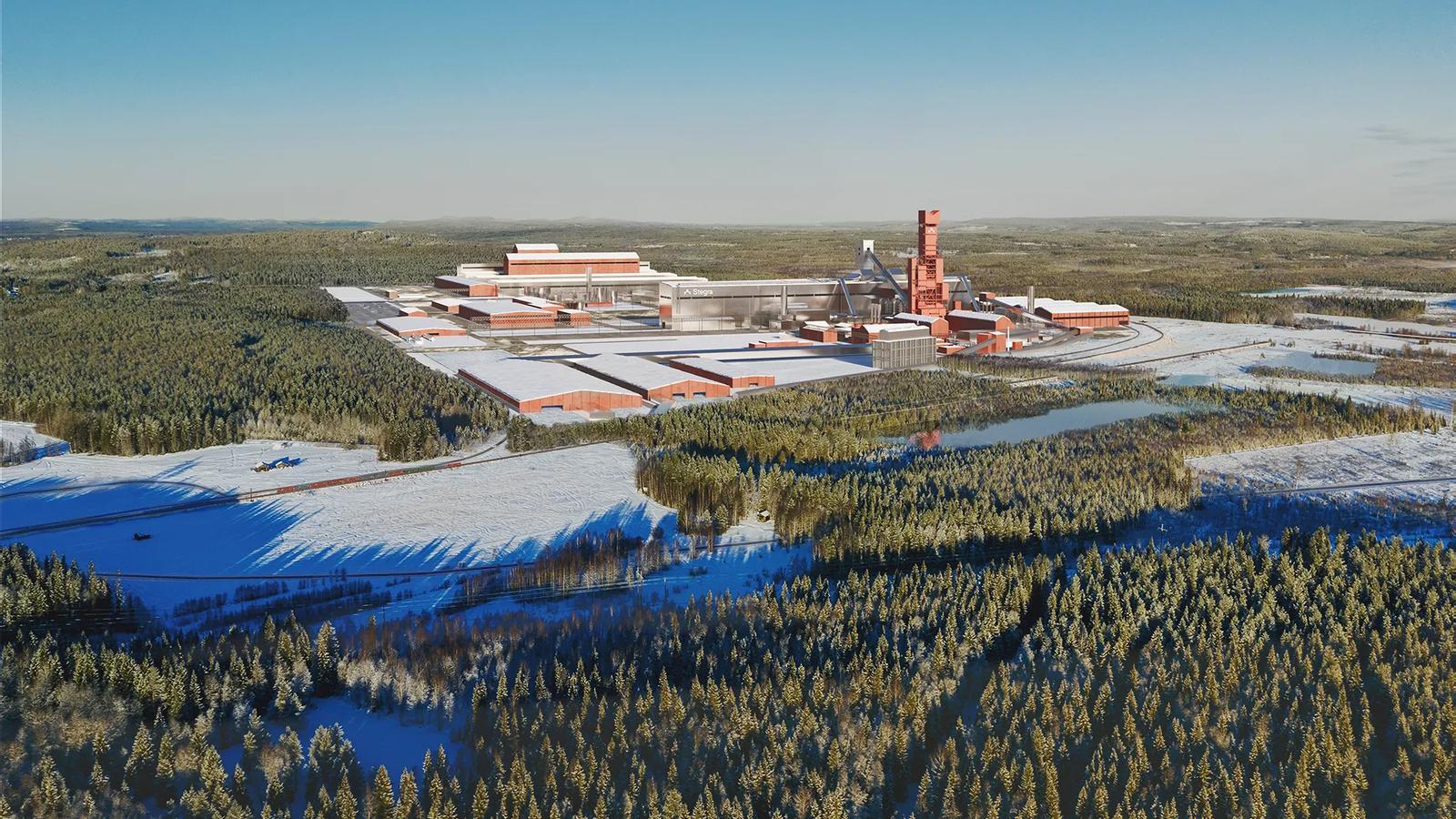
In this case, it is Stegra, the company that aims to reduce carbon dioxide (CO2) emissions by 95% in steel production, an industry responsible for emitting four billion tons of CO2 globally each year, according to the World Steel Association. To achieve this, the company, created in 2020 as a start-up under the name H2 Green Steel, is building Europe's first decarbonized steel mill, an immense project covering an area equivalent to 450 football fields.
From the outset, the company has had to face a disproportionate increase in the construction costs of the plant, with no date yet set for the start of steel production. This situation has led to serious financial difficulties, which have intensified since the autumn of 2025, when the company was on the verge of bankruptcy.
But after months of intense negotiations, Stegra can breathe a sigh of relief again after announcing an agreement with a consortium of investors willing to provide 1.4 billion euros, including the Wallenberg family, Sweden's richest and most influential business dynasty. With this sum of millions, the company's executives are confident they can complete the construction of the plant, which includes a hydrogen plant with a 145-meter-high tower (which will become Sweden's tallest building), a sponge iron plant, the steel mill itself —for which railway tracks had to be built— and an adjacent water treatment plant, which has added millions in cost overruns to the project. “It has been incredibly hard work over the last six months, but we will finish the steel mill within 18 to 24 months,” said the company's CEO, Henrik Henriksson.

In the city of Boden, with 28,000 inhabitants and located more than 1,000 kilometers north of Stockholm, where Stegra is building the steel plant, the news has been received with relief. In the construction works, which began in 2022, more than 4,000 workers are employed and 6.5 billion euros have already been invested. The factory represents the only steel plant built in Europe in the last 50 years, and Sweden has used it as a true showcase of the industrial energy transition it wants to promote.
Save Sweden's industrial image
But beyond the funds that Stegra has managed to raise, what has most highlighted by the Swedish press is the identity of its investors and the message they have wanted to convey: through the Wallenberg Investments fund, this business lineage becomes Stegra's first shareholder after investing 240 million euros. The consortium of investors also includes the Singaporean state fund Temasek, along with the IKEA IMAS Foundation, owner of most IKEA stores worldwide. For its part, the Wallenberg family controls several of Sweden's main industrial jewels, including the telecommunications group Ericsson, the home appliance manufacturer Electrolux, and the aeronautics and defense company Saab.
The entry of Wallenberg capital into Stegra has been interpreted not only as a financial contribution but also as a validation of a project committed to the ecological transformation of industry. This has occurred at a time when, from conservative and far-right Swedish sectors reluctant about ecological industrial transformation, the idea of a "green bubble" has been spread, which they warn will eventually burst.
To lend even more credibility to the investors' commitment, they have appointed a true industry veteran as chairman of the board of directors of Stegra, Leif Johansson, known for having been CEO of AB Volvo between 1997 and 2011. After his nomination, Johansson justified the Wallenberg fund's involvement "due to the great importance of the project for Sweden's status as a business nation." In fact, from the country's leading newspaper, Dagens Nyheter, they valued that "the concern to preserve Sweden's image as a pioneering nation in green industry has likely been a significant factor in the Wallenberg family's decision to commit to Stegra."
However, experts also warn that, despite the construction of the green steel plant in Boden having been saved, the company still has bigger challenges ahead, such as the rising cost of energy, which is needed in large quantities for the production of green steel, while the prices of conventional steel continue to fall. Another problem was pointed out by Klara Helstad, deputy director of research at the Swedish Energy Agency, admitting to the British newspaper Financial Times that "it is difficult for Sweden to support emerging green industries on a scale that we see in China". From the Stockholm Environment Institute, Aaron Maltais warned that "we see things slowing down in Europe with other projects similar to Stegra that are having trouble reaching business projections and end up postponed or completely stopped".
