A decisive election

-
CAT -
CAST
What do Leo XIV, Donald Trump, and Xi Jinping have in common? That all three have understood that the emergence of artificial intelligence is no longer just a technological issue, but a global strategic fact. The Holy Father opens his encyclical Magnifica Humanitas warning that humanity faces a “decisive choice”, and closes it with a fundamental question: how can we care for the human person in the age of AI? Trump, in turn, presented the American plan a year ago to “win the race” for artificial intelligence, convinced that whoever dominates this ecosystem will set global standards and reap the economic and military benefits. Xi Jinping, with more measured but no less ambitious language, has also placed AI at the center of China's coming years, to the point of wanting to introduce it massively into industrial processes and move towards artificial general intelligence.And meanwhile, what are we doing in Europe? Not much, to be honest. Facing a continent scorched by climate change, with an uncaring, nationalist and anti-European right gaining ground, and with a war entrenched in the backyard, the European Union appears slow, hesitant and, too often, inefficient. The problem is not just that we struggle to react to AI; it's that AI arrives at a time when the whole old world order seems to be falling apart at the same time. Therefore, the discussion about algorithms, data and machines is also a discussion about power, dependence and political future.It is worth reading the papal encyclical not as a text strictly about technology, but as a warning about the course of a planet that is more insecure, more unpredictable, and more multipolar than what the men and women of my generation have known. We are witnessing —first with condescension; then with disbelief, and now with stupefaction— the undoing of an order that seemed more solid to us than it was.Trump has called into question institutions and alliances that we believed unassailable: the United Nations, NATO, free trade, even the very idea of the West. Today, Europeans are no longer entirely sure whether the United States is a reliable ally or not. And this is perhaps its hardest lesson: in international politics, what was white yesterday can be black today, and beneath the civilized veneer of institutions, the old law of the strongest continues to beat.
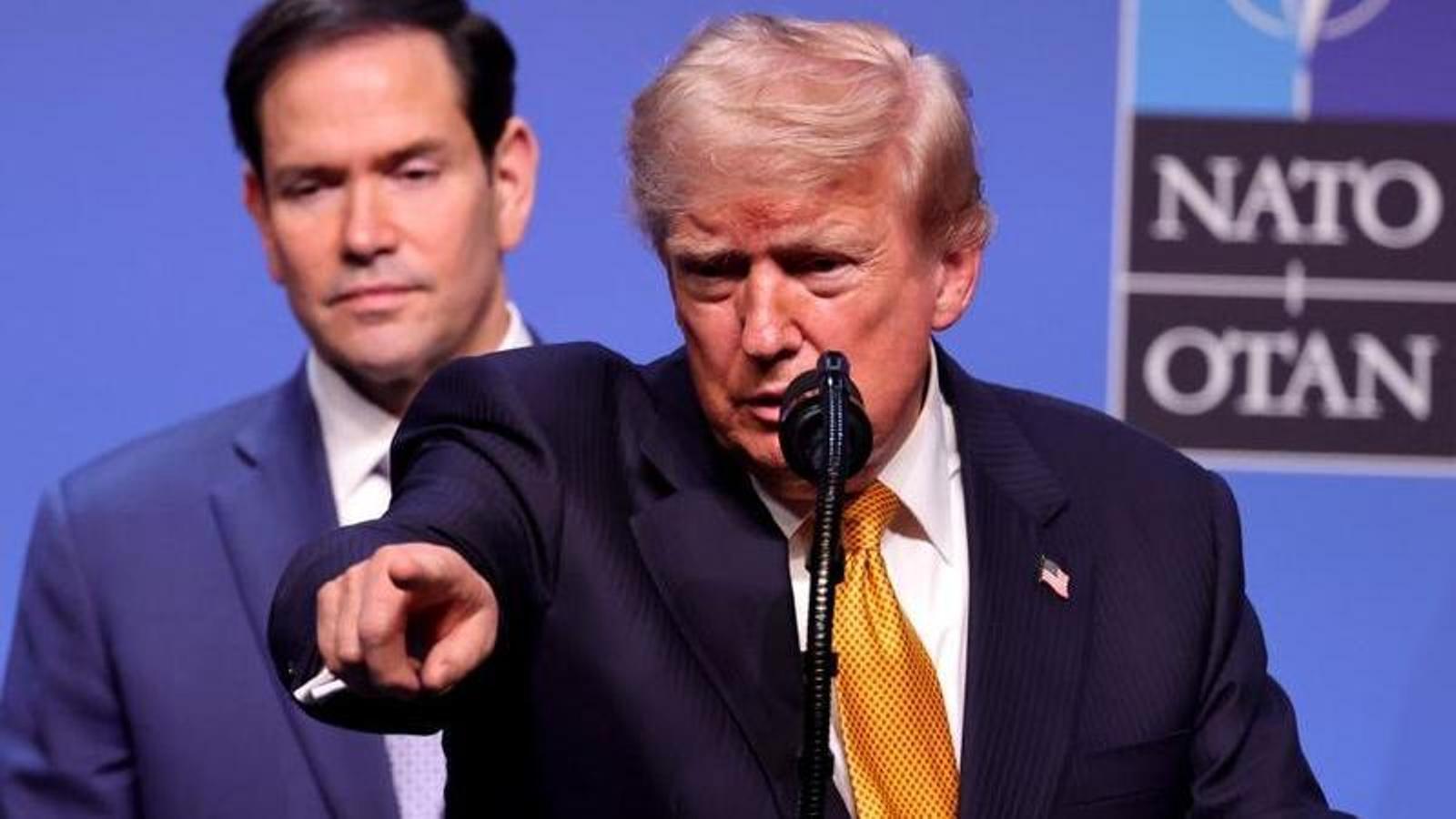
The recent NATO summit in Ankara has made it evident again. The American pressures for Europe to multiply military spending are not just a budgetary demand: they are also a reminder of a dependence that we have disguised as an alliance for too long.In matters of defense, Europe continues to live under an umbrella it does not fully control: it buys weapons, technology, and security guarantees from the US, but it does not decide the pace, conditions, or limits of this protection. And on the other great front of the century – the technological, industrial, and commercial – pressure comes mainly from China, which does not need grand proclamations to alter the global balance: it is enough for it to build factories, ports, patents, batteries, critical minerals, platforms, and supply chains. Washington reminds us that without military muscle there is no autonomy; Beijing shows us that without a productive base, there is none either. Between the two, Europe runs the risk of discovering too late that sovereignty is not proclaimed: it is manufactured, financed, and also – let's be clear – defended.Referring to the dangers of technology (and showing us the importance that, in Catalan, an accent can have!), Hans Jonas wrote that “we only know what is at stake when we know that it is at stake”. Today, what is at stake is Europe: the very idea of Europe. But not all is lost. If this idea is attacked from the outside – from the White House and from the Kremlin – and also from the inside – by forces that despise the European project – it is precisely because it still matters.Hölderlin wrote that “wherever there is danger, grows also that which saves”. For too long, European integration has seemed a postponed ambition, a promise we invoke in crises and forget when the urgency subsides. The time has come to reclaim it, even with horizons that today seem unthinkable, such as a United States of Europe. We too have a decisive choice: to bet on a continental state capable of defending its citizens, its industry, its technology, and its democracy, or to resign ourselves to being weakened and irrelevant spectators of a century that will wait for no one.

