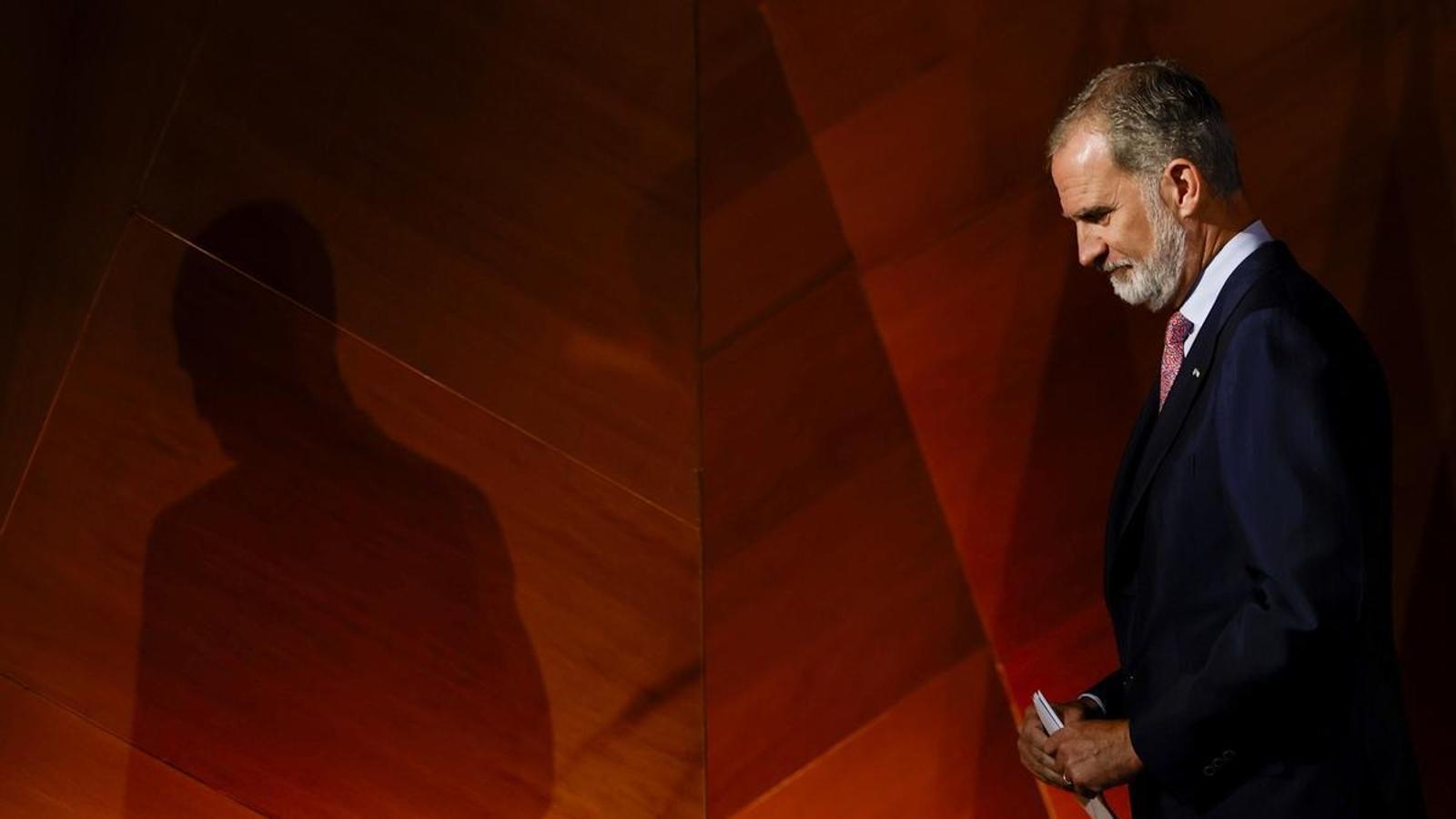

In an event in Madrid, Felipe VI called to “continue to trust in democracy, even in these somewhat dark days”. What a beacon, the Spanish royal house. It is true that, as in Bob Dylan's song, there is a long and black cloud descending upon all of us, the citizens of the West, and it is the black cloud of the far right and new fascisms. But every time the King of Spain praises democracy, he reminds us that his position and his very figure are not democratic. Representative democracy was born as a response to the absolutist Ancien Régime, of which monarchies were the political form par excellence. In the case of Felipe VI (and his father, Juan Carlos I), this contradiction is aggravated by the fact that they are heads of state by mandate of their predecessor, the dictator Francisco Franco – leader of one of the longest-lived and bloodiest dictatorships of the 20th century –, a maneuver that prevented the resumption of the republic – that one, yes – democratic republic that was aborted by the fascist and military coup of 1936, of which it will be ninety years on July 18th.If by "dark days" the monarch means to allude to political corruption, perhaps he would do well to start by looking at his own home. Juan Carlos I fled Spain to avoid having to answer for his fiscal crimes, and for six years he has lived in Abu Dhabi with a level of luxury that is evidently the same as what the character is accustomed to. Spanish justice (which, as Juan Carlos himself said, "is the same for everyone") shelved the cases against him with technicalities and excuses: the crimes had prescribed, or Juan Carlos was exonerated thanks to the shielding that the 1978 Constitution itself provides for his figure, an exaggerated protection to the point that Juan Carlos de Borbón is the only person mentioned by name and surname in the constitutional text (it is in article 57.1, which literally says: "The Crown of Spain is hereditary in the successors of H.M. Juan Carlos I of Bourbon, legitimate heir of the historic dynasty. Succession to the throne shall follow the regular order of primogeniture and representation, and the line anterior to the posterior shall always be preferred; in the same line, the closer degree to the more remote; in the same degree, the man to the woman, and in the same sex the older person to the younger", a wording that, as can be seen, is a real ode to democracy.In any case, since he insists on “trusting democracy”, it would be good for Felipe VI to remember that the United Arab Emirates, where his father resides, is a theocratic dictatorship that does not recognize human rights. And to mention more domestic matters, that the Marivent Palace in Mallorca, where he will soon go for the summer holidays, is actually the house that the artist Joan de Saridakis bequeathed to the Mallorcan citizens to be a cultural center open to everyone. Instead, it was plundered to turn it into the summer residence of the Spanish royal family.
