Cerdà cannot be left alone

It is said that a monument will be erected to Ildefons Cerdà, in Plaça Universitat, which is the place where the monument to Doctor Robert would be most fitting to return (because it is where it was located before the dictatorships). Cerdà would live better in Plaça Tetuan, with an absurd name but perfect confluence amidst his grids. Or in Plaça de les Glòries, his failed new Barcelona centrality, where they have now made a “park” that, as is customary in this “green” conscious city, only has 30% grass. And marking centralities cannot be done from planning artificiality, nor can well-being be imposed by decree, and therefore, Cerdà's genius always ends up failing somewhere. This year we celebrate the 150th anniversary of his death, but also the centenary of Gaudí's, and in fact this coincidence coincides with my growing conviction that it would have been reckless to leave Cerdà alone.His contribution to the city is more than remarkable: hygiene, the foresight of the automobile and the train, the 45-degree cut of the chamfers, the scalability of the grid. And yet, I perfectly understand that the Barcelona council (which had to comply with Madrid's decision) would have wanted to opt for other proposals: that large expanse of uniform squares, between the demolished walls and the surrounding villages, ignored the layout of paths and rivers pre-existing for centuries and, when it did, it gave them the robotic name of Diagonal, Paral·lel or Meridiana. If we had left Barcelona in Cerdà's hands, we would basically be a correct and orderly city. More rational and rationalist than modern or modernist, indeed eliminating inequalities and exceptions, but at the evident price of foregoing exceptionalities. Everyone with their little garden inside, which in the end we haven't ended up having either: New York, like Cerdà, also names (so to speak) its streets with numbers and letters, but they, at least, have skyscrapers and a large central park. We, at most, have superblock concrete and large extensions of dog parks.
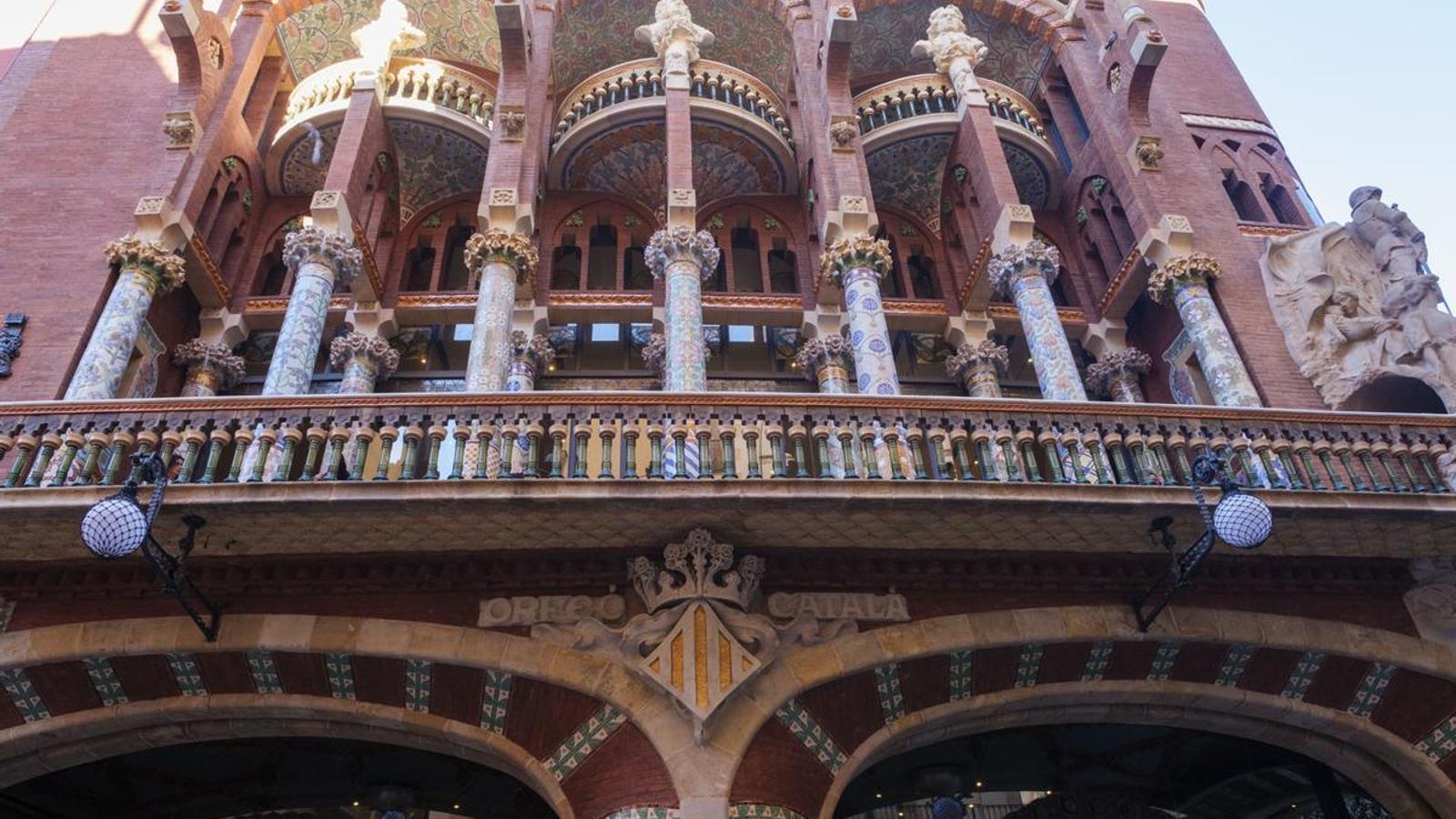
Cerdà's dream was not this, of course, but even so, it's lucky he wasn't left alone. If the Cerdà Plan had been developed with all its geometric coherence, without interference, without eccentricities, without the nuances that were incorporated into it (especially via Domènech i Montaner), today the Eixample would be a sea of identical blocks. Architects, fortunately, put a bit of imagination into the facades and were able to dress them up (a good part of them) for Sunday. And the modernists, for their part, put in the colors and boldness in the form of a hyperbolic temple, an underwater house, or a medieval castle. If Cerdà had been left alone, Barcelona would be an example of rational urbanism, but it would only awaken emotions in people with OCD. Tourists would stroll through it as if contemplating a well-resolved plan, a pattern, a border.Fortunately, under the cobblestones is the beach and under the chamfers are the woods and the paths. Nature, the country. We prevented the new Eixample from being a simple annex to the Gothic city, as artificial and geometric as the Ciutadella or Barceloneta were. Undoubtedly Cerdà conceived an advanced city, but his proposal had an elegance as abstract and scientific as his utopian federalism (redundancy intended). They say he read the theses of socialism by Étienne Cabet, that is, the Icarias (later renovated by Bohigas in the Olympic Village), but sometimes egalitarianism ends up leveling down. That is why Barcelona's merit is not having left Cerdà alone and having adorned him with natural hierarchies and monumental exceptions. Beauty does not usually dress in uniform.Let's imagine it: with Cerdà alone, what would tourists come to see? Not the Eixample: rather the Gothic Quarter, the Ramblas, the port, perhaps Montjuïc. But after three strolls, the city would be a monothematic beehive, a city gentrified before its time. Just as without Gaudí's intervention, the original Sagrada Família would have been a dispensable neo-Gothic temple. La Pedrera would today be a conventional building, with some added storeys. The Palau de la Música Catalana would be a civic centre on the site of the convent of Sant Francesc de Paula. Yes, we have been very lucky: after having demolished the walls to avoid dying of unhealthiness, the only thing missing would have been dying of sadness.
