An Islamic NATO?
Turning religion into a political actor, even physically eliminating progressive and secular forces, has historically been done in the service of imperialist militarism. In 1978, the Carter administration, with its security advisor, the Pole Zbigniew Brzezinski, began to sponsor the anti-communist far-right of different religions. They financed Sunni jihadists to dismantle the socialist government of Afghanistan and Ayatollah Khomeini's Shia jihadism to abort the Iranian democratic revolution. And, in the same year, while financing Lech Walesa's pseudo-workers' union in the People's Republic of Poland, they installed John Paul II at the Vatican, the center of the soft power of global capitalism, a Polish anti-communist and opponent of liberation theology. All these were maneuvers related to countries that, by "coincidence," were neighbors of the Soviet Union.
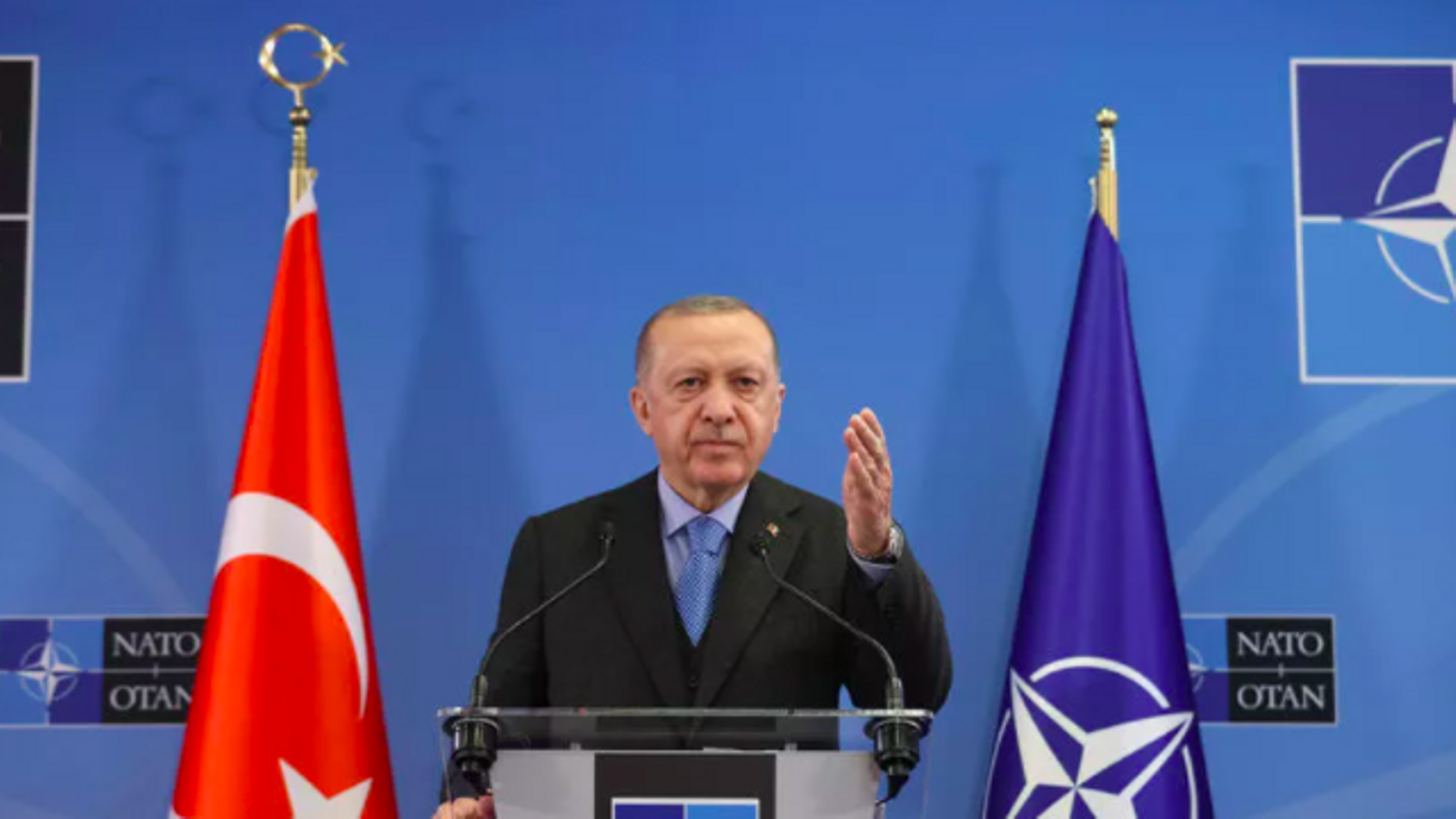
Currently, we have an example of this strategy in the Pentagon's promotion of an "Islamic NATO" (let's call it "OTIS"), a military alliance that is being discussed these days in the Middle Eastern media. The hard core of OTIS would be formed by Egypt, Saudi Arabia, and Turkey, a group to which Indonesia, Pakistan, and the Arab countries of the Persian Gulf would join, and this alliance would be broader than the idea of an Arab NATO that emerged years ago in the context of the fight against terrorism. OTIS would fight against Iran and its area of operations would include the Persian Gulf, the Red Sea, and the Mediterranean Sea. But what are the real reasons for this religious and military alliance?
To begin with, the US is promoting it to guarantee its dominion and that of capitalism in general over the Middle East, at a time when China is expanding its influence without firing a single shot through the soft power of trade, partly thanks to the New Silk Road. Furthermore, this alliance would accelerate the construction of pipelines to bring oil from the Middle East to the Mediterranean, so that Europe could do without Russian hydrocarbons. Because the US is aware that, by producing mostly shale oil, its condition as a net exporter is not forever. OTIS would also allow for a reduction in the American military presence in the region: the recent withdrawal of part of the Pentagon's troops from Syria and Iraq and of various missile and defense systems from Jordan, Kuwait, and Bahrain would fit into this logic.
Furthermore, with the creation of this alliance, the US could increase the sale of armaments and intelligence services: in the war business against Iran, the Pentagon has already signed the sale of arms to Israel, Qatar, Kuwait, and the United Arab Emirates for about 8.6 billion dollars. OTIS would also host weakened and more divided Arab countries than ever (Saudi Arabia and the Emirates have been confronting Yemen, Libya, and Syria) under one umbrella and would help them regain an image of strength in front of investors who have seen them as so vulnerable to Iran's attacks. On the other hand, and given NATO partners' refusal to collaborate in attacks against Iran, with OTIS, Washington would create a mini-NATO that would not dare to confront it. And it would also oblige a series of Islamic countries to abandon the strategy of passivity and observation in front of the ayatollah regime, which, by attacking them with dozens of missiles, has actually done Israel's dirty work in its covert fight against Arab peoples.
OTIS would also come to replace the Abraham Accords, which proposed the normalization of relations with Israel, unacceptable to Arab public opinion for having its hands stained with Palestinian blood. And it would complement another recent military pact in the region: the trilateral alliance between Israel, Greece, and Cyprus. Finally, with the Islamic military alliance, the US could also curb Israel's uncontrolled ambitions to divide the Middle East. Because, despite the privileged relationship that unites both countries, the American administration wants to prevent Israel from becoming an incontestable dominator of the region that could reduce its room for maneuver. An "Islamic NATO" would be, in this sense, a balancing mechanism.
However, the OTIS project also faces difficulties. To begin with, it is highly doubtful that the members of this nascent alliance will prioritize the interests of the US when they clash with those of their ruling elites. Furthermore, the armies of its member states have been trained to defend the heads of their states, not their countries, let alone their neighbors. On the other hand, religion would not be a sufficient bond to keep the alliance together, and the combined armies would fall apart upon encountering the modern world. It is also likely that quarrels between Saudi Arabia, Turkey, and Egypt for leadership of the group will disintegrate it before it even starts: the Arab League already failed in its objective of achieving a joint army. Let us remember that countries like Qatar or Kuwait consider Israel to be the main threat to their security, while the Emirates, Saudi Arabia, or Egypt point to Iran. We are talking about an area where the lack of seriousness of the rulers drags countries into agreed-upon and unfulfilled pacts; after all, they were going to create not an alliance but a "United Arab Republic," unifying three states and led by Gamal Abdel Nasser, which we already know how it ended. It is also obvious that Israel will do everything possible to abort such an alliance and, if it does not succeed, will conspire for it to disappear just as it is born.
However, the project is being talked about more and more. Do the leaders of OTIS not realize that this initiative will deepen the Shiite-Sunni division, not only in the region but even within the states themselves, undermining their stability? And at the same time, how do they intend to confront Iran? By provoking chaos in a country of 90 million inhabitants? Have they thought about the resulting refugee crisis?
The situation in the Middle East is extremely complex, with multiple entrenched conflicts, controlled by men of Christian, Jewish, and Islamic far-right extremism. Why did we create the UN in the first place?
