Page 60, summer 'making of'

-
CAT -
CAST
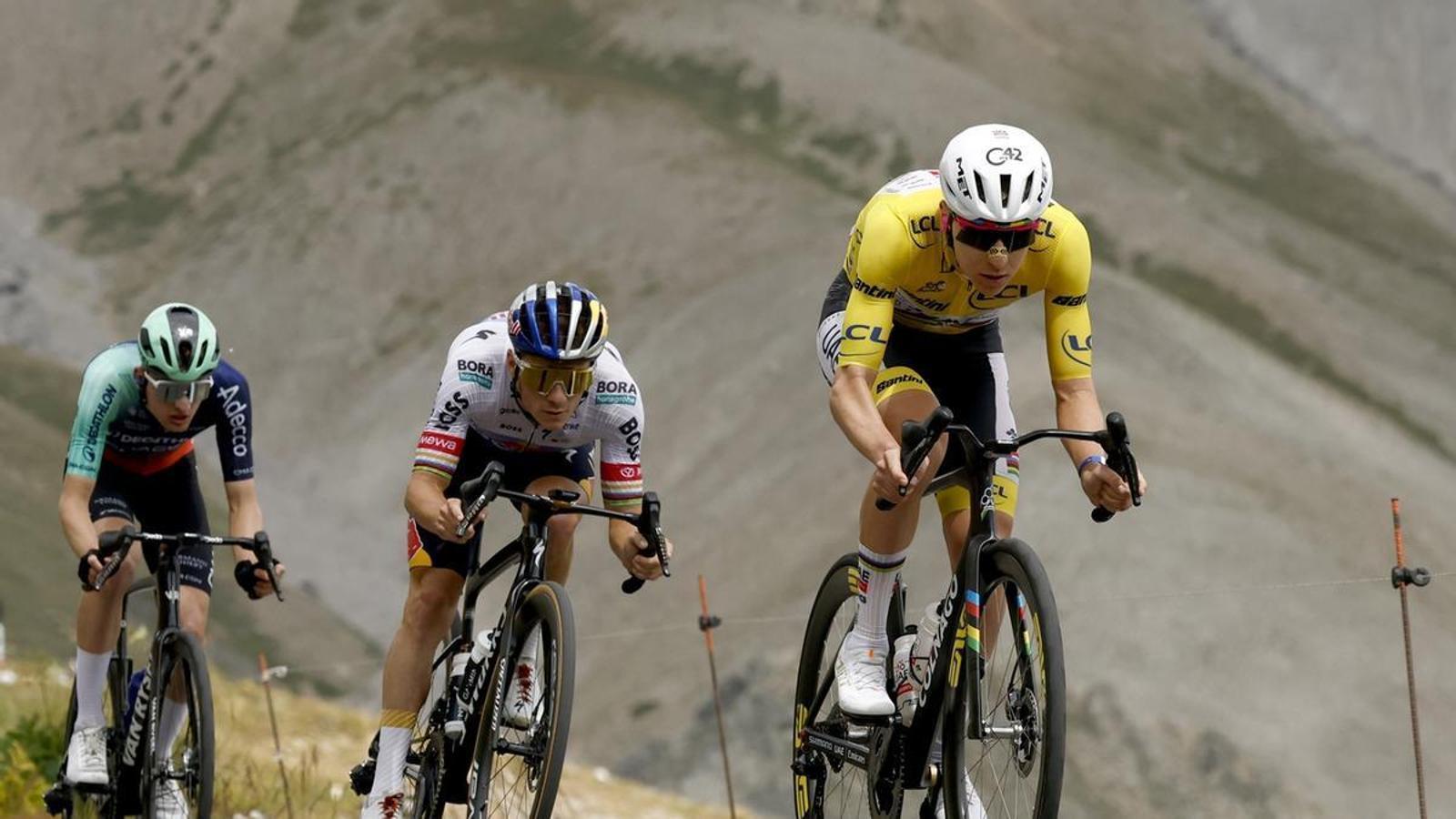
With this chronicle, the Reader's Advocate section reaches sixty pages, which, on a fortnightly basis, is two years and a bit. Sixty pages of newspaper, in my format, are about 420,000 characters in round numbers, the same as a 250-page book approximately. A good time to do a summer chronicle of making of my work, with the understanding that next month I will present the data from the balance of the last year to the newspaper's editorial board and will make them public.Errors are naturally a constant in the complaints I receive, most of them related to linguistic issues, which show the importance of language for Catalan press readers, who love the language and know what struggles it has had to go through and still goes through. However, as error alerts are often sporadic and numerous, I cannot address them all. Concrete errors, however, when placed side by side, add up, and even more so if we add to them those that readers already correct with IT tools and digital comments at the end of articles. The conclusion is that many errors are made, and that, as I have suggested at other times, they would require a final correction or post-correction of each journalistic piece before publication, which in the past times of linotypes was done by the “plate editor”, referring to the reading of the composition plates, one minute before entering the printing press and avoiding that the blunders were stamped for posterity in the unappealable newspaper archives. I refer interested readers to the chronicle that, at the end of last year, I titled “Sisyphus and the enigma of the plate editor”, where thanks to various readers and subscribers I reviewed a series of errors, and I had the experience and academia of Professor Gabriel Jaraba.I'll give some examples of recent errors that readers have pointed out to me. Robert Serra ironically asks me if in "summer and holiday times... there is less text correction?", and sends me a screenshot of page 23 of July 25, where we state: "The efficacy of antiviral transplants makes possible a transplant between two infected people". No less ironically, Andreu Suriol writes to me on July 26, after one of the most mythical stages of the Tour: "Good morning, my lord (and all the readers who annoy me). Could you agree on naming orographic accidents in a single way? It seems that each sports reporter climbs the mountain slopes of the Tour on a bicycle to their liking. I have seen Alpe d'Huez written almost always with this spelling, but in the same brief headline one could read Aup d'Huès and, oh horror, Aup d'Uès. Shall we clarify?" Dear Mr. Suriol, in the trust that we already share, readers never annoy me, quite the contrary, I thank them for their ideas, criticisms and suggestions. And yes, we will clarify: on the paper page, which is what will go down in history, the toponym that appears is the classic French one, Alpe d'Huez, while the one referred to is the Occitan one in two – not "two" – variants.I also note that Josep Bruguera has sent me several phone messages about his critical perception of the newspaper, and in one of them he points out an error not as a farmhouse but as a castle, also without sparing healthy irony: on page 6 of the Tourism dossier, also from July 26, in a photo caption, Lloret Castle is identified as if it were Tossa's and “not everywhere on the Costa Brava where there is a castle is Tossa. We do not deserve to make these mistakes.” All this, in a couple of days that yes, are in the heart of summer, the staff are on vacation and the immeasurable heat of climate change drags lethargy.The reading of the newspaper by the Reader's Advocate is necessarily meticulous, but a point is reached where the words themselves struggle to save themselves, in the style of Espriu, and it is as if they themselves denounced the embezzlement and highlighted them in the red color of traffic lights. We also see, in yellow, words or phrases that are not errors but could be improved, for example, the reiteration of certain discursive connectors, especially "in fact" and "as for"; I swear like Scarlett O'Hara on the stairs of Tara that I have counted four "in fact" in a single "M" size article, not very long. Catalan proofreaders do enough to correct mistakes, that they should also worry about reaching here, the issues where the journalist should resolve before submitting the piece. Journalism is a literary genre, but I fear that, between the rush of immediacy and the digitalization that gave birth to it – the news spreads in real time –, the beauty of the language that proclaims the art of the word will step aside.“A step aside” is a very repeated expression, and there are others that also contribute to settling the balance of aesthetics in bankruptcy proceedings negatively. Stretching semantics hyperbolically, we break seams at will, we fire more torpedoes at the waterline than German submarines in World War II, if metaphorical tsunamis were real, the world would have ended long ago according to the Apocalypse, we open more melons than old roadside vendors, we tear up cards when there are no longer any paper ones and it is materially impossible, there are no medium measures but rather smaller ones, we highlight iconic images, the same meaning according to etymologies from Latin and Greek, we value more than on Wall Street... And journalism, which is the main producer of language, reflects like the cyclopean thermometer of Portal de l’Àngel the high temperature of its impoverishment. Having enjoyed Nolan's cinematic Odyssey has made me reread Carles Riba's Catalan verse translation (1948) and, alongside the exultation of verifying the richness of our language, the sadness for the vocabulary and syntax we are losing floated. The philologist Jordi Badia, in a tweet, mentioned expressions that his 18-year-old son, upon reading it, kept asking him what they meant: “cisellat”, “engrunar”, “encamellar-se”, “tudar”, “a cremadent”...The critical eye I have on my journalistic grievance memorial business does not deny the high definition of Nolan's IMAX camera and I emphasize, consequently, that in the total balance of what we publish, the margin of error is what all statistical morals admit. And thanks to the interactive contributions of subscribers and readers, we must temper them. In these 60 pages, I have given voice to 128 readers and, in this time, I have been able to personally attend to 203, although I have read the 407 messages I have received, by email or WhatsApp, as I have listened to the numerous phone calls. I thank them from here for their contributions that help us to constantly rethink the newspaper and each person's journalistic practice. By defending the readers, together we are defending ARA, because, in an increasingly interactive dynamic, with the unidirectionality of communication that preceded us democratically broken, it is clear that what is written contributes, but also contributes, and in what a way, those who read and convey their critical sense to us.The Reader's Advocate takes note of doubts, suggestions, criticisms, and complaints about the newspaper's content in its digital and paper editions, and ensures that the treatment of information is in accordance with deontological codes.To contact the Reader's Advocate you can send an email to eldefensor@ara.cat or record a message of no more than one minute to the WhatsApp number 653784787. In all cases, identification with name, surnames, and DNI number is required.
