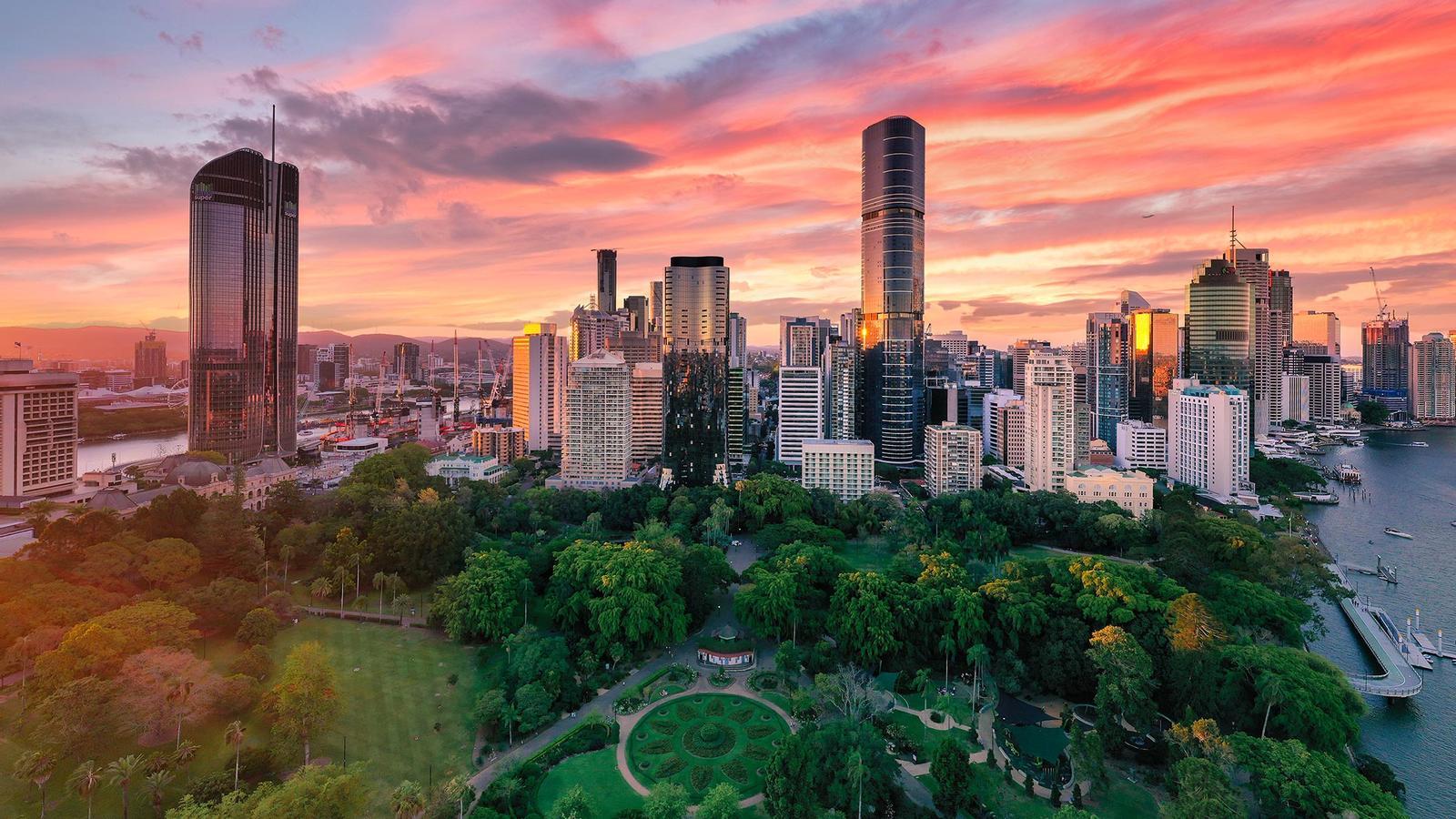
"When in Europe they embrace the darkness, in Brisbane we embrace the dawn"
A study points out that in some Australian cities the morning economy rivals that of the evenings
-
CAT -
CAST
SydneyDuring the week Anna Alstersjö arrives at the gym between a quarter past and three quarters past five in the morning. It's not crowded, but it's not completely empty either. She assures that the early bird catches the worm, but admits that sport has led her to get up early to make the most of the day. “It bothers me when my coffee isn’t open at 6:30 AM on a Sunday,” laments this Australian-Swedish resident of Brisbane.This city marked by a river, with an average temperature between 25 and 15 degrees and named after a colonial administrator, has one of Australia's earliest economies, along with Perth, on the west coast. According to a study led by Dr. Anna Edwards, a specialist in urban planning from the University of Melbourne and founder of Ingenium Research, in these two urban centers, one out of every three hospitality establishments is open before 7 AM. In Melbourne or Sydney, only 16% and 19%, respectively."The sun rises early in Brisbane – assures Edwards, who recently presented the data from his study to a city committee–. I was there, and when I opened the curtains at 4 in the morning and looked at the river, there were people running". According to his research, between 5 am and 11 am Brisbane generates spending volumes similar to those between 7 pm and midnight.But it is not an exception. In Adelaide in 2021, two friends started Salty Sips, a free beach yoga session that includes a dip in the ocean and brings together hundreds of people every Wednesday. At 6:30 a.m. yoga class and at 7 a.m., a dip. In Melbourne and Sydney, early mornings are filled with people running along the coast in a running club –with their posts on the Strava app –, swimming pools are filled with fast and slow lane swimmers, 24-hour gyms have proliferated, the Saint Judes cafe hosts members of a retired cyclists' club, and even a grandmother with her mobile phone at full blast does tai chi in a nearby alley.On the other hand, in cities like Paris, only 3% of hotels open before 7 a.m., and after 7 a.m. 14%, while in Amsterdam only 7% open before 8 a.m., a figure that in London rises to 24%, as reported by the study carried out in more than 7,800 establishments in 20 cities worldwide. While in Brisbane or Perth one out of every three establishments has raised the shutters before 7 a.m., in Barcelona's Raval this happens from 9 a.m. onwards.Among the possible causes are the temperate climate of the Australian coast in a country where almost 90% of the population lives less than 50 kilometers from the sea, the interest in outdoor physical activity in parks and coastal areas or beaches, while there are different schedules than those in Catalonia: in Sydney it is complicated to find a table after 9 in the evening because the kitchen is often closed. On the other hand, coffee culture is part of the country's personality to the point that the Australian football team has taken a person who is dedicated to preparing them coffee during the World Cup."Younger generations are more interested in health and a healthy lifestyle, they drink less than before," says Edwards. Trends that the Australian Bureau of Statistics has managed to collect. Young people between 19 and 24 years old who claim to drink daily have decreased for the first time since 2010, while, according to data collected through smartwatches, the practice of intense sports among the population is increasing.Edwards noticed the morning economy after consultant Ivan Power published a text on LinkedIn stating that “tea and coffee lubricate social life as much as beer, wine or spirits”. Power's idea that now even some business meetings (or first dates) happen over breakfast has been best synthesized by the mayor of Brisbane, Adrian Schrinner, in the presentation of the annual budgets: “While in Europe they embrace the night, in Brisbane we embrace the dawn”.Although the morning economy provides more “flexibility” for participating in social activities, Edwards recalls that cities already have a 24-hour economy. In fact, up to four million Australians work shifts between six in the evening and six in the morning, and as the researcher acknowledges, the challenge is to “understand what already exists and then make adjustments so that things work better for everyone who uses the city at different times of the day.”But tomorrow a majority of Australians will wake up at 6.41 a.m. on average, a quarter to eight if it's the weekend. “Most of my circle doesn't wake up as early as I do. Thays and LJ [her fiancé] do, which helps – assures Anna Alstersjö from Brisbane–. It also helps that the city is prepared, with public transport that starts early and cafes open”.
