Barcelona reorients the electric recharging model
The bet on the first public ultra-fast hub in the city reopens the debate on how to accelerate urban recharging and guarantee access to the electric vehicle for residents without a private garage
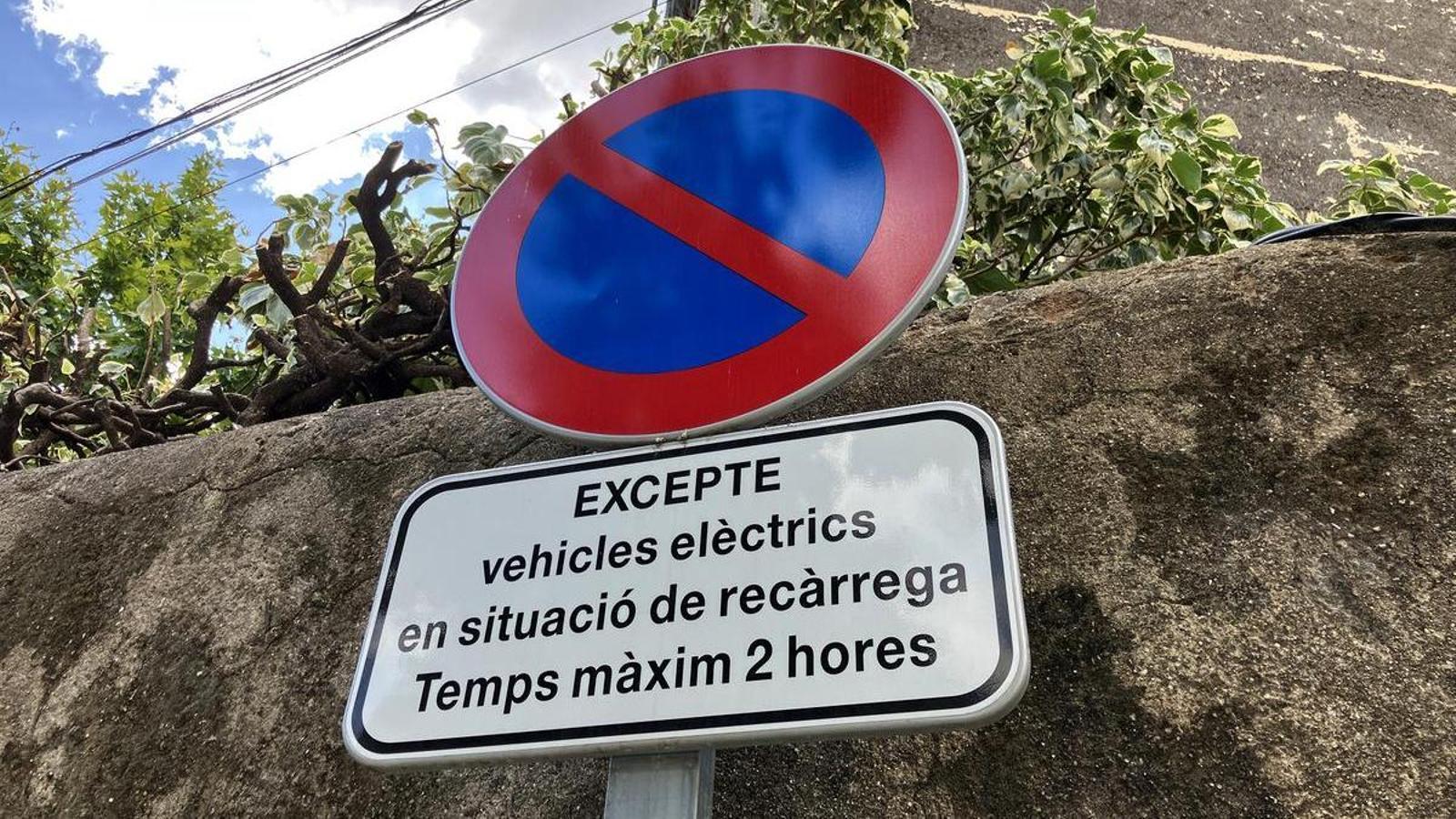
-
CAT -
CAST
The deployment of electric mobility in Barcelona has entered a second phase in which the number of charging points is no longer the only indicator of progress. In Barcelona, the transition has reached a maturity that makes it necessary to rethink the architecture of this public service.
In a first stage of the municipal model, the Endolla Barcelona strategy focused on prioritizing charging in underground parking lots, and this decision responded to a double objective: to free up public space on the sidewalks and to take advantage of night or work parking hours to charge batteries at slow and medium power levels.
However, the expansion of the vehicle fleet, the emergence of new batteries with greater capacity, and the needs of transient and professional drivers have made it clear that the underground model, despite being indispensable, is no longer sufficient to meet all the demand.
This reality has driven a strategic shift towards the surface. The city is preparing to launch its first public high-speed charging station, a hub of ultra-fast charging conceived under the stop&go concept: stopping, recovering hundreds of kilometers of range in just 15 minutes and resuming the journey. This paradigm shift, however, opens up a debate of urban and social scope. How should fast street stations coexist with domestic and neighborhood charging? How can we avoid the lack of a private garage penalizing families who want to make the move towards zero-emission cars?
From parking charge to the need for the 'stop&go' model
According to data from the electric mobility evolution map of the Catalan Institute of Energy (Icaen), Catalonia has 1,756 public charging stations. However, the picture changes when the power of these connectors is analyzed. The vast majority of public points in operation remain concentrated in slow or semi-rapid alternating current power (up to 22 kW), while rapid charging (more than 50 kW) and ultra-rapid charging (more than 150 kW or 350 kW) remain clearly in the minority and highly localized on highway axes such as La Jonquera (350 kW), Llinars del Vallès (150 kW), and specific points in Tarragona and Barcelona (50–120 kW).
This composition of the network has created the risk of having a public infrastructure designed primarily for parking and charging for hours, when the driver who does not have a private garage or who is on a metropolitan trip needs a model equivalent to that of the traditional gas station: arrive, recharge in a few minutes and continue the route.
This imbalance is what justifies the strategic shift of urban operators like BSM, which, after consolidating more than 1,000 underground points in municipal parking facilities, are now orienting their growth towards the surface. As detailed by Francesc Delgado, Director of New Mobility at BSM, the Endolla Barcelona network combines points on public roads and in BSM parking facilities to meet different needs. "Surface points facilitate charging linked to daily trips, while those located in BSM parking facilities offer an especially relevant alternative for people who do not have a private garage."
To reduce waiting times by anticipating the construction of large facilities, BSM is executing a plan to triple the power of conventional surface chargers, going from 50 kW to 160 kW, a measure that halves the time required to recover daily range. This strategy responds precisely to the request made by the users' association AUVE. Its delegate, Albert Segarra, considers that the power gap requires differential responses: "We cannot treat all points the same way. In a commercial or office hub where the car stays for two hours, it makes sense to install high power. But in residential areas where the car spends the whole night parked, what is needed is an accessible and affordable proximity network."
High speed for traffic and the neighborhood
The most advanced symbol of this new approach is the hub for public ultra-fast charging that BSM will build next to the Passeig de la Vall d'Hebron and exit 4 of the Ronda de Dalt. With an investment of 2,082,000 euros, the facility will occupy nearly 900 square meters and will have 12 simultaneous spots for passenger cars and last-mile delivery vehicles, with the capacity to serve more than 300 vehicles per day.
The installation will have a power output of up to 480 kW (expandable up to 600 kW) and must allow for recovering 400 kilometers of range in 15 minutes. Furthermore, it will operate with 100% renewable energy via a photovoltaic canopy and storage batteries that reduce pressure on the electrical grid.
Along these lines, from the AUVE they point out that this project "is an interesting evolution of the model", a step they value positively "because a city needs different options depending on the time available, the type of journey, and the charging possibilities of each driver".
Regarding the choice of location, Delgado highlights the dual function of this site: "Its proximity to the Ronda de Dalt allows it to serve people entering or leaving Barcelona who need to regain autonomy quickly. However, it is not conceived as an isolated infrastructure for through-traffic, but as a facility integrated into the public network and also accessible to residents of the surrounding neighborhoods".
Segarra makes a positive reading of the choice of this location: "The ring roads are the main way for channeling traffic entering and leaving Barcelona. Placing the hub at exit 4 allows for a brief stop whether you are about to set off on a trip or have just entered the city".
Regarding whether the 12 spaces will be sufficient, the AUVE representative qualifies it with pragmatism: "With the current volume of the electric vehicle fleet, 12 spaces is a sufficient and appropriate amount to begin this stage. I understand that this project is sized to grow, considering the announced investment." The fact is that this first hub will serve as a pilot test for the future expansion of high-speed charging in Barcelona, as confirmed by Delgado. "The Vall d'Hebron experience will serve to guide the next phases of the deployment of this type of infrastructure".
In view of this horizon, the AUVE is already pointing out what could be the next strategic priority. A logical step would be to install “a hub similar to the Ronda Litoral or the surroundings of the port of Barcelona, due to the concentration of heavy vehicles and goods distribution”, which makes it essential to have high-power infrastructure adapted to their needs. “The selection of locations should be based on accessibility, projected demand, connection to the road network, and the availability of alternatives when incidents occur”.

Faced with this deployment, Segarra clarifies that the quality of a hub must be measured by its real utility and not just by the installed power. For the AUVE, equipment with these characteristics should meet minimum requirements: visible prices before charging, direct payment by card without the obligation to download specific applications, real-time updated information on the availability of connectors and nearby alternatives in case of an incident, as well as measurable maintenance and safe, well-signposted access 24 hours a day.
When electric charging hits the housing barrier
Beyond large surface stations, daily electric mobility encounters a structural obstacle on the agenda: access to housing and consequently, the lack of private parking.
Data collected by the AUVE indicates that between 60% and 70% of vehicles in Barcelona are parked on public streets. This fact is decisive because "public charging is not a complementary service for everyone: for many people without a garage, it is the condition that makes it possible to own an electric vehicle".
In a dense city with a stock of old buildings and few community garages, and in the context of the housing crisis, the impossibility of having a home charger can become the main obstacle to electrification. In Barcelona, this barrier is "closely linked to access to housing. When buying or renting an apartment is already difficult, having a parking space where a charger can be installed can also be out of reach for many households. That is why the problem is not only the price of the electric vehicle: it is also the real possibility of charging it comfortably and affordably".
This residential gap has a direct economic impact. According to data from the AUVE, charging an electric vehicle at home at night allows you to travel 100 kilometers for about 1.98 euros (with a domestic rate of 0.11 €/kWh). On the other hand, if a resident does not have a garage and depends exclusively on fast public charging at market price (between 0.40 € and 0.50 €/kWh), the cost for every 100 km rises to 7.20 or 9.00 euros. The entity highlights that this economic barrier, where public charging can be "considerably more expensive than charging at home", ends up reducing "the savings in use that often make the electric vehicle attractive". Therefore, they argue that expanding the network is necessary, but it must be accompanied "by transparent and competitive rates, proximity points where the vehicle can charge while parked and fast hubs for occasional needs".
"The 'no-garage' can turn into a 'no' to the electric car, not because it is impossible to own one, but because the experience ends up being less convenient and significantly more expensive," warns Albert Segarra regarding this price difference. For the AUVE, the public network must ensure that access to clean mobility does not depend on a family's purchasing power or type of housing.
While from the municipal management side Delgado maintains that the combination of BSM parking lots and surface points offers options for all residential profiles, from the user's perspective the AUVE insists that fast speeds do not solve the problem of the neighbor who needs to leave the car parked all night near home. As an alternative, Segarra proposes studying solutions applied in European cities like Amsterdam and London, where hundreds of slow, low-power (3.6 kW) chargers integrated into streetlights and sidewalks have been installed. "With the energy consumed by a single 22 kW fast charger, we could power 5 or 6 slow 3.6 kW points for overnight charging. With this power, six neighbors would be allowed to charge their vehicles overnight," explains Segarra.
In parallel, regarding drivers who rent a space in a community garage, the association asks to simplify the procedures and change the mentality of the owners, noting that "installing a charging point revalues the parking space, since when the tenant leaves the electrical installation remains and the space increases its market value".
The territorial fracture: the macrocephalic effect of the AMB and the "refill deserts"
The Icaen map shows a second divide: the territorial fracture between the metropolitan region and the rest of Catalonia. The data demonstrate an enormous concentration of infrastructure in the Barcelona metropolitan area and along the coastal motorway corridors (AP-7, C-32), while inland counties of Ponent, the Terres de l'Ebre, and mountain areas show token coverage.
While in the AMB the debate is about public space (whether the points should be underground in parking lots or on the surface so as not to disturb pedestrians), outside the metropolitan area the problem is the survival of mobility. Many inland regions are facing true "charging deserts", a situation that keeps the electric vehicle perceived as an eminently urban and metropolitan phenomenon.
To this inequality of access is added the gap in the quality of maintenance. While in Barcelona a very high level of operability is maintained, with only 0.3% of technical incidents inoperative, in many municipalities in the rest of the territory, breakdowns and cable theft remain unanswered for months.
Francesc Delgado explains that in the case of Barcelona they have continuous monitoring protocols and real-time telemetry that allow for the immediate detection of anomalies, as well as maintenance contracts that provide for financial penalties for contractors in the event of non-compliance with the required levels. A rigorous management that is recognized by Albert Segarra himself, who states that "in Barcelona city the availability is very high and the service attends to and resolves incidents very quickly". However, the AUVE spokesperson draws attention to the contrast with other parts of Catalonia "such as Manresa or Tarragona, where there are public chargers that have had their cables cut for months". "Many town councils rushed to get their photo taken and request European funds, but afterwards they have forgotten about it. And the most important part of a charging point is not that it is there, but that it works", he adds.
To avoid this degradation, the AUVE demands that all public administrations include rigorous service level clauses in maintenance contracts, which set a maximum period of five working days to repair breakdowns or replace stolen cables, as well as the installation of video surveillance cameras to deter vandalism.
From a pioneer profile to the practical driver looking for real savings
Going into the detail of the urban distribution by neighborhoods, BSM maintains that its growth plan does not respond solely to the cost of the electrical connection, but to criteria of capillarity. "The planning combines territorial coverage, the urban characteristics of each environment, the existing and potential demand, the availability of off-street parking, and the technical feasibility of each location," explains Delgado, who emphasizes that the Endolla network is present in all twelve districts of the city. An analysis with which Segarra agrees, who rules out that there is any intentional grievance in Barcelona. "It makes sense that the Eixample or the Diagonal concentrate more public power because they are hubs of great commercial and professional activity, where vehicles stop for two hours. Why should I place a point in a neighborhood where there is no electric mobility? In the city, the distribution is quite equitable and generous."
Planning the network based on the use and demand of each neighborhood is a criterion that directly connects with the mutation that the driver's profile itself has experienced. If the infrastructure is no longer designed as a testimonial element but for daily life, it is because the nature of the demand has changed. As observed by the AUVE, "the electric vehicle is increasingly valued as a daily, comfortable, and efficient option, and not just as an innovative technology or an environmental decision".
Thus, if a decade ago the typical user fit the profile of a pioneer or activist willing to accept comfort trade-offs, today a strictly practical driver predominates, driven by the economic calculation of daily savings. And it is precisely this pragmatic search for efficiency that ends up triggering the phenomenon of "plug-in hybrid regret". When this new user profile analyzes the real cost per kilometer, they discover that the hybrid vehicle maintains the expense of traditional fuel. An evidence that, according to the AUVE, means that "many buyers who opted for a plug-in hybrid as an intermediate step end up regretting it when they verify the enormous difference in cost between the kW and gasoline, and regret not having switched directly to 100% electric".
The transition towards zero-emission mobility in Catalonia no longer depends on convincing citizens of the virtues of technology but rather on deploying a mature, coherent, and territorially balanced infrastructure. The key for the coming years could involve ensuring that large surface charging stations, the long-range underground network, and proximity points in neighborhoods and regions function as an interconnected whole, guaranteeing that the electric car is a real and affordable option for everyone, whether or not they have a garage at home.
