Montserrat Junyent: "Let's change the rules of the game like someone playing Ludo"
President of the College of Real Estate Property Agents
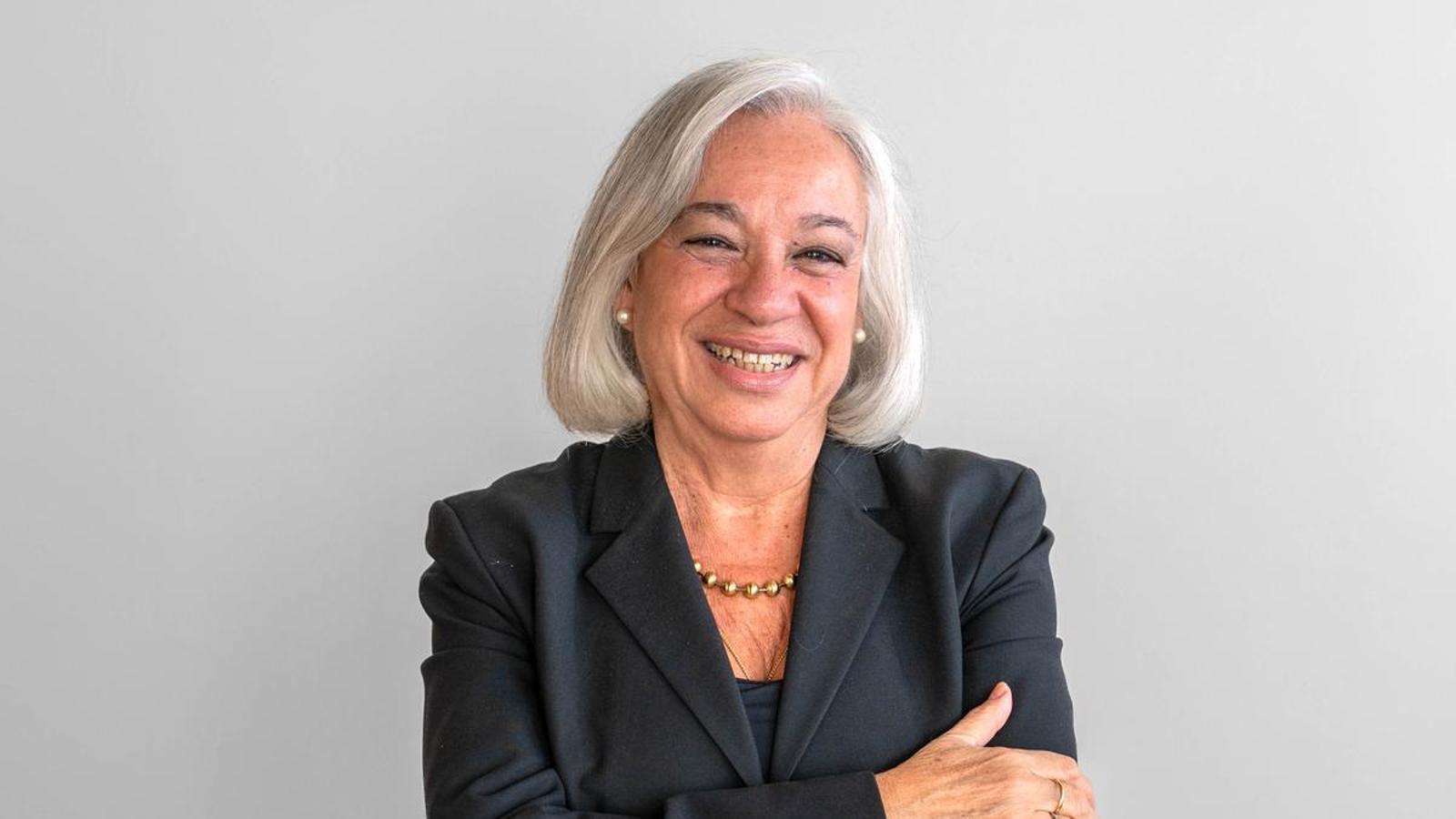
Montserrat Junyent is the president of the Association of Real Estate Agents (COAPI) of Barcelona and the Association of Real Estate Agents of Catalonia (AIC). She speaks to ARA on the same day the country is mobilizing in a general strike over the housing crisis.
How do they view the strike?
— It is a rare situation, I do not know exactly against whom it is promoted. The government? The companies? It is difficult for me to detach it from the electoral context.
Do you feel addressed by the mobilization?
— No, what we defend is private property, not the landlord. We have asked actively and passively to talk, to dialogue, to reach a consensus. And nobody takes us into account proactively; we can no longer participate in the drafting of legislative proposals.
And what should be done?
— The housing crisis will not be solved overnight, the strike will not make us have more housing tomorrow. And in this case, I do not even know who to negotiate with. Legislation has been piecemeal, which is generating legal uncertainty because we keep changing the rules of the game like someone playing Parcheesi. And that cannot be. And what we are seeing is that the measures that have been implemented to solve the problem do not solve it, they aggravate it. The first step would be to stop and design medium and long-term policies. And progress should be made on the law for the streamlining of administrative procedures.
Streamline procedures to build more?
— Yes, to build more and speed up deadlines. The creation of homes is far above the supply we have.
And don't the decree's measures work to address the urgency? There are tax incentives, the administration's obligation to take charge of payment in cases of vulnerable tenants...
— This administration subrogation sounds very good, but beyond it being an incentive not to pay, with what money will it be done? This is not in the decree. We know, from experience with other grants, that the money arrives however it arrives. At this moment, trust in the administration has gone bankrupt.
What do the owners convey to you? What worries them?
— The owner wants security: to have the rent paid, for the property to be taken care of, and to recover it when the contract ends. And if they encounter a vulnerable person, they want to know that someone will answer for that person. When the owner finds themselves in this insecure situation because they do not know whether or not they will be able to recover that housing at the end of the contract, in many cases they decide to put it up for sale. Now some decrees have been approved without being coordinated even with the majority, and this paralyzes any management. They are now waiting to see what will happen on November 29th.
And doesn't the tenant also have the right to ask for security? For example, with a cap that guarantees that the price will not increase for X amount of time?
— It is proven in many studies that it does not work. It is obvious that we must intervene in some way to unlock this. And it is evident that vulnerable groups must be protected, and above all, remove ideological pressure from housing. Because we are turning it into an element of civic confrontation. The confrontation between landlord and tenant. And this cannot be. We are using terminology that is clearly influencing the narrative of good guys and bad guys. And that is what does not allow for a calm and respectful dialogue.
