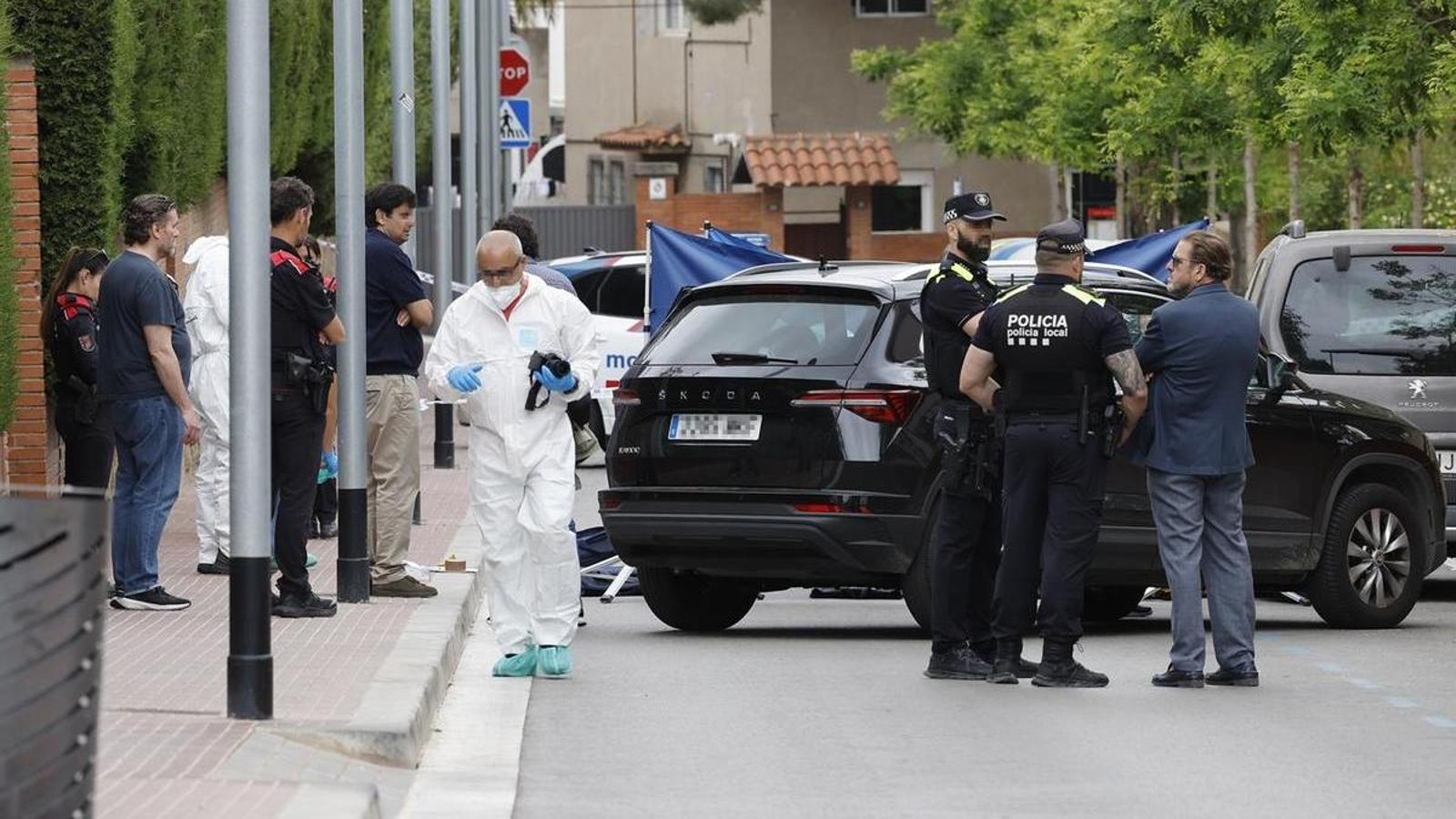

Saturday, on Telenotícies vespre, Joan Reventós reported very briefly on the murder of a woman in Esplugues that same morning. He explained that the Mossos had already arrested the aggressor who had stabbed her, the call to 112, and that the emergency services had not been able to save the woman. To close the news, he reported: “The alleged perpetrator has been arrested and the Mossos confirm that the aggressor and victim had no romantic relationship. The case is under seal of investigation.” Given the seriousness of the events, the absence of images and further context was strange, especially given TV3's proximity to the crime scene. It contrasted with the approach of Telecinco, Antena3, and La Sexta, which sent a reporter to the street where the murder had occurred, explained some circumstances of the assault, and showed images of the emergency services' actions from a safe distance. Telecinco, moreover, had a video recorded on a mobile phone showing the aggressor's confrontation with the street's residents shortly before the murder. Informativos Telecinco committed the imprudence of not pixelating the man's face in a photograph where he was seen with a knife in his hand, especially since the nature of the assault was not yet known.
The responsibility of journalistic caution, the desire to avoid alarmism, and respect for the secrecy of investigations are understandable. But turning such a violent murder of a woman into a mere passing mention on Telenotícies is strange. Compared to the other channels, TV3's journalistic apathy was striking. They treated it as a formality, as pure proceduralism, indifferent to the gravity of the events. The next day, Sunday, they briefly recalled the arrest of the aggressor and the condemnation by the Esplugues City Council. However, on Monday, on Telenotícies migdia, the news suddenly gained prominence and became one of the opening headlines: “The Ministry of Interior rules out a jihadist motive in the stabbing of a woman in Esplugues.” Suddenly, two days later, it was a highlighted news item and there was talk of a terrorist hypothesis that they had never mentioned. Whether due to a lack of resources, a lack of spirit, excessive caution, or because weekends are run at half-speed or by inertia, TV3 has shown little judgment, little professionalism, or too much fear of explaining it. But tiptoeing around it has had the opposite effect: raising more suspicions and doubts about the events.
Sunday, Informativos Telecinco, already included the police unions on duty warning of growing violence, recidivism and insecurity. And on Antena3 Noticias, a reporter from Esplugues recalled the four knife attacks "that paint a picture of maximum tension on a black weekend in Barcelona". They say that journalism, you either do it or others do it to you. And sensationalism, often, is at the service of ideological interests. Meanwhile, on TV3, they are perhaps waiting for Crims to explain it all to us later.
