"Screens, sugar and 'scroll': this is how they hack our brains with superstimuli"
We interview the biomedicine expert Nicklas Brendborg, author of the book 'Overstimulated'
-
CAT -
CAST
BarcelonaWhy is it so hard for us to stop eating processed foods, scrolling on our phones, or binge-watching series all night? Around the world, there's an epidemic of problems related to mental health and addiction, especially among young people, and they don't seem to be related. But nothing could be further from the truth: it all stems from superstimuli.
Human beings are instinctively drawn to superstimuli, which are exaggerated and unnatural versions of things that give us great pleasure, such as food, sex, or social recognition. This is why we become obsessed with endless scrolling, eat ultra-processed sweets, and spend our nights hooked on streaming platforms. The good news is that this isn't because we are weak, but rather because many powerful companies spend millions of euros to manipulate our biology so that we consume more.
At least, that's the premise of the book
Superstimulados (Destino, 2025), written by biomedical expert Nicklas Brendborg, in which he analyzes from a biochemical perspective the main tactics companies use to create stimuli that generate immediate pleasure and drag us into addiction.
One of the great exponents of this entire setup is our human passion for sugar. For millennia, we sought sugar by eating fruit. But nothing natural can compete with a candy made with the same flavor: "If instead of a strawberry you make a candy, and with technology you make the strawberry flavor much sweeter, it's normal that you end up preferring the processed product," explains Brendborg. And the same applies to elements like fat and salt, to which artificial additives are added to enhance their flavor and trick the brain into needing to consume them more and more.
Infinite options
In the essay, Brendborg also talks about sexual superstimuli, which are found on thousands of pornographic websites and create addiction in many of their followers, especially heterosexual men. In these videos, not only are the sexual attributes of the actors exaggerated, but also a wide range of women are presented, which makes them stay on the platform for much longer. “There comes a point when real-world women cannot compete with these superstimuli, and many of these men feel less desire for their partners,” laments the expert.
This fact is also related to the increasing difficulty in pairing up and establishing a committed relationship with other people. “Dating apps show us thousands of people as potential partners. But, ironically, it becomes harder for us to choose an option the more variety we have, and we feel much less satisfied with our choice knowing that there are so many other possibilities behind it,” explains Brendborg. All this leads to increasingly unstable and uncommitted relationships, because “there can always be something better” out there.
Another superstimulus is the way we interact with screens. In this regard, the author analyzes the functioning of technology companies that make money by manipulating our social instincts, such as social networks or creators of audiovisual entertainment content. “They only aim for us to spend as much time as possible hooked on their product,” he states. In the case of streaming platforms, the worst enemy is sleep. Those who sleep do not consume.
And why are series so addictive? For example, how many of them revolve around a group of friends having adventures together, or a family constantly sharing situations? “These are experiences that, in theory, many of us could live, but the series eliminates everything that is not stimulating: awkward silences, rainy days, the routine where absolutely nothing happens,” qualifies Brendborg. What fiction does is identify what can be attractive and exaggerate it. Since it is a made-up story, the narratives are taken to the extreme: there is always something funny, there are always bizarre situations. “And so we reach the point where a real family or a normal group of friends cannot compete with this bombardment of superstimuli. It is simply impossible,” he indicates.
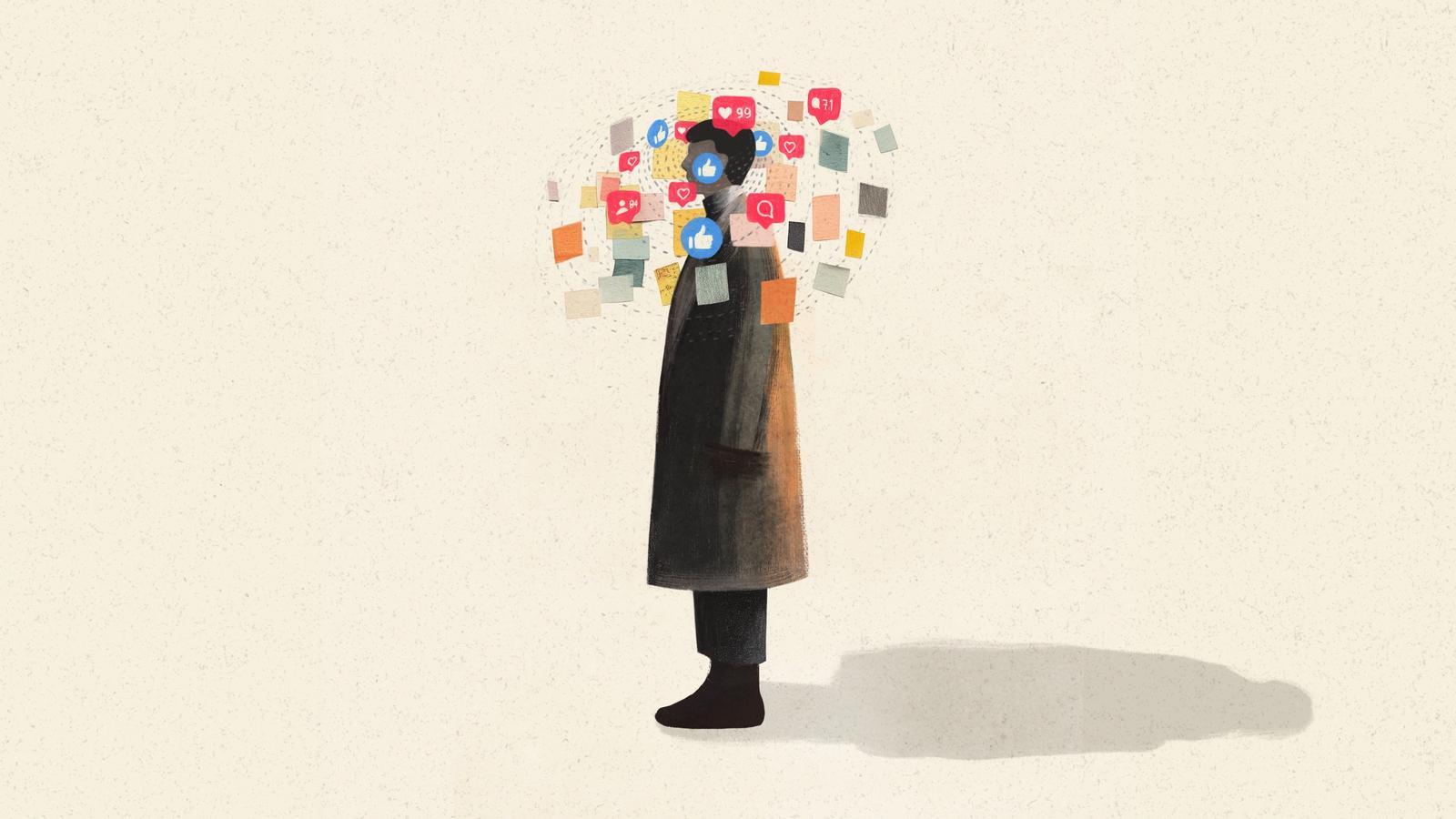
Regarding the obsessive mobile scrolling, in the end, it responds to a very human need: to feel part of a social life, to gain recognition, to follow what others are doing. The pattern is the same. “In real life we like someone to congratulate us or tell us they like our sweater; but on social networks we can receive fifty or a hundred 'Likes' in a matter of minutes,” continues Brendborg. The level of recognition is much higher than we would ever have face-to-face. It is, again, a superstimulus.
This leads to a paradox: there are people who have fewer friendships and spend less time socializing... but not because they have become less social, but because real life cannot compete with the digital version of socialization, as the mobile phone offers immediate and exaggerated gratification, and they end up taking refuge in this digital environment.
One of the consequences of living surrounded by superstimuli is the increase in anxiety, depression, and isolation. Fortunately, we always have time to counteract the problem. Brendborg uses the fight against tobacco companies as an example: “Tobacco is also a superstimulus and, over time, we established rules, restrictions, taxes,” he points out. But probably one of the most effective measures was to inform consumers about the harms of smoking and about the manipulative practices of the industry.
In the same way, today we need people to have enough information to be able to say to themselves: “I don't want to do this anymore, because I know it harms me,” he concludes.
