The impossible puzzle of extracurriculars: how many activities are too many?
Access and extracurricular hours in Catalonia vary according to socioeconomic class and totally opposite realities coexist
-
CAT -
CAST
We are at the door of a school in the Maresme region. A group of families waiting for the children to leave are talking about the difficulties of fitting in extracurricular schedules. "It's an impossible puzzle," complains Sara. "There are companies that schedule against each other; the music school coincides in hours with the soccer club," says Eduardo. In the conversation, there are also those who claim that there are extracurricular activities that require a minimum of three days a week, even for six-year-old children. "They do it because it's a business matter," they opine.
This is a typical topic of conversation at the end and beginning of the school year. On one hand, there are the difficulties in accessing extracurricular activities, whether due to logistical or economic issues, and, on the other, the desire of children and families to participate in them, who may believe that formal education is not enough. Or sometimes, it is simply a matter of family reconciliation. "School ends at half past four, and when you can't pick them up until later and you don't have a family member or someone else available, you have to sign them up for something," says Rita, another one of the mothers. Precisely, Cet10, a company that offers activities in some schools so that children do not have to be moved, states that the need for extracurricular activities for family reconciliation has increased.
Arnau Palou, a sociology professor at the University of Vic specializing in extracurricular activities, also talks about this topic. Palou says that he is beginning to see preschool children enrolled in more than one activity. As an expert, however, he points out that there is not enough data on the suitability during the early childhood stage, because "all studies speak of benefits from the age of six onwards". Going even further, the doctor of education and psychology and author of Educar en l’admiració (2013), Catherine L’Ecuyer, says that "at the early childhood stage, it makes no sense for children to go to extracurricular activities". In fact, she considers that, for their proper development, they need to consolidate secure attachment through human interaction with their primary caregiver.
On the other side of the scale, Maria Truñó, director of the community to promote education Aliança Educació 360, warns that when children start high school, extracurricular activities plummet. Both she and Palou agree that, in part, this is due to academic overload, but she also believes that extracurricular activities need to adapt and be more engaging through elements like participation, because otherwise adolescents lose interest and fall into less healthy leisure activities. "Everything is increasingly 'A taste, but I don't fully commit to it'," says Truñó.
Benefits and excesses
Professor Palou points out that regarding extracurricular activities, "the worst thing is not doing any at all." According to studies, these activities improve socio-emotional skills such as communication. Truñó says that this is important in an individualistic context where socialization is lacking, and believes that two afternoons of extracurricular activities should be guaranteed for everyone. "It is no longer just about getting better grades, but about issues such as fostering full participation in community life and improving support networks," adds the researcher.
On the other hand, experts warn that it is also important to respect free play and rest time, which are children's rights. L'Ecuyer reminds us that a child may have particular interests and needs that justify adding activities for them, provided we keep in mind that "they cannot turn into a stressed little executive, with their agenda full at all times." "Boredom is important, it is the preamble to desire," adds L'Ecuyer.
In any case, there is no magic number of hours that fits all children. The coordinator of the neurodevelopmental and learning disorders working group of the Catalan Society of Pediatrics (SCP), Anna Gatell, speaks about the large number of variables that can affect the appearance of discomfort due to overload. In addition to the child's characteristics, we find those of their family and the expectations they have. That is why it is necessary to listen to them and agree with them on the choice of extracurricular activities. Even so, things will not always work out the first time and they will encounter difficulties, such as finding it hard to learn to play an instrument they have chosen. In these cases, Dr. Gatell reminds us, "it is necessary to encourage them to persist in the attempt and work on tolerance to frustration".

Matter of competitiveness?
Among the families we have spoken with, there are those who compare the extracurricular activities offered by the AFA or the school, which they consider more "leisure-oriented," with those outside. "There is a growing culture among families of wanting to take their daughters and sons to specialized places, which are more expensive, but supposedly better," says Sara.
This issue is linked to families' expectations regarding the child's future, so that they may become, for example, an elite athlete or simply have better academic preparation that offers them more job opportunities. In this sense, for example, the English academies Kids&Us explain that although until the age of nine their method only involves one weekly class, families often ask them if that is enough.
In these academies, in fact, they currently offer classes for one-year-old babies (accompanied by an adult), a practice that has been on the rise for some time. A similar offer to that of the Artés Municipal School of Music, where babies up to two years old have experimentation sessions with their family. The director, Marc Reguant, confirms to us the increase in the number of children under six years old enrolled, and attributes it to a matter of an increase in "the sensitivity of families".
For this issue, Dr. L’Ecuyer offers the following explanation: "There is a reason why demand has increased over the last few years: the poverty of what is offered in the classrooms". According to the psychologist, parents want to complement the academic part, since "the classroom increasingly resembles a place of entertainment, which is why we have neglected the basics of education".
Dr. Gatell disagrees that it is the fault of the educational model. "It may seem that the cause of the drop in level is gamification, but it is due more to the low number of class hours and the ratios, which should be about 15 students," she says. For her, the reality in classrooms has changed due to the increase in neurodivergence (which she places between 10% and 15%) and the arrival of newly arrived children, who "usually come with very large emotional backpacks." "But looking for academic extracurriculars is not the solution," says the pediatrician. For Gatell, more resources are needed for schools, such as expert professionals to provide support in special education, and to improve the connections between school and external figures such as pediatricians.
The plastic and performing arts, the great forgotten ones
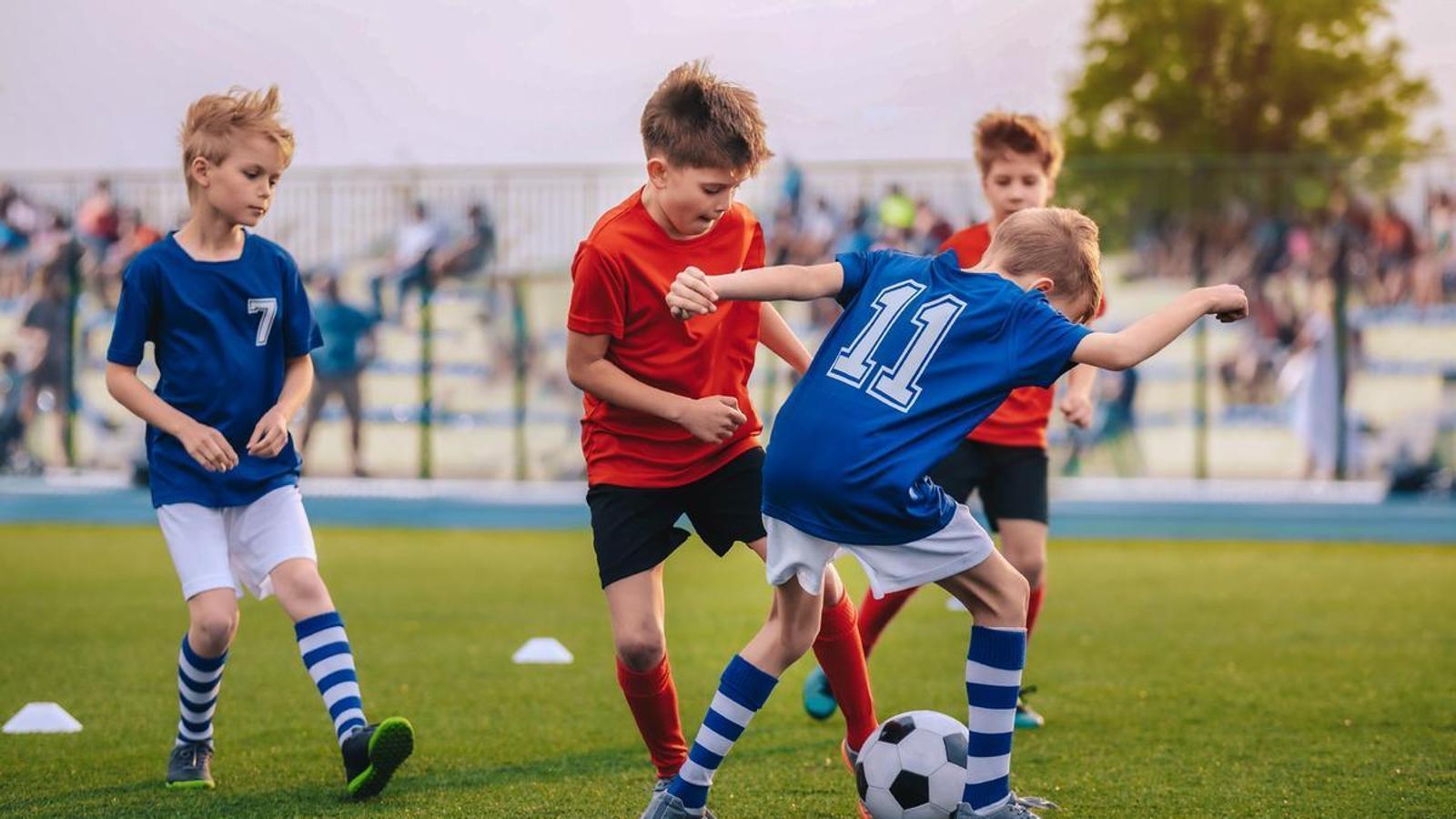
According to the latest report on extracurricular participation in Catalonia (2023) by the Equitat.org foundation (formerly Fundació Bofill), 58% of children and adolescents play sports outside of school hours and 33% take extracurricular language classes. Palou comments that studies have determined that these are the extracurricular activities with the most benefits for emotional well-being in adulthood and academic performance, respectively. However, different voices claim the importance of artistic activities, such as drawing and theater, which, together, only add up to 25% participation, and with a higher proportion of girls than boys.
Marta Mercadé, director of the Traç school of plastic expression in Barcelona, asserts that while languages are an extension of school, her center works on a part of the brain that is currently not exercised in formal education. "Plastic arts in school are in decline, because there are no longer specialists, there are fewer hours, and it is evaluated together with music, when they are two totally different languages," she says.
Dr. Gatell is in total agreement with this, considering that there are too few hours of visual and performing arts (including music) in schools, disciplines that provide many personal benefits, such as confidence, autonomy, and creativity. In fact, the pediatrician does not hesitate to commit herself when asked if she would choose an artistic extracurricular activity if she could only pick one: "Absolutely, yes".
Dr. Gatell speaks about the example of dance, which benefits the physical, intellectual, and social dimensions, and which she believes "is not taken into account at all." "Very little is done in school, and more should be done, and there isn't much of a habit of it as an extracurricular activity either. In other European countries, boys dance more, almost as much as girls," she says.
An axis of inequality
Although according to the cited report the participation percentage in extracurricular activities has exceeded pre-pandemic data, a marked class bias continues to exist. According to Truñó, children from families with high purchasing power spend twice as many hours on them as those from families with low levels. In fact, one in three of these low-income families does not do organized activities in the afternoons, the expert tells us. Another similar indicator that we can find is the statistic of private tutoring, present in twice as many households with more resources than in those with fewer, just as an EsadeEcPol study on the subject shows (2023).
Obviously, there are economic reasons behind this situation. Although more and more municipalities have policies to advance equity in this matter, the requirements to apply for a grant have been frozen for a long time, without being equalized to wage increases –and even if it does not correspond to inflation–. This, according to Cet10, has caused that, even though all families who meet the requirements receive the grant, the number of applications has decreased.
Social and cultural capital are also factors to take into account. "What affects it most is the mother's level of education," asserts the director of Aliança Educació 360. As several of the consulted sources point out to us, there are families that, due to language barriers or simply the fact of not having many contacts, are not aware of the different possibilities for extracurricular activities –especially those offered outside of school–, since, as Truñó tells us, "it works a lot by word of mouth".
Furthermore, once this difficulty is overcome, families in vulnerable situations must face bureaucratic and travel obstacles. It must be taken into account that, especially in areas with lower population density, activities outside school centers can be located far away and it is necessary to take the children there and pick them up.
Gender and functional diversities are also among the main barriers, and Truñó believes that many more inclusive proposals are still needed. All of this, as a whole, ends up having repercussions in different ways, and she gives us an example: "When there is no real access to healthy leisure, children with fewer resources engage in more sedentary leisure, because the abuse of screens is not randomly distributed".
