Sofia, a classic that evokes wisdom and elegance
A trendy name that will grow in the coming years
-
CAT -
CAST
BarcelonaSeptember 18th celebrates Saint Sophia, a classic name that evokes elegance and knowledge, and which has more than 2,500 years of history. It comes from ancient Greek and means wisdom. It has other international variants such as Sophia (in English and Italian), Zsófia (in Hungarian), or Sophie (in French). In France, there is even the famous Sophie the Giraffe, an ideal toy-teether for the little ones at home that has been awarded more than 60 times worldwide.
The fact that it has a soft sound and is easy to pronounce in any language makes it one of the most chosen names, especially for multilingual families.
Looking at the data by decades, it can be concluded that, at least in our country, Sofia is a modern or contemporary name. Although it evokes wisdom and can be misleading due to its roots in ancient Greek, the peak frequency of the name Sofia is recorded between 2010 and 2019, with nearly 3,749 people with this name in Catalonia. Only by adding the figures between 1990 and 2009 do we slightly approach the meteoric rise of this name, which during the 40s, 50s, and 60s recorded fewer than 300 cases.
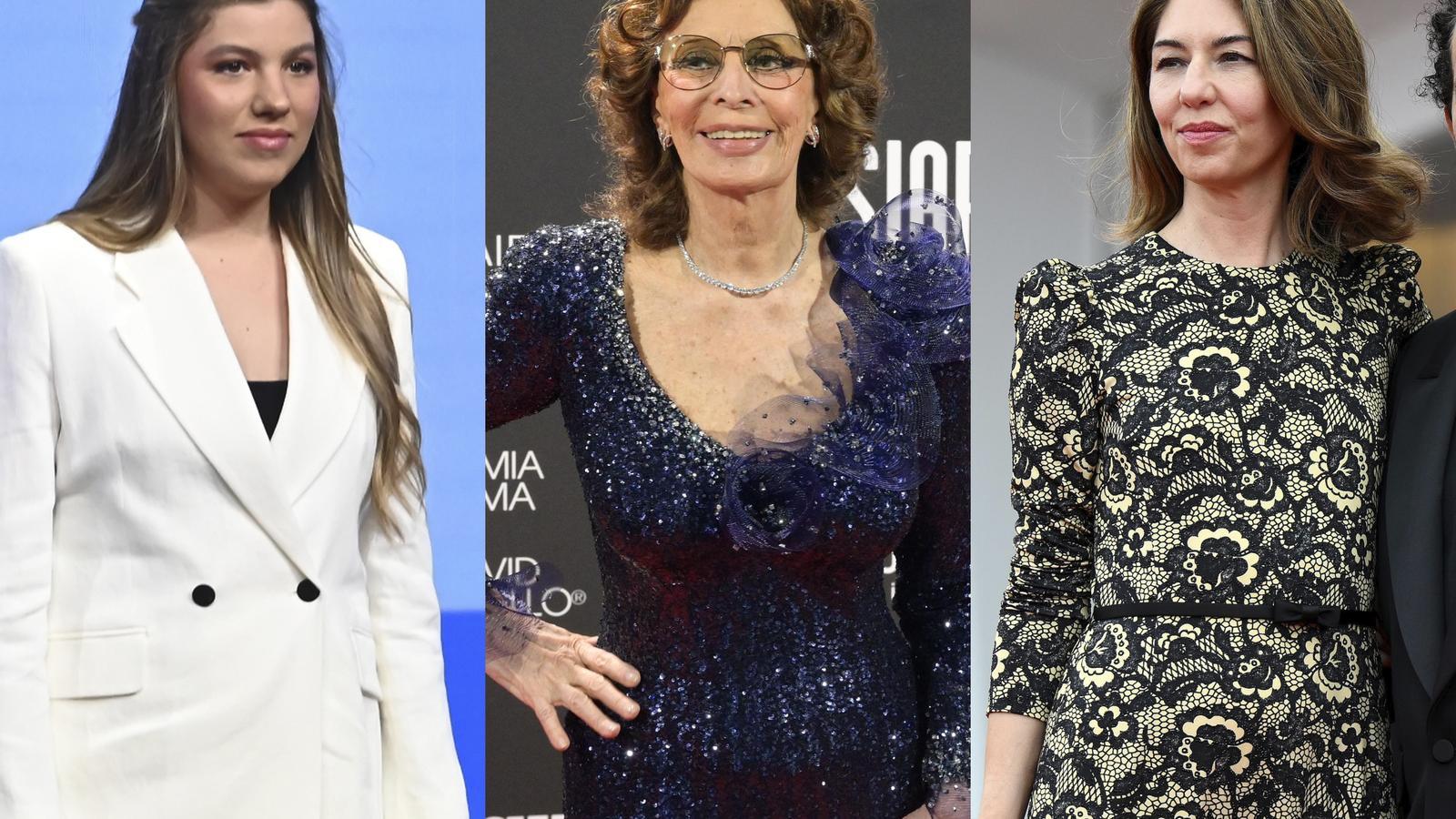
And it will be a trendy name in the coming years, given the young references, such as Infanta Sofia, Sophie Turner (Game of Thrones) or Sofia Carson (Disney Channel). Between 2020 and 2024, the last period for which data is available, more than 1,800 Sophias have been registered, waiting to see what happens over the next five years.
Sofia has often become fashionable, especially in the seventies and during the second decade of the 2000s. For this reason, the average age of women and girls who go by this name is 21.89 years, while in the Spanish state the figure drops to 19.5 years.
Francesc Calafell, principal researcher at the IBE (CSIC - Pompeu Fabra University) and professor and researcher at the UPF, points out that “this is one of those classic names that are given when there are role models, or even the opposite, which disappears because these role models no longer convey sympathy”. In the eighties, the name must have been successful because it was associated with Sophia Loren, the diva of Italian cinema, or with Sofia of Greece and Denmark, the wife of King Juan Carlos I of Spain. But this last connection gradually faded into the background at the same rate as her prominence within the Royal Household did, due to personal reasons and a generational change, and therefore as she remained out of the media spotlight. The peak in the nineties coincides with the publication of the bestseller Sophie's World, by Jostein Gaarder, where a philosophy professor explains to Sofia Amundsen, a fifteen-year-old girl, the life and work of the great thinkers in the history of philosophy, such as Plato, Aristotle, Galileo or Hume. A novel that is still read and given as a gift sooner or later to all Sofias.
Common in Spanish-speaking families
It is with the arrival of the 2000s and also with immigration from Latin America that this girl's name takes a great leap when associated with Sofia Vergara, the North American television star of Colombian origin. As Francesc Calafell explains: “Currently, Sofia is one of the most common names in South America and here: 21.9% of the people who are named it are of foreign origin”.
Calafell points out that “one of the most important factors that determines children's names is the parents' language, and Sofia is used more in Spanish-speaking families”. Therefore, if we look at its geographical distribution, we see that the Sofias are mostly found in regions that welcomed the Spanish migratory movement of the sixties and those that received the migratory movement from Latin America or Slavic countries.
Although the highest percentage of Sofies per thousand inhabitants is found in metropolitan territories such as Barcelonès (3.14 per thousand), Baix Llobregat (3.12 per thousand), and Tarragonès (3.08 per thousand), the surprise is the Vall d’Aran, with an incidence of 3.45 per thousand. Regarding the territories with a lower incidence, Lluçanès and Alta Ribagorça do not have data because they do not reach the minimum required incidence. In third place is Osona (0.74 per thousand), followed by Ribera d’Ebre (0.83 per thousand).
In general terms, of the 99,913 people registered with the name Sofia in the State, 1 out of every 10 (10,712) resides in Catalonia.

