From posters in the bedroom to TikTok 'influencers': how young people's idols have changed
Singers and footballers have given way to 'influencers' and 'youtubers' with messages aligned with teenagers' principles
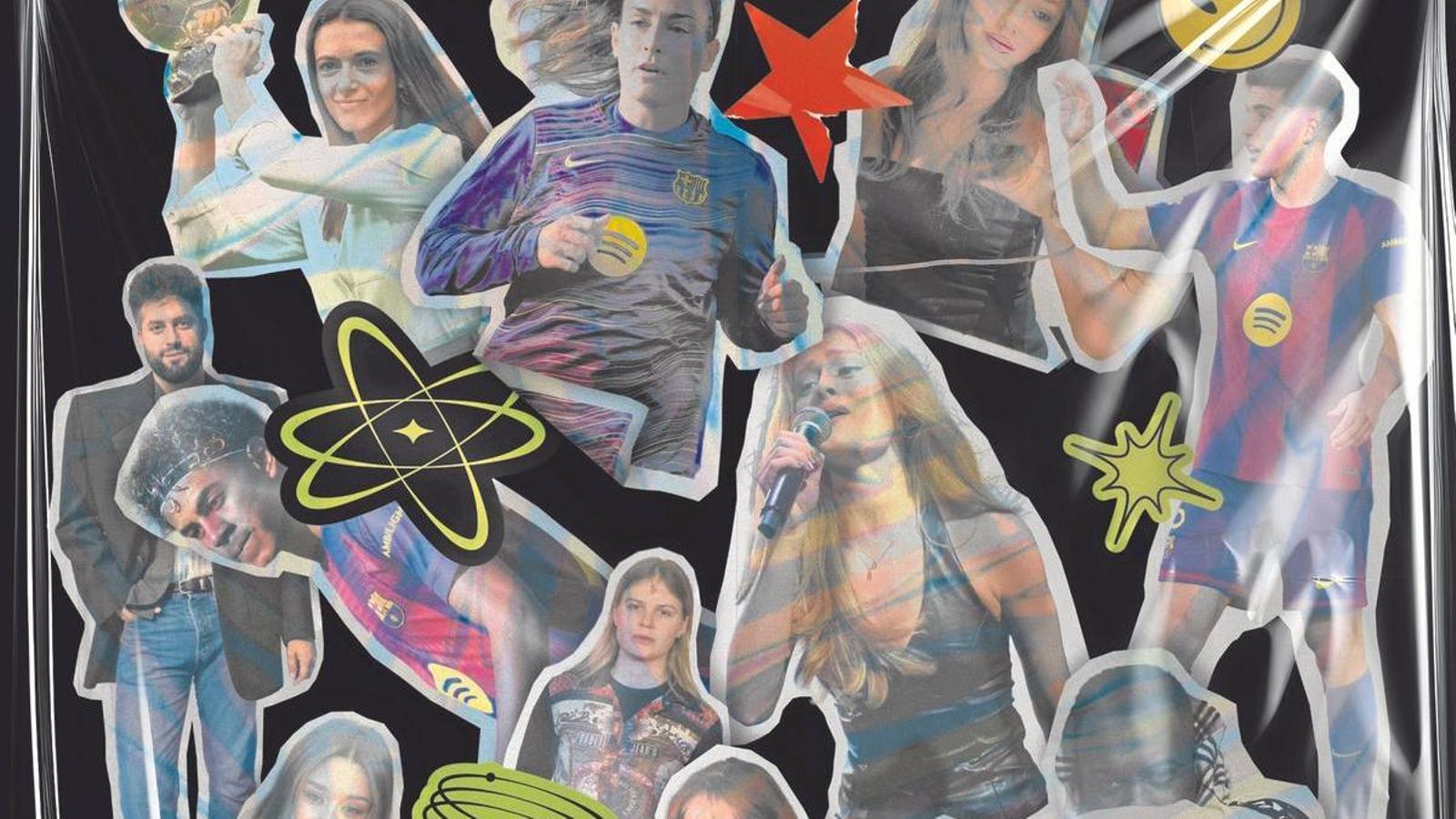

BarcelonaFor young people, it is positive and necessary to have role models to follow, it helps them to build their identity, imagine different possibilities, find motivations, and know where to go. “The most important thing would be to have several role models, and for them to be human and imperfect, so they become a guide to look up to and not a pressure to imitate”, proposes Sylvie Pérez Lima, a registered psychologist and professor at the UOC. But what are young people's idols like in the digital age? From the 1960s to the 2000s, teenagers' bedrooms were transformed with posters of their youth idols hanging on the walls. “They were young people a bit older than them whom they looked up to, and they idealized their image and identity,” explains Carles Feixa, a professor of social anthropology at the UPF and coordinator of the Youth in Spain Report (INJUVE 2024). In the 1960s, teenagers appropriated their bedrooms for the first time and displayed their idols, especially musical ones, rock’n’roll and rock evolutions. In the 70s, they were revolutionary political idols –Mao Tse Tung, Che, or Fidel Castro–, who, with the crisis at the end of the 70s, ceased to have continuity. Then, consumer idols returned with more commercial music, not so much protest-oriented, and sports idols, especially in football and tennis, who were models of success. It is from the 2000s onwards that digitalization began and more artificial idols emerged, youtubers and influencers, who would go on to occupy an even more intimate space, social media. Lucía (15 years old) does have posters hanging in her room, a couple from one of the Spiderman movies and several of Sadie Sink (@sadiesink_), an actress from Stranger Things: “I follow her on social media and watch all the interviews she does, she's my crush”. What she watches most on TikTok and Instagram are reels of series, music, and especially humor, accounts that make her laugh –“many silly things, falls, and slips”–, Manu Rivas (@manurivasr) or Pablo Vera's (@pablovr11) dances, news channels, and people who explain things like Javi Hoyos's (@javihoyosmartinez) gossip.
Her friends, Sara (15) and Julia (16) also consume the recommendations that Instagram and TikTok algorithms give them: “I watch a lot but I follow almost no one, I'm very into motivational phrases, reflections, and gym routines,” says Sara, who when it comes to choosing profiles, sticks with Carlota Marañón's channel (@Carlo Marañon), “because she doesn't make the typical YouTube videos of 'I'm at home and I explain what I'm doing,' she works hard on it, it goes beyond a personal diary.” On her top list are also Anitarqp (@anitarqp) and Elena Gortari (@elenagortarii), one of Julia's favorite content creators: “I like what she does and especially the tone, she's very natural, she explains things about her life transparently, without pretending to be perfect.” Her list also includes Aitana Soriano (@aitanaasoriano) with content on beauty, cosmetics, and personal care; Fabiana Sevillano (@fabiana.sevillano), who introduces herself with the phrase “what you see is what you get,” or Claudia (@ot2025.claudiaarenas) and Olivia (@ot2025.olivia), participants of the latest edition ofOT, and although she's not much of a football fan, Pau Cubarsí (@paucubarsi), whom she loves. The three agree that they won't miss the Velada del Año, because there are many people they like: Plex (@yosoyplex), Tati (@tatianakaer), or Marta Díaz (@martaa_diiaz).

Content for girls and content for boys
The Eines Cooperative runs workshops in schools and institutes, training for families and educators, and offers comprehensive prevention services for drugs and screens. Ester Angelats, a prevention technician in drugs and screens and a member of the cooperative, believes that, with few exceptions, there are still differences between what boys and girls consume. In the workshops, girls are more interested in trends, beauty routines, fashion, or dances, and boys' content is more related to finance and body worship. A significant group of boys are interested in football, and they look up to players like Lamine Yamal or Pau Cubarsí, who are practically teenagers like them. With the rise of women's football, many girls who play sports have incorporated new role models like Alexia or Aitana Bonmatí, who are also young, and they have managed to change the role of football, which until now was very masculine. What Guim (17) likes most about his idols is what they represent, the topics they discuss, and their vision of the world. He is interested in politics, football, and society, and among his favorite content creators are the rappers Ill Pekeño (@pekeorc) and Ergopro (@ergopro_) for their political ideals and how they convey them, Baya Baye MGT (@bayabaye_mgt) for how he expresses himself, or Santa Salut (@santa.salut) for how she communicates, “it gives you the feeling that you are listening to the song with her”.
What do they like?
When social media is always showing successful people with constant plans, it's easy to believe you're missing out and that your life is less interesting. “It can distort your perception of what is normal and affect your self-esteem, as well as generate constant pressure to be and appear well,” explains the psychologist. Surely for this reason, even if unconsciously, when following profiles, young people look for spontaneity, closer role models who share less prepared content, or at least content that seems that way. They no longer like overly polished influencers as much, they value authenticity. For Angelats, considering that young people are in a vital stage of searching for and constructing their identity, following different content creators allows them to have diverse role models and more than one point of view: “The problem arises when everything they see has a similar focus, they are inside an ideological bubble, they believe that everyone thinks the same, and they find it difficult to be critical,” she points out.
Regarding suggested content, in the workshops they focus on what recommendations appear to each person: “They tend to be different but similar content depending on whether they are boys or girls”. This small experiment is useful for them to understand that the algorithm chooses the content it knows they will spend the most time watching, and that whether it goes viral or not is not determined by quality. “It is important to have conscious consumption of social media, otherwise the content chooses you and not you the content”, comments Angelats. There are also young people who, by being constantly exposed to impossible –supposedly perfect– bodies, can affect their self-esteem. Angelats recommends making them reflect on the model of success that is sold to them –being popular, traveling, having money–, and that they understand that there are many other life models. This expert assures that young people have been modifying the way they are on social media. Five years ago they used to post a lot of content on their walls, they showed themselves constantly, which is why in workshop interventions they reminded them that they should think before posting because once the content is published they can no longer retrieve it and it represents them forever. Instead, now the walls are empty, they share stories and have several profiles –main and secondary–, to separate their digital identity, one account is their presentation letter to everyone, they can have another for their best friends and another for their family.
From "forever" to "that I like"
“I’m not a big fan of anyone in particular nor do I usually follow the same people”, says Pau (15), although he admits that he especially likes Bad Bunny, “his songs and above all what he stands for, culture and justice”. The content that follows is usually about music, movies, politics, and sports. Apart from Bad Bunny, in his top are 31 FAM and Mushka. The anthropologist Carles Feixa explains that the idols of the 60s and 70s were for life: “You became heavy and you were it forever, ideologies were more lasting. Today they are fickle, they are idols that they don't quite believe in, they know they are temporary and momentary”. There are two types of idols, digital ones that are mostly found on networks that teenagers like, such as TikTok and Instagram, and others that are face-to-face, a kind of mentors, adult figures who are neither parents nor teachers and who accompany them without judging or infantilizing them. While the former are found without looking for them thanks to algorithms, the latter are sought out but are very difficult to find.
