The man who began to light up Barcelona (and Madrid's Puerta del Sol)
Josep Roura directed the Industrial School and also invented white gunpowder
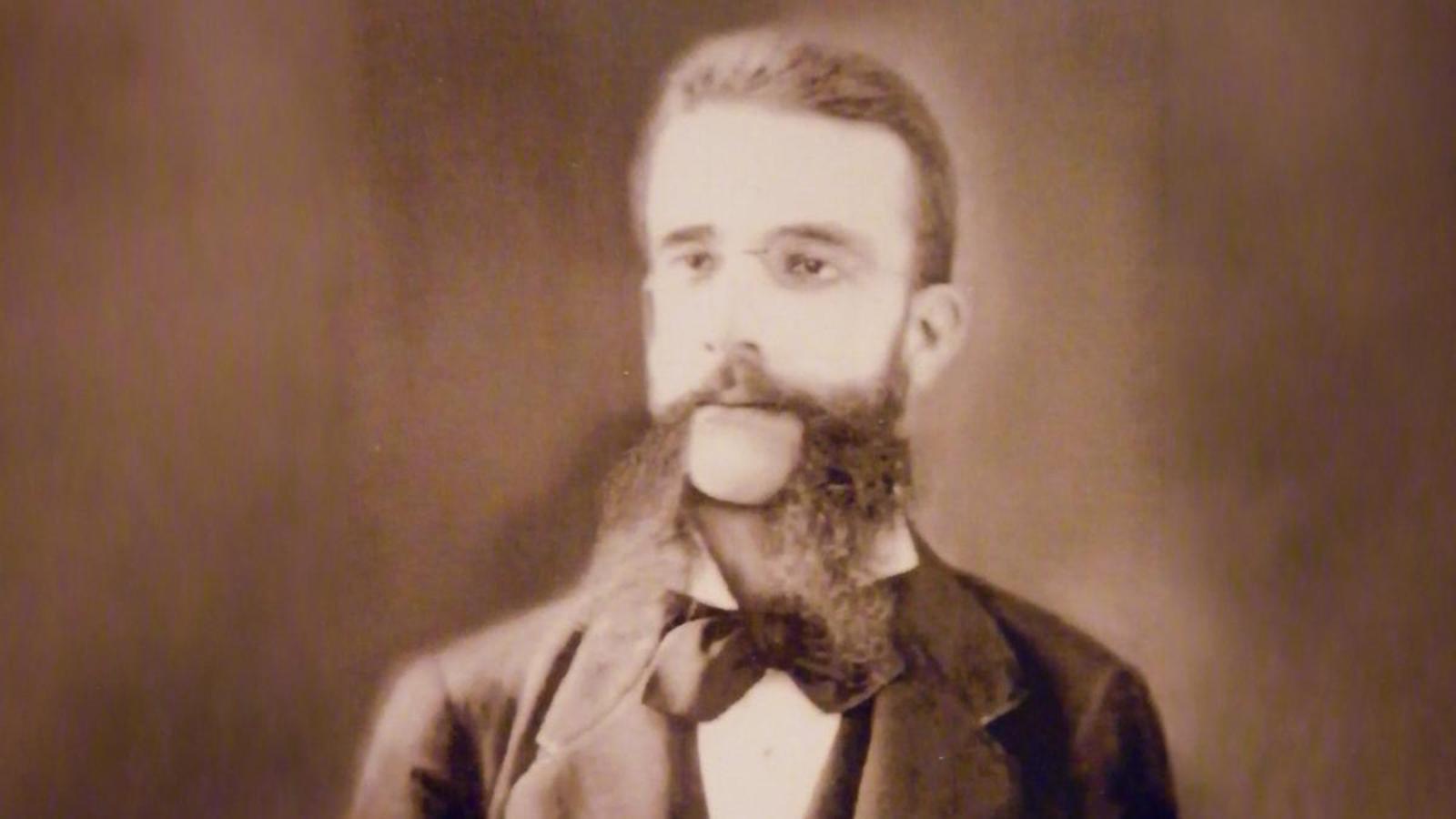
On Saint John's Day in 1826, a historic event occurred in the center of Barcelona which, despite its great significance, is not entirely known. Generally, the beginning of public street lighting is remembered as the moment in 1843 when the Societat Catalana per a l'Enllumenat per Gas, founded by Pere Gil Babot and Charles Lebon, began to operate. But the reality is that a few years earlier, a solitary entrepreneur named Josep Roura Estrada illuminated a building in Barcelona for the first time using gas. The Saint John's Day we mentioned a few lines back was the date chosen by Roura to install a lighting system in the Llotja building, which was the seat of the Junta de Comerç school.
- 1797-1860
Roura's strong technical training was based on his chemistry studies, which he had pursued at the University of Montpellier (1820), where he obtained his doctorate. It should be remembered that the University of Barcelona (Estudi General de Barcelona) had been closed in 1717 due to the Decret de Nova Planta and would not be reopened until 1837. Returning from his Provençal sojourn, Roura obtained a professorship at the Military Gymnasium of Barcelona, which was where military personnel acquired engineering training, and shortly thereafter also at the School of Chemistry of the Junta de Comerç. In 1824 he began working on obtaining an inflammable gas from the distillation of coal. He was clear that chemical reactions of that type could generate enough light to illuminate spaces, and for this reason, in 1825, he traveled to Paris to study gas-powered lighting systems. With the lesson learned, he returned to Barcelona, where he became the pioneer in the installation of light in buildings, as we explained from the outset.
Despite the future his product could have (it illuminated the Puerta del Sol at the request of the Madrid City Council), his interest was more scientific than commercial, and he focused on continuing his research in this field. From the 1830s onwards, he concentrated on the research of chemical products, so much so that in 1836 he created his own company, whose plant was located in the Bordeta neighborhood. However, the different lighting systems he had been installing throughout the city of Barcelona continued to operate for a number of years, until the arrival of the public network of the Societat Catalana per a l’Enllumenat per Gas (1843). At this time, he was also one of the first to recognize and publicize the great possibilities of coal from the Sant Joan de les Abadesses (Ripollès) area.
He combined on-site research with the preparation of technical manuals – highly valued by the local academy – on all the technological innovations he discovered on his travels throughout Europe. His activity at the Academy of Natural Sciences and Arts was very intense (he had been a member since 1822) and, as an example, we can recall May 6, 1841, when he brought a young Italian named Vito Mangiamele, who was a prodigy of mental calculation and who, at just fourteen years of age, impressed the academics with his abilities.
As a result of his research activity and chemical business, in 1846 he invented a completely innovative product called white powder. It was more powerful and of higher quality than traditional black powder, which was what the army used. Everything seems to indicate that the tests carried out were very satisfactory, but for some unknown reason the Spanish army refused to acquire it and, faced with this, Roura preferred to put his discovery in a drawer. Today it is still not known with certainty what the chemical composition of this mysterious white powder was, among other things because the last sample preserved by the family was lost in 1988.
In 1851 he was appointed director of the Industrial School, an institution that was inaugurated that same year and later evolved into the School of Industrial Engineers. In a way, it was an improved continuation of the schools of the Board of Trade and was located in the former convent of Sant Sebastià. Despite the new responsibilities acquired, Roura continued with his scientific investigations, some for private companies, such as the report he prepared in 1860 for the Spanish Asphalt Company. From a political point of view, he was very involved in the tributes received by General Prim upon his return after the wars in Africa, in 1860.
