A young and reformist general to end the Soviet tradition in the Ukrainian army
Zelensky tries to appease criticism with the appointment of Mykhailo Drapati as new Commander-in-Chief

-
CAT -
CAST
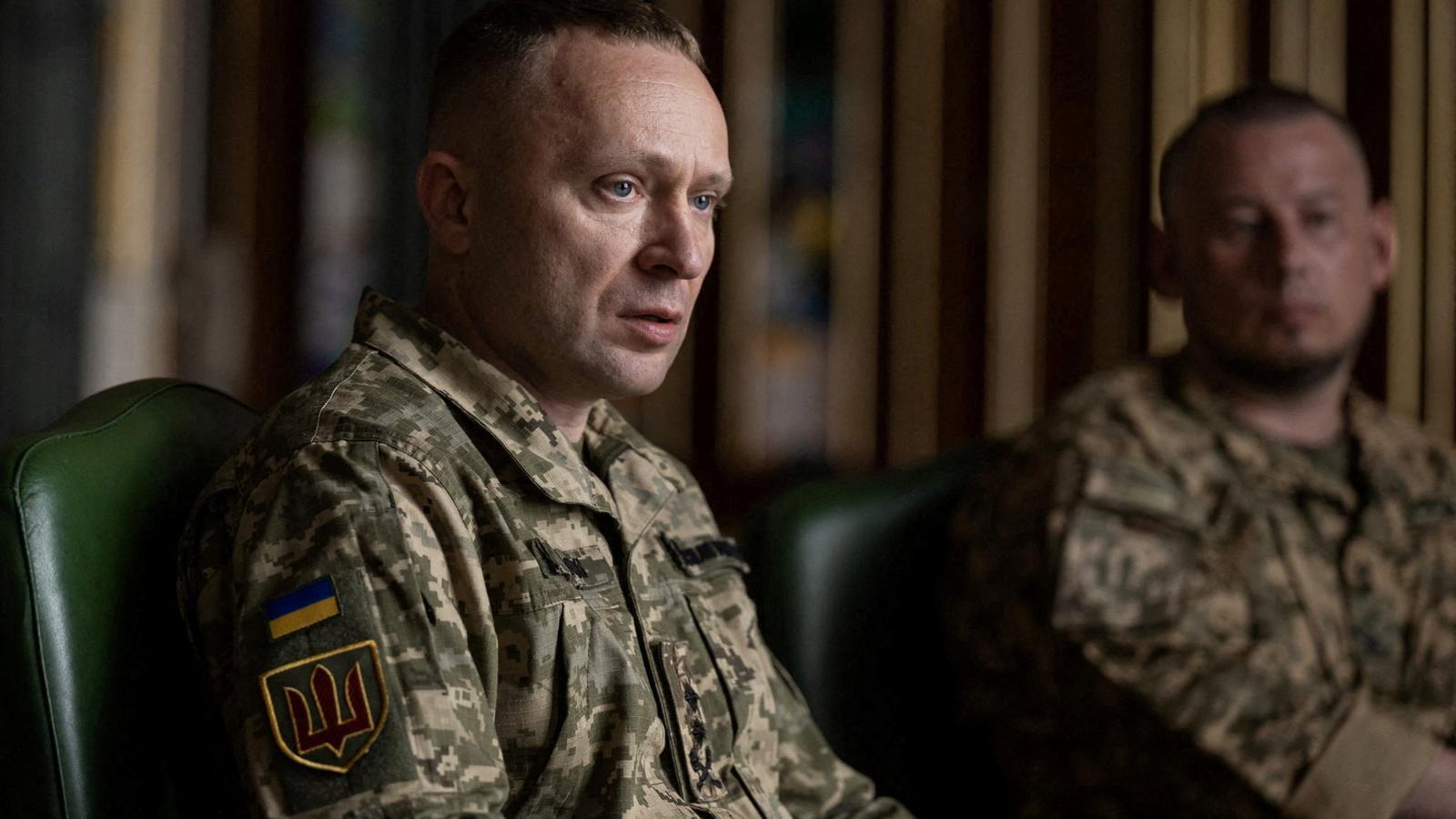
Barcelona"Drapati! Drapati! Drapati!" This name has been heard often in recent days' protests in Kyiv and other Ukrainian cities, that of who, as of a few hours ago, is the new commander-in-chief of the Ukrainian army, Mikhailo Drapati. Since last week, many Ukrainians have taken to the streets daily to protest the dismissal of the Minister of Defense, Mikhailo Fédorov, a decision with which Volodymyr Zelensky sided with the old military guard to the detriment of younger voices with an initiative for change. The Ukrainian president chose to dismiss Fédorov and keep the commander-in-chief, Oleksandr Sirski. But on Tuesday night, after six days of demonstrations, he announced Sirski's dismissal and Drapati's appointment as his replacement, responding to the proclamations in the streets.
Drapati's appointment, at 43 years old, means handing over the leadership of the army to a reformist general, in an attempt to leave behind the methods typical of military personnel trained in the Soviet era. The new commander-in-chief was one of the few high-ranking military officers who spoke out in defense of the former Minister of Defense when Zelensky dismissed him and called Sirski authoritarian and outdated.
Fedorov has applauded Drapati's appointment, which he described as "a breath of fresh air and a new source of hope". "It is the voice of change that can no longer be ignored," he wrote in a post on X, in which he also said he had called Sirski to thank him for the "historic battles" he had led, but added: "Now we must move faster, write the next chapters of this story and correct the mistakes of the past".
In his first public comments in the new role, Drapati said he has been ordered to "continue and intensify offensive operations in all areas", as well as to plan new operations behind enemy lines, develop the army and its technologies, and strengthen the capabilities of the armed forces.
An experienced soldier in the war against Russia
Until now, Drapati commanded the joint forces, a structure of the front in the northeast of the Kharkiv region. The general has extensive battlefield experience, with a career forged in the war against Russia, and many analysts have described him as one of Ukraine's most respected commanders. As early as 2014, he gained popularity when he led an assault against pro-Russian rebels who were trying to occupy Mariupol, and he himself gave the order to an armored vehicle driver to cross a Russian barricade.
When Vladimir Putin's full-scale invasion began in 2022, Drapati became the reference commander for front-line areas where the situation was more complicated and required a change of course. In the summer of 2024, he stopped a Russian incursion near the city of Kharkiv, stabilized the front line, and shortly thereafter became the youngest commander of the Ukrainian ground forces.
"Drapati has very good credentials and is respected for his principles, including taking responsibility," Ukrainian political scientist Olexi Haran, professor at the National University of Kyiv Mohyla Academy, summarizes to ARA. The general's good reputation became widespread in June 2025, when Drapati, who had been leading the ground forces for eight months, submitted his resignation after a Russian missile attack on a training ground killed at least twelve soldiers and wounded more than sixty. He argued that he had a "sense of personal responsibility" for the tragedy. Zelensky, however, asked him not to leave the army and appointed him head of the joint forces, a position with less responsibility and more focused on combat actions.
At the time he left office, Drapati published a statement on social media in which he pointed to the main problems of the army, where he stated that an "atmosphere of fear, lack of initiative, rejection of feedback and indifference to personnel problems" reigned.
Confrontation between Fédorov and Sirski
Many of these problems have been attributed to the then-commander-in-chief, Oleksandr Sirski. Despite this, Zelenski chose to keep him and dismiss the Minister of Defense. Fedorov took office as minister with the main objective of modernizing the army, especially by further strengthening the role of drones. According to The Economist, Fedorov ordered an audit of the ministry and army brigades, which revealed excessive spending of about 5.8 billion euros. He also subjected ministry officials to lie detectors and fired those who refused or lied.
Haran considers the protests of recent days in various Ukrainian cities against Fedorov's dismissal to be "very justified": "He had been in the Ministry of Defense for half a year, where he was trying to introduce innovative methods. We cannot yet say that everything he has promoted has been successful, but at least he began to take steps towards modernization." He also points out that "there were rumors that he had started this process to try to end cases of corruption, and that is why, when he was surprisingly dismissed, people took to the streets".
The demonstrations continue
Haran states that the replacement of the army's commander-in-chief will probably not be enough to appease popular discontent. He points out that the reinstatement of Fédorov as Minister of Defense is one of the protesters' demands. Furthermore, he says they also have other demands, such as deputies returning to work and Parliament not closing for summer holidays.
According to the Ukrainian media The Kyiv Independent, the protests are expected to continue to demand Fédorov's reinstatement, and for now, one has already been called for Saturday in the capital. The newspaper Ukraïnska Pravda has reported that Zelenski has offered him several positions within the government, including that of Deputy Prime Minister for Technological Development, but that Fédorov has rejected them and will only accept returning to his previous position.
