Who is Andy Burnham? The mayor of Manchester who will be the next British 'premier'
The new Labour leader has reinvented his Westminster fighting character after moving away from it for almost ten years

-
CAT -
CAST
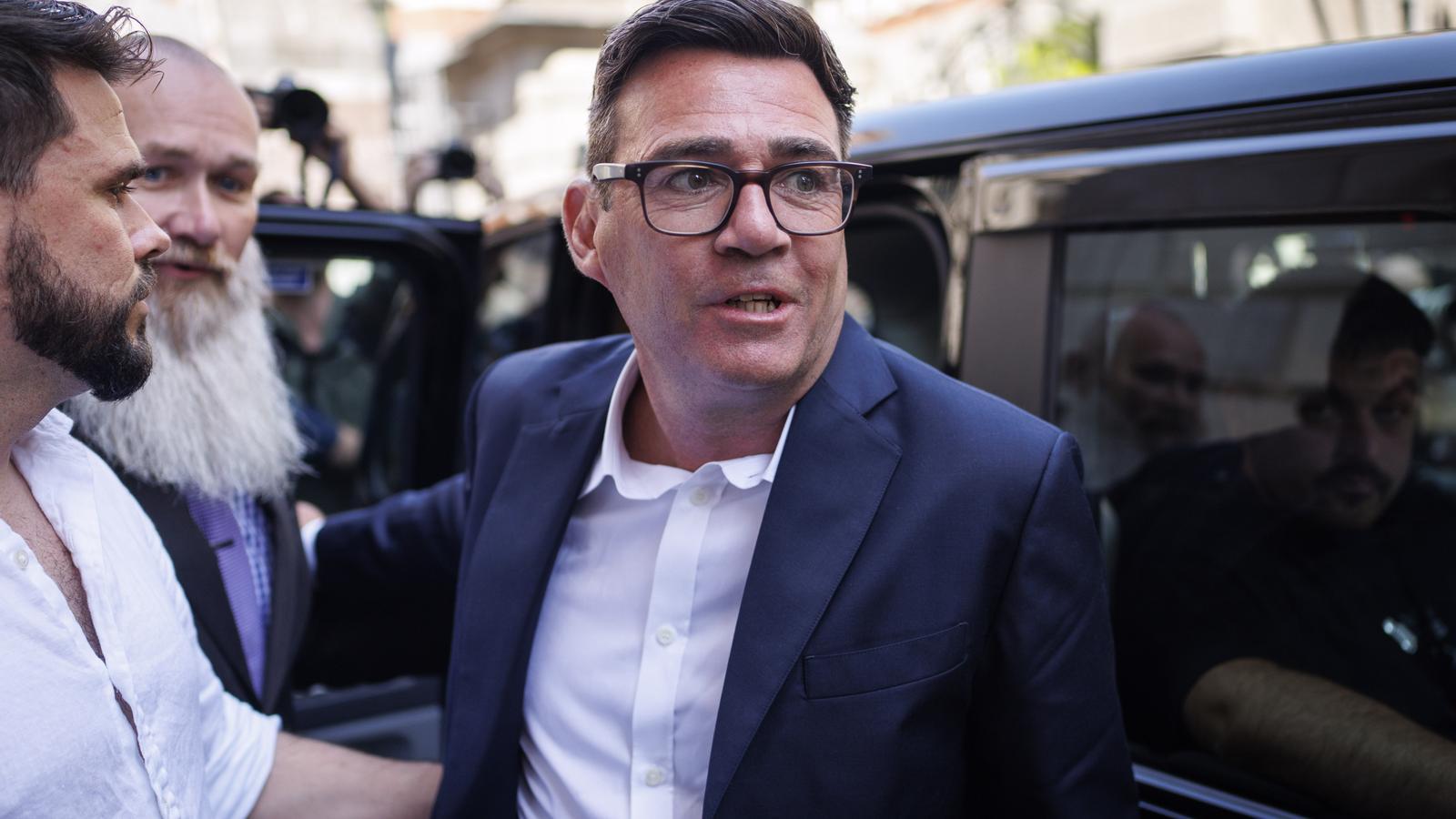
LondonA recent scene sums up Andy Burnham, 56, pretty well. Three weeks ago, as he was about to return to the House of Commons as a elected Member of Parliament for Makerfield, he explained that he was traveling to London to take up the post of "mayor". He immediately corrected himself: "I mean MP". The slip of the tongue was revealing. After almost a decade at the head of Greater Manchester, Burnham no longer sees himself as just another member of the Westminster establishment, but as the mayor who has turned the great northern city into a political idea and a different way of understanding the United Kingdom. A look that he now wants to move to Downing Street, and which he can start to make real from Monday, when he receives the commission from Charles III to form a government and thus become the first number 59 of the United Kingdom.
The son of a British Telecom engineer and a medical practice receptionist, both convinced Labour supporters, Burnham grew up in Merseyside (Liverpool metropolitan region), in a working-class environment with no university tradition. He attended a Catholic school and he and his two brothers were the first in the family to pursue higher education. At 14, he joined the Labour Party, impressed by the BBC series "Boys from the Blackstuff, which portrayed the social devastation of the city's deindustrialization. His political trajectory is, in part, the reverse of Boris Johnson's, who also reached Downing Street after having been mayor, in this case, of London, but having went through Eton and grew up with the certainty that that destiny belonged to him. For the worker it wasn't so obvious.
In Cambridge, where Burnham studied English literature, he felt – as he wrote in Head North–"an impostor". Manchester's music – from The Smiths to The Stone Roses – gave him the identity he was still searching for. At university he also met the Dutch Marie-France van Heel, whom he married in 2000, and with whom he has had three children. A specialist in marketing and strategy, several sources attribute to her the modernization of her husband's public image, including the popular caricature with a black t-shirt and dark glasses that has accompanied his latest campaigns, in which the "Vote Andy" has been more than a slogan, a statement of familiarity.
Against colonial treatment
After fully Blairite beginnings –he was an advisor to Tessa Jowell and Chris Smith, and a minister under Gordon Brown–, Burnham has been shifting his political centre of gravity. Detractors call him a chameleon; supporters see in him the ability to adapt his convictions to reality without losing his way. The pandemic marked the turning point. When Boris Johnson's government imposed restrictions on Greater Manchester without the economic compensation he demanded, Burnham turned a budgetary dispute into a political battle over the country's territorial balance. For weeks he was the main counter-power to Downing Street and consolidated himself as the voice of a north that claimed to be treated as a colonial periphery. All this has earned him the nickname King of the North. The king, reinvented, has finally conquered the south.
From his time as mayor also stems what some have dubbed "Manchesterism": less centralism, more power for large cities, coordinated public services in public hands, and decisions made from proximity. The recovery of Greater Manchester's buses under public control is the most visible example. If he does this for the country's major public services, he has a good part of his success assured. Therefore, it will be key to know his appointment to the Treasury: from the right of the party or the left, even if it is moderate.
His identification with the north goes far beyond politics. He maintains an unmistakable accent, has cycled around Manchester, has presented a weekly radio show to answer neighbours' questions, and has made his support for Everton (Liverpool's blue team) an inseparable part of his persona. This loyalty also explains his involvement in the fight for the truth about the Hillsborough tragedy. To the point that his first intervention upon returning to the Commons last Tuesday was to defend the Hillsborough Law: legislation that obliges public authorities to act with transparency in investigations into major tragedies, such as the infamous one in 1989, which caused the deaths of 97 Liverpool fans in a human avalanche during an FA Cup semi-final.
Burnham arrives at Downing Street after having twice fought for the Labour leadership (2010 and 2015) and lost. Reimagined as if he had never set foot in Westminster, or as if he were a "naughty boy", as he put it at the time of taking the oath as an MP on June 22, he will now try to lead the revolt of a very popular underdog (not a favourite) who comes from Downing Street, is Catholic, from Everton and from the North of England.
