What do we know about the mysterious attack against an RAF and United States base?
The police expand the perimeter of the investigation and interrogate the five detainees while pointing to Iran

-
CAT -
CAST
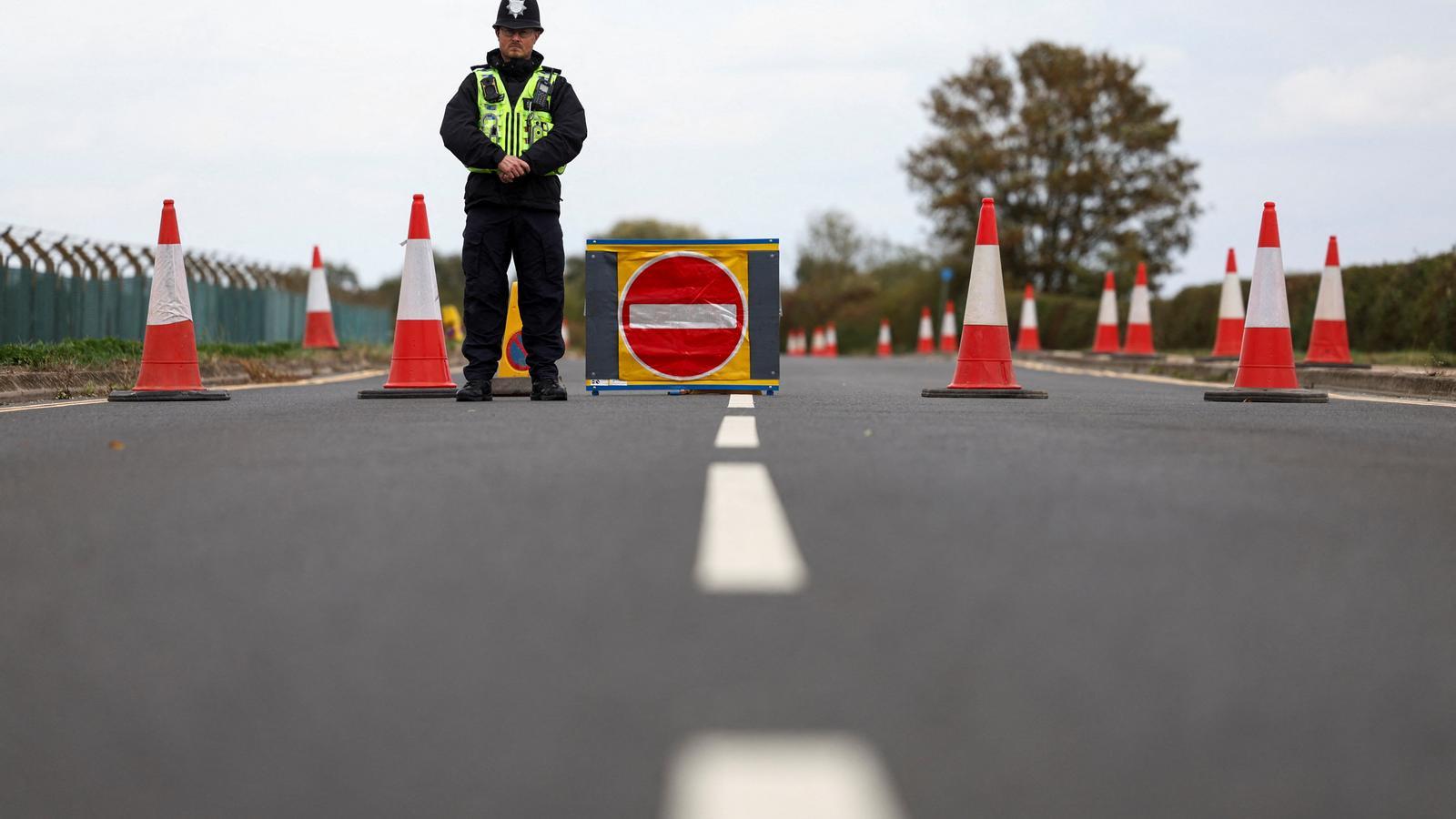
LondonWhat could have been a serious attack on the Royal Air Force (RAF) base in Fairford, used by the United States in its bombing raids on Iran, has ended, for the moment, in a truly English ending: a scare with, for now, more questions than answers. Everything partially resolved thanks to citizen collaboration.
A farmer who was returning home just past midnight on Sunday ran into five men dressed in black and balaclavas. She saw them while trying to access her property via a secondary road, blocked by three white vans.
The Fairford base is located in the idyllic Cotswolds region –one of the richest in England–, in the county of Gloucester, about 160 kilometers west of London. Faced with completely unusual activity near the base, she first called the Ministry of Defence police, who did not answer the call. Then, she called the 999 emergency services to report what she had seen. Throughout the early morning, about 85 homes in the surrounding area were evacuated. The residents have not yet been able to return home.
Five arrested
Five men were arrested on Sunday, suspected of a possible attempted terrorist attack. They may remain in detention for up to fourteen days before being brought before a judge under the anti-terrorism law. The vans that they allegedly drove up to the air base were inspected by robots from the bomb disposal squads. The search of the vehicles is still ongoing and for the moment they have not yet been declared safe for forensic specialists to access them.
A stroke of luck, only?
Contradictorily, the President of the United States, Donald Trump, stated this Sunday that the detainees "intended to cause great harm" and that they had been "under investigation" for some time.
Could his version and that of the citizen alert be compatible? Specialists claim they are not. Whitehall sources consulted by different British media outlets claimed this Monday morning that it was not an operation directed by intelligence services. According to these sources, in an intelligence operation, the suspects should have been subjected to constant surveillance, 24 hours a day, seven days a week. The fact that three vans, with hooded individuals and presumably with explosives inside, could get so close to a sensitive military installation would call this version into question.
However, the British Secretary of State for Defence, Wes Streeting, assured this morning, in statements to the BBC, that "the neighbour who raised the alarm only has partial knowledge" of the situation, which suggests, therefore, that there was indeed an intelligence operation underway. Was it just a statement to rule out a possible security breach?

Iran, the possible actor behind it?
The British counter-terrorism police have not yet explained what they know about the five arrested men, nor what evidence they have found against them. Interrogation and the analysis of the mobile phones or computers seized from them may allow investigators to determine whether they were acting alone or if they were serving a foreign power or a specific terrorist group. This, in any case, is now the most important question. The first suspicions are directed towards Iran. The British Foreign Secretary, Ed Miliband, had met last week with his Iranian counterpart, Abbas Araghchi, in the framework of the UN General Assembly in New York and warned him that he would not tolerate "intimidation, threats or hostile activity on British soil". The head of the Foreign Office reiterated the government's determination to "combat the threat of groups linked to Iran" that supposedly operate in the country, and to which attacks against various targets, including the Jewish community, are attributed.
Fairford base is one of the British facilities used by the US armed forces, along with RAF Lakenheath and RAF Mildenhall, in Suffolk. When the war with Iran began, Washington asked to use British bases for military operations. Initially, London refused, but later the government of Keir Starmer authorized their use for defensive purposes, to attack Iranian missile and drone launch sites that threatened US allies in the Persian Gulf. In principle, they would not have attacked targets located inside Iran from British territory.
In July, Iran warned that any country that allowed the use of its territory or its bases to attack it would become a target. It is in this context that the Iranian trail would gain weight over other hypotheses, such as Russia or jihadist groups.
