Iran says that the war enters "a critical and decisive phase" to "consolidate the victory"
Trump rejects the Iranian offer to unblock Hormuz and Tehran ensures that it is prepared to resume the fighting

-
CAT -
CAST
JerusalemThe war between Iran and the United States is entering a phase of high tension once again. After weeks in which indirect contacts have kept a diplomatic path open, Washington has rejected Tehran's proposal to reopen the Strait of Hormuz, while Iran is hardening its military discourse and warning that it is prepared for a new American offensive.
The President of the United States, Donald Trump, has described the Iranian proposal as “unacceptable” and has asserted that Tehran only wants to reach an agreement because it is “clearly losing.” In statements to reporters at the White House, Trump insisted that Iran is seeking an agreement because the American naval blockade is preventing revenue from entering the country.
In Tehran, however, the message is diametrically different. The head of the army, General Amir Hatami, stated this Sunday that “the war is not over” and that, although Iran considers that it has won, it must now “consolidate this victory.” During a military ceremony, Hatami warned that the war is in a “critical and decisive” phase and that Iranian forces are prepared to respond if the United States resumes attacks.
The general also warned countries in the Gulf that the Strait of Hormuz will remain closed as long as Washington maintains the economic war against Iran. “If Iran cannot do business and cannot live, no one can trade or live,” he stated, according to state media. “I call on all our neighbors and the countries in the region: you have seen that cooperation with the United States does not generate security. Security in the region will not be possible without the expulsion of the United States and the Zionist regime, and that will not take long to arrive.”
The spokesperson for the Iranian armed forces, Brigadier General Abolfazl Shekarchi, warned in turn that any new aggression will be met with “new military technologies.” According to Shekarchi, Iranian missiles and drones are now more advanced than in previous phases of the conflict. The Revolutionary Guard navy has also threatened to attack American warships, even in the Indian Ocean, if Washington goes to war with Tehran again, according to the Iranian news agency Fars.
Open the Strait of Hormuz in seven days
The Strait of Hormuz remains Iran's main piece of leverage. Before the war, a very significant portion of the world's oil flowed through this maritime passage, but traffic has been drastically reduced since the start of the conflict on February 28. According to maritime traffic data from Kpler, only 17 cargo ships passed through the strait over the weekend, compared to the 125 daily ships that circulated there on average before the war.
The Iranian proposal suggested a solution within seven days. Iran's Foreign Minister, Abbas Araghchi, proposed gradually reopening the Strait of Hormuz if Washington lifted the naval blockade of Iranian ports, released some 10.5 billion euros in frozen Iranian assets, and relaxed oil sanctions. Araghchi calculated that these conditions could be met within four or five days, at which point the strait could be reopened. Negotiations with the United States to reach a final agreement would begin on the seventh day.
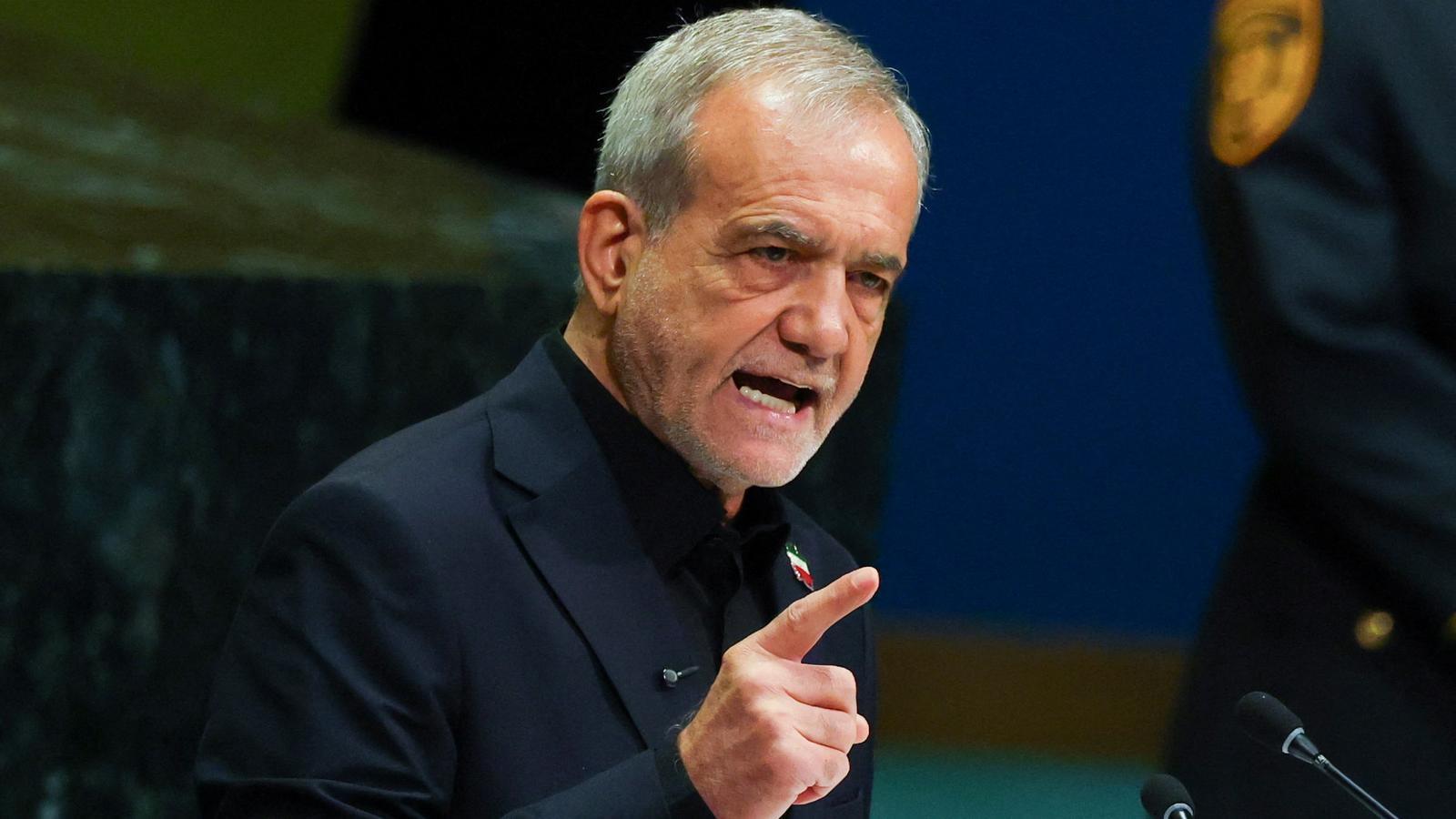
Today's statements come after a week of various indirect contacts between Washington and Tehran in New York, coinciding with the UN General Assembly. Iran then conveyed the proposal to unlock Hormuz to the United States through Qatari mediators, while, publicly, Trump threatened to “annihilate” Iran if it did not accept an agreement and Iranian President Masoud Pezeshkian defended dialogue, but “without accepting the language of force”.
Now, however, Pezeshkian has toughened his rhetoric. In an interview with Al-Jazeera, he stated that Tehran does not trust negotiations with Washington because, according to him, previous dialogue processes have been followed by attacks and new sanctions. “We have no trust in the American side,” said Pezeshkian, who believes that a negotiated solution is still possible, but not under military or economic pressure.
In parallel, the United States has intensified economic pressure on Iran and this week announced sanctions against airlines that do business with the Persian country's air carriers. For the moment, several countries in the region, including the United Arab Emirates and Iraq, have already restricted or suspended flights.
The tension this weekend also comes after the last major direct escalation between the two countries, less than three weeks ago. At the beginning of September, Washington destroyed five Iranian oil tankers after accusing the Revolutionary Guard of having attacked a US warship with missiles, and Tehran responded by attacking a US base in Jordan.
