"We have embarked on an announced suicide": AI data centers are already leaving towns without water
Each image that you ask the AI consumes five liters of water, and in Mexico, Indonesia and the United States they are suffering from it
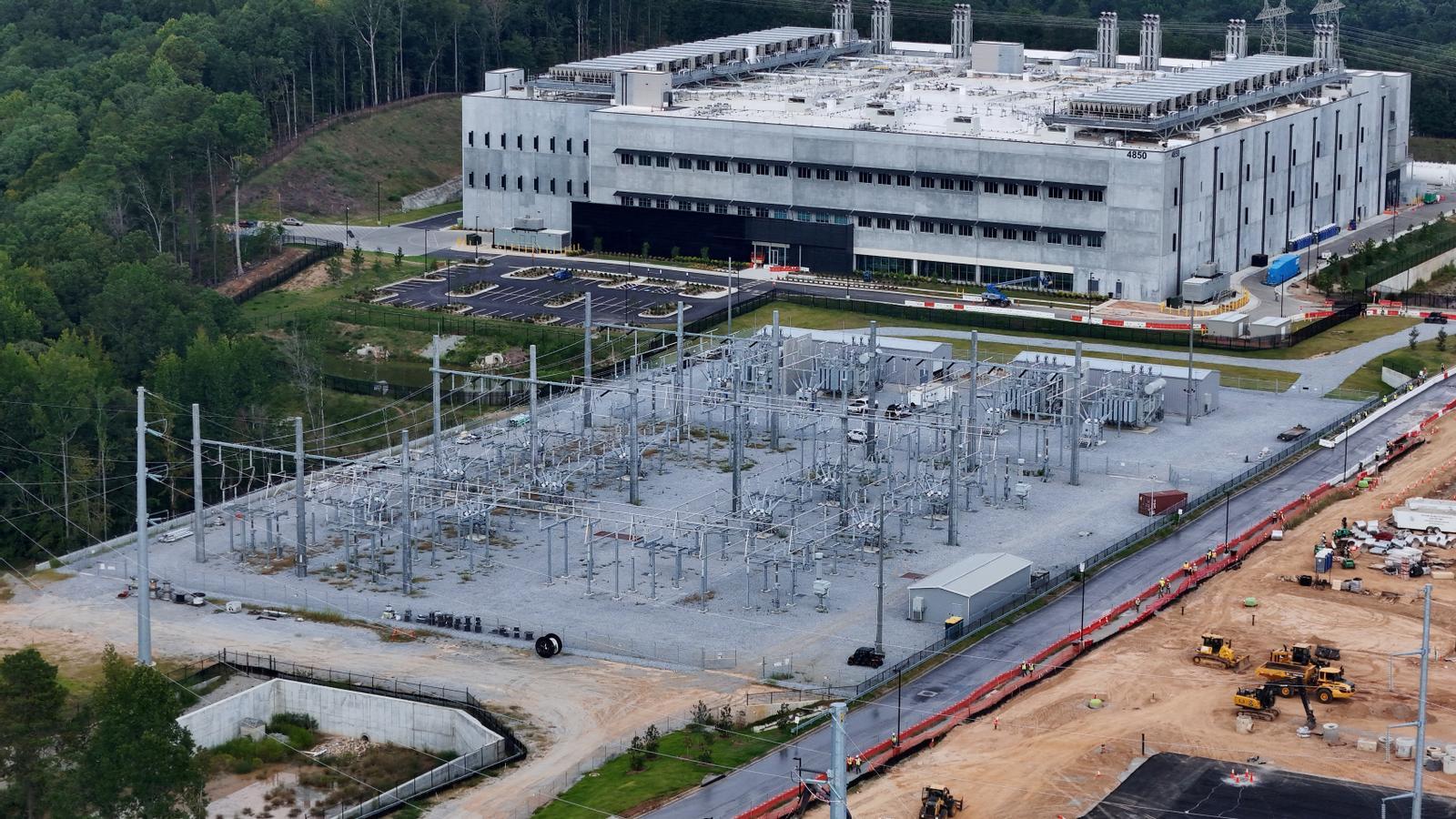
BarcelonaWith empty water bottles in hand, citizens of the Indonesian island of Batam stormed a data center macro-complex this week shouting "Water, water." They were all protesting because for months now, no water has flowed from the taps in their homes. Meanwhile, the data centers at the Nongsa Digital Park, located on the island, continue to have enough water for computers and systems to operate normally. Now the island's inhabitants, which is trying to become a technological hub, depend on water tankers, as reported by the BBC.
The case of Batam island is just one of the latest in which data centers, constructions that have skyrocketed to support the race for artificial intelligence (AI), are monopolizing water in the areas where they are installed. Quilicura (Chile), Dallas (United States), Querétaro (Mexico), and Canelones (Uruguay) are other examples where data centers are stifling water resources—and also electricity—due to the massive need for water to cool servers, as well as to generate the enormous amount of electricity they use.
According to data from the OECD and Cornell University, for every 100-word text or every conversation with between 10 and 40 prompts (instructions) up to 0.5 liters of fresh water are consumed, or the equivalent of 14 LED bulbs left on for an hour. The creation of images with AI further increases water needs: each generated image consumes between 2 and 5 liters of water, and videos drive consumption even higher, about 30 liters for every minute of video. By 2027, global water usage related to AI is expected to be between 4.2 and 6.6 billion cubic meters, an amount equivalent to between 4 and 6 times the annual water consumption of Denmark.
New resource extraction
Like on the island of Batam, Quilicura, north of Santiago de Chile, has emerged as a hub for data centers in the country and Latin America. With six macro-complexes from companies like Google, Ascenty, and Microsoft, the town is experiencing an uprising against these large facilities, which endanger its wetland, the most important in the area and one of the largest in Chile, covering 469 hectares and declared under national protection.
The first centers arrived in the Chilean town in 2010, but a key moment was when Google committed to Quilicura in 2015 and installed its first data center in Latin America there. Now the Chilean town has one of the largest concentrations of data centers in Latin America, and residents report that these facilities, connected to the wetland, are drying it out due to the massive water consumption they require. Google has the right to extract 50 liters per second—the equivalent of the consumption of about 8,500 families—to cool the thousands of servers and computers.
According to official reports from Google, the Quilicura data center consumed 461 million liters in 2024. Added to this massive consumption is the risk of droughts due to climate change, which could further endanger the wetland.
The problem of data centers and water escalated in Chile to the point that the country's government presented a plan to decentralize them, with the idea of moving the centers to desert areas. The justice system has also intervened: a Chilean court blocked Google's attempt to build a new data center in Cerrillos—southwest of Santiago—which was intended to support the one in Quilicura, due to the environmental impact it involved. The new center that Google aspired to build required 7.6 million liters of drinking water per day.
The case of Quilicura is not the only one. Querétaro, north of Mexico City, also suffers from the water consequences of data centers. In this town, the student collective UEMAS has been among the most belligerent and has denounced that the proliferation of these data centers does not bring modernization, but is a new form of resource extraction: it involves sacrificing the land, saturating the electrical grid, and depleting local water.

However, the environmental rebellion against data centers is not limited to the Global South. It has also reached the United States, where a large part of the companies that operate them come from. Upon his return to the White House, the President of the United States, Donald Trump, authorized a deregulated policy to benefit the construction of large data centers, just as the big tech companies demanded, but he has encountered complaints in the states affected by the facilities, such as New Mexico and Pennsylvania.
In Pennsylvania, the issue has gone so far that the company NorthPoint Development has proposed paying $10,000 to each family in the municipality of Hazle so that they support the construction of the data center that the company wants to build in the town.
"An announced suicide"
Given environmental and energy concerns, around twenty states in the United States—governed by both Democrats and Republicans—have approved measures to halt or prohibit the construction of data centers, and seven more are in the process of setting limits. Texas—in Republican hands—is one of the states with the highest concentration of data centers and has put a brake on the construction of new facilities, also influenced by a possible victory for the Democrats in the midterm elections to be held on November 3rd.
In Europe, the EU requires that data centers with an installed capacity of 500 kW or more must report their water and electricity consumption, and several countries, such as Germany, France, and the Netherlands, have rushed to promote legislation that imposes restrictions on the facilities or measures to make them more sustainable. In Spain, regulation is still pending. While some countries are rushing to try to contain the expansion of large data centers, in the midst of the AI fever, the UN has called for a moratorium. It was requested by the rapporteur on the right to water, with a forceful tone: "We have embarked on an announced suicide."
