Trump wants to make tech companies pay for the energy that data centers spend
The US president announces the expansion of a non-binding commitment with the adhesion of governors and data companies

-
CAT -
CAST
WashingtonThe unease caused by artificial intelligence (AI) data centers in the places where they are built is becoming increasingly difficult for the White House to ignore. U.S. President Donald Trump announced on Thursday an expansion of the plan he presented in March to protect citizens from the cost overruns these centers cause in public service bills. The initiative, however, is not binding. In total, it is estimated that there are more than 3,000 data centers already operating in the United States.
Beyond noise and water overexploitation, AI data centers consume enormous amounts of energy, sometimes exceeding the volumes normally produced by power plants. As a consequence, the high demand necessitates a reform of the electricity distribution and production system, such as new high-voltage lines and substations. The costs arising from these changes are directly passed on to consumers through changes in tariffs, as indicated by recent studies conducted by Harvard Law School and Lawrence Berkeley National Laboratory.
According to a recent analysis by ICF, a consulting and technology services firm, the increase in electricity demand could cause monthly public service bills to skyrocket by between 15% and 40% by 2030.
Trump christened the initiative "Commitment to Protect Consumers," to which the main AI and technology companies had already adhered. All this, with the aim of calming citizens in the face of forecasts that more centers like these will continue to be built in the country to advance in the race for artificial intelligence development. Not only because of the competition with China, but also because it has become one of the main drivers of the U.S. economy in recent years.
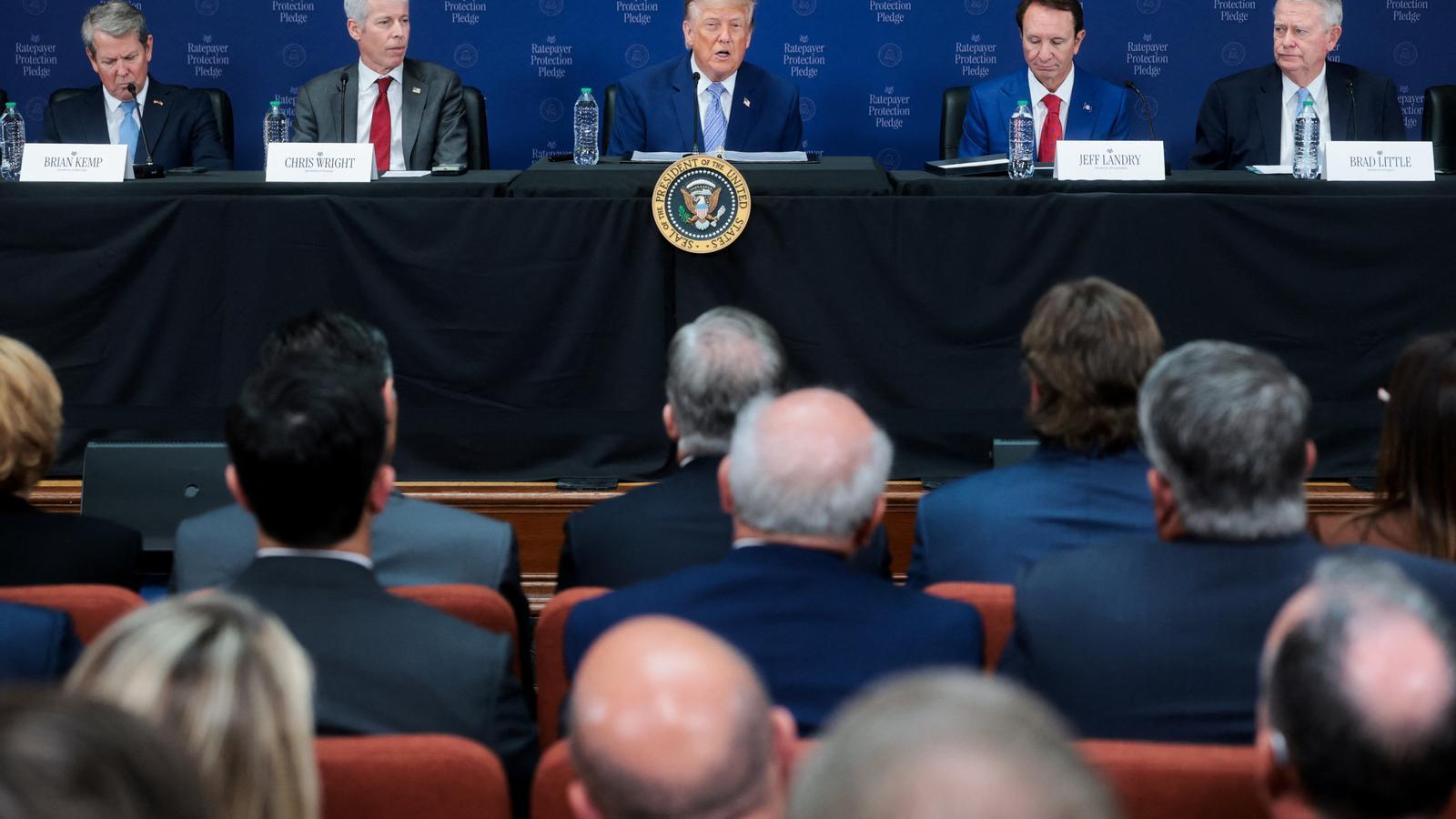
During a meeting at the U.S. Environmental Protection Agency, Trump attempted to reinforce this message of calm to consumers. The commitment, which remains non-binding, has managed to incorporate about twenty governors, as well as public utility companies and companies related to data development.
"It's hard to believe, but it takes twice the electricity we have right now, maybe even more than that, to truly achieve what we want to do [to develop AI," Trump told attendees, who also contemplated the option of allowing tech companies to build their own power plants.
"It occurred to me that they should build their own power plant. That way nobody can complain," he stated. And he added: "So [tech companies] we'll let you build your own plant with the Trump administration's taxpayer protection plan."
Collaboration between administrations
Although the US president boasts about his plan to protect citizens, it remains to be seen how effective it will be. The measure must be implemented in collaboration with state and local governments. Silicon Valley giants say they support this initiative, but in California they are opposing legislation designed to prevent consumers from bearing the extra cost these centers cause.
"It is disappointing, though perhaps not surprising, that the same tech companies that signed the taxpayer protection pledge are simultaneously opposing state-level efforts to hold them accountable to their promises," Matthew Freedman, a lawyer for the Public Interest Network Reform, told the Associated Press.
