Trump says US can end Iran war in "two or three weeks"
The US president will give a speech to the nation this Wednesday afternoon on the conflict in the Middle East
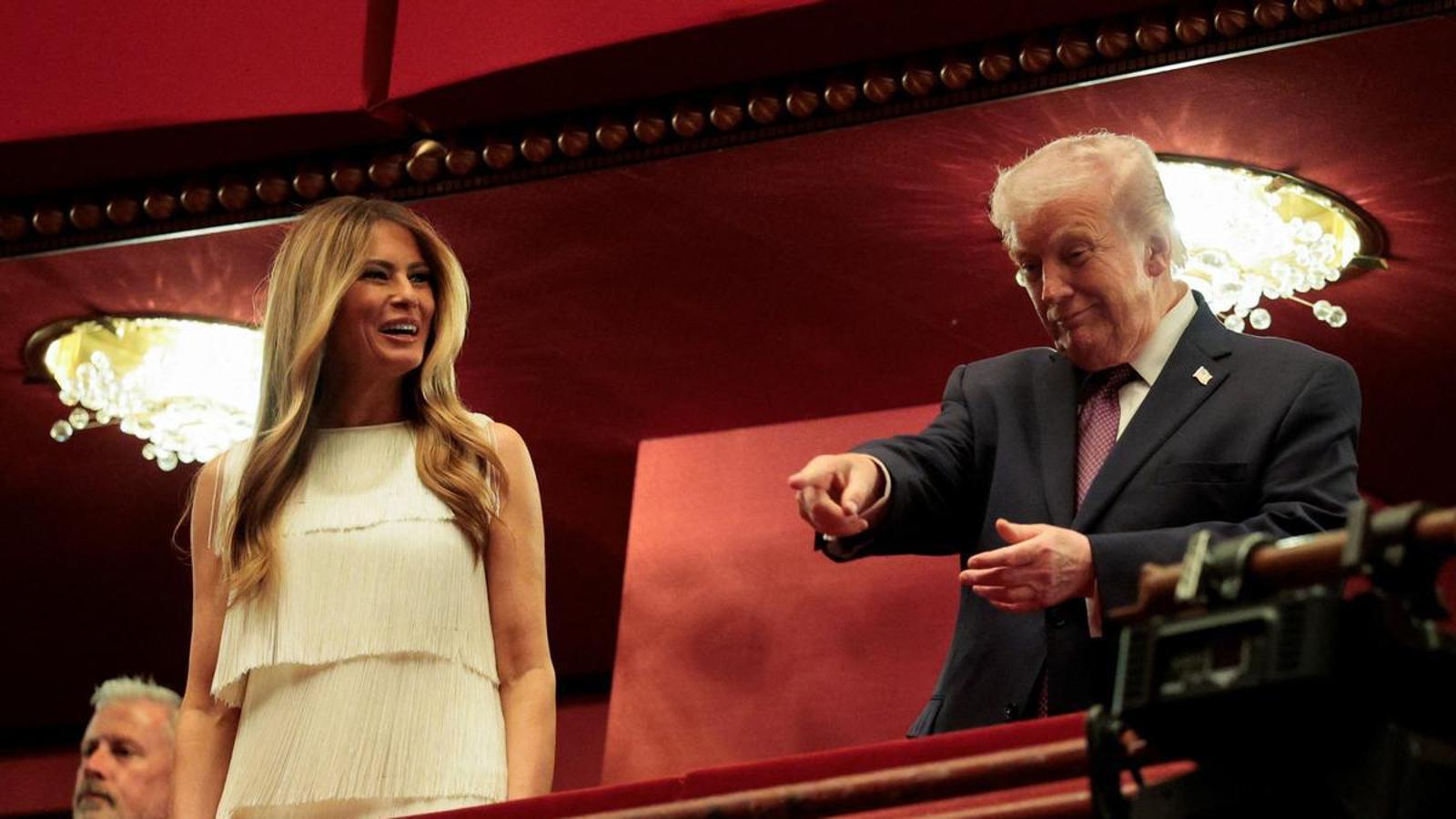

WashingtonAt the start of the conflict, Donald Trump predicted that the military campaign in Iran would last about four weeks. After a month of war and with the price of oil in the US exceeding 4 dollars for the first time since 2022, the US president has said that, in his opinion, the conflict could be resolved in "two or three weeks". “We will leave very soon”, he announced this Tuesday afternoon from the Oval Office. After days of insisting that he was negotiating with the Iranians to end the conflict and reopen the Strait of Hormuz, the president now assured that no agreement would be necessary for the war to end. “Iran does not have to reach any agreement. No, they don't have to make any deal with me”, he stressed. Shortly after these statements, press secretary Karine Leavitt announced that Trump will address the nation this Wednesday at nine in the evening (local time) to talk about Iran.
Wednesday evening's appearance adds more uncertainty to the war after Washington has been sending specialized units for ground operations to the region. The president sets a deadline of three more weeks of campaigning before the operation, codenamed "Epic Fury," concludes. Of the 7,000 additional soldiers the Pentagon has sent to the region, only about 2,500 Marines have arrived, aboard the amphibious assault ship USS Tripoli. The others are still to arrive aboard the USS Boxer, and were expected to do so by mid-April. Meanwhile, elite paratroopers from the 82nd Airborne Division have already been mobilized. The corps is prepared to be activated within a maximum of 18 hours from the order being given. Last week, furthermore, the Pentagon was also considering sending another 10,000 troops.
On Tuesday night, The Wall Street Journal exclusively reported that the United Arab Emirates wants to reopen the Strait of Hormuz and is ready to enter the military campaign. Sources familiar with the conversations had also explained to Associated Press that the Gulf countries have privately urged the United States not to stop attacking Iran until significant changes are obtained. These pressures would be led by the United Arab Emirates and Saudi Arabia. The insistence of the Arab countries to continue with the campaign represents a significant shift compared to the reactions in the early days of the conflict, when they criticized Washington for not notifying them of the attack in advance.
The horizontal escalation by the ayatollahs, with attacks on all their neighboring countries, has put the economy and prosperity of the petrostates at risk. Last week, the bombings already escalated to energy infrastructure, causing billions of dollars in damage that will take years to repair. This fact alone already ensures that the economic impact of the war will continue to be felt long after the end of the conflict.
Trump has now said that it is not necessary for the ayatollahs to reach an agreement with Washington to end the conflict and seemed to disassociate himself from how the post-war period should be managed. Especially with regard to the Strait of Hormuz. "We will leave. This is not for us. Someone can remove the mines that have been dropped in the water. France can do it or anyone who uses the strait," said the president, referring to the naval mines that Iran has placed in the maritime passage since the beginning of the conflict.
Tuesday began with a post on Truth Social in which Trump explicitly disassociated himself from the fate of Hormuz, despite having made its reopening a condition for not bombing Iranian electrical facilities on April 6. In this same post, he railed against European countries for not wanting to help him unblock the maritime passage and disassociated himself from the fuel shortage that the extension of the boycott could entail. In fact, he suggested Europeans buy oil from the US and told them to muster the courage to take control of the strait by force of arms. "The United States will no longer be there to help you, just as you have not been there for us. Iran has been, essentially, decimated. The hard part is done. Go get your own oil!", he concluded.
Iran has at all times denied the existence of these conversations and on Tuesday morning threatened to escalate its attacks against North American companies in the region. The Revolutionary Guard warned that, starting this Wednesday, it would attack a total of 18 companies, including Microsoft, Google, Apple, Intel, IBM, Tesla, and Boeing. The Iranians warned them that "they would have to expect the destruction of their facilities for every terrorist act in Iran," referring to attacks by the United States and Israel.
