The drivers defy Renfe: they reject the Garraf schedules and delays in Rodalies worsen
The associations and user platforms criticize the lack of management to resolve this new conflict

-
CAT -
CAST
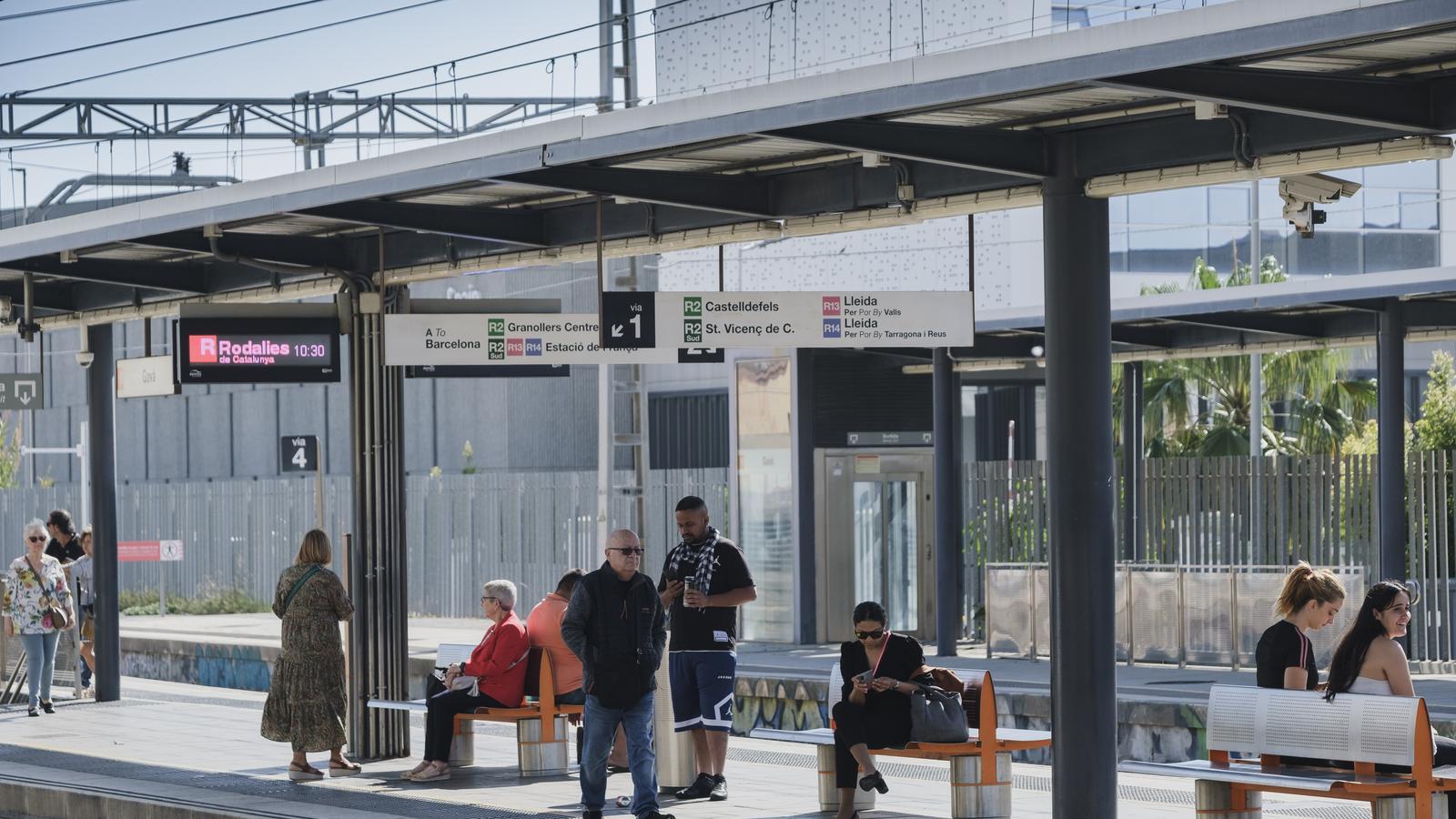
BarcelonaProblems are piling up on the R2 Sud Rodalies line, in Garraf, since the tunnel maintenance works began two weeks ago. The alternative transport plan designed to ensure train circulation while the work continues is not working. The reason? Some of the drivers have refused to work with the new schedules defined by Renfe for this operation, which has rendered the new timetable for the trains useless, as they now run on a single track due to the works. The Spanish drivers' union Semaf alleges that the company did not comply with the established deadlines to give sufficient notice of the changes.
Thus, although the operator designed a new timetable to ensure all trains entered and exited the single-track section with the shortest possible waiting time, it is not being applied, and drivers continue to work according to the old schedules. The situation has been ongoing for 15 days, since the works began, which are scheduled to last for three more months, until the summer. According to industry sources, the disagreements have a "direct" and "serious" impact on the service, which has become more irregular and unpredictable due to the accumulation of delays, trains overlapping, and excessive waits at the entrances to the single-track section, which lengthen travel times because the schedules do not add up.
Associations and platforms fighting for dignified public transport lament that it is the users who are "paying" for the situation.
"With a single track, if the schedules don't change, you have a serious problem," agrees Anna Gómez, spokesperson for Dignitat a les Vies, who adds:
The operator Renfe, on whom both the new schedules and the drivers depend, has avoided giving a strong response to the conflict and is limited to saying that "management is in permanent contact with the drivers" to try to implement the new schedules in accordance with the works and make "the necessary adjustments that are required" to guarantee, they say, the best mobility conditions. For its part, the Generalitat - the owner of the service - has also been discreet in its assessments in this regard: sources from Territori admit that there are "dysfunctions" and assure that they have requested explanations from the operator so that it clarifies the reasons.
"The one responsible for the service to function as requested is the operator, and therefore it is Renfe who must execute what the service holder has requested and what she herself has planned", values Ramírez from the PTP. "We are surprised how difficult it is to know all these intricacies in a company that is public", he complains. "What we know, because we have spoken with the Generalitat, is that behind all this there are union issues, and the calling of new positions", advances Gómez.
A hidden strike?
Union sources consulted by this newspaper agree that Semaf would be carrying out a "pressure maneuver" on Renfe to achieve more positions, which would be beneficial to them in the upcoming union elections. Other sources in the railway sector add that the union has a lot of power, as it brings together the majority of drivers, and Renfe's management "would not want or could not face another labor revolt" like the one that occurred in February, with the strike. The same sources add that, despite this standoff, the operator and Semaf maintain good rapport at the moment and "follow the same strategy" on many issues since the crisis began.
"We do not want to go against the drivers, in fact, perhaps if we listened to them we would understand them, but there is a lot of opacity", continues the spokesperson for Dignitat a les Vies. "What is this called? Can we talk about a hidden strike? Why doesn't anyone explain to us what's happening?", asks Gómez. Semaf has not wanted to elaborate on any arguments, but they point out that "if it were a hidden strike, Renfe would have already opened disciplinary proceedings, as it has done on many other occasions," point out the union spokespersons.
Be that as it may, this conflict adds to all the problems that the Catalan railway network has been accumulating since the crisis began, last January, just after the creation of the new mixed company, Rodalies de Catalunya, which has not yet been able to start managing the "normalcy" of the service. Currently, two months after the accidents in Adamuz and Gelida, and the storm that put the entire network in doubt, there are still speed limitations, sections under construction, closures, and ongoing repairs throughout the network.

