Trump allows Russian tanker to break Cuba blockade: "It will have no impact, they are finished"
The Kremlin celebrates as a geopolitical victory the oxygen to its last great ally in Latin America

-
CAT -
CAST
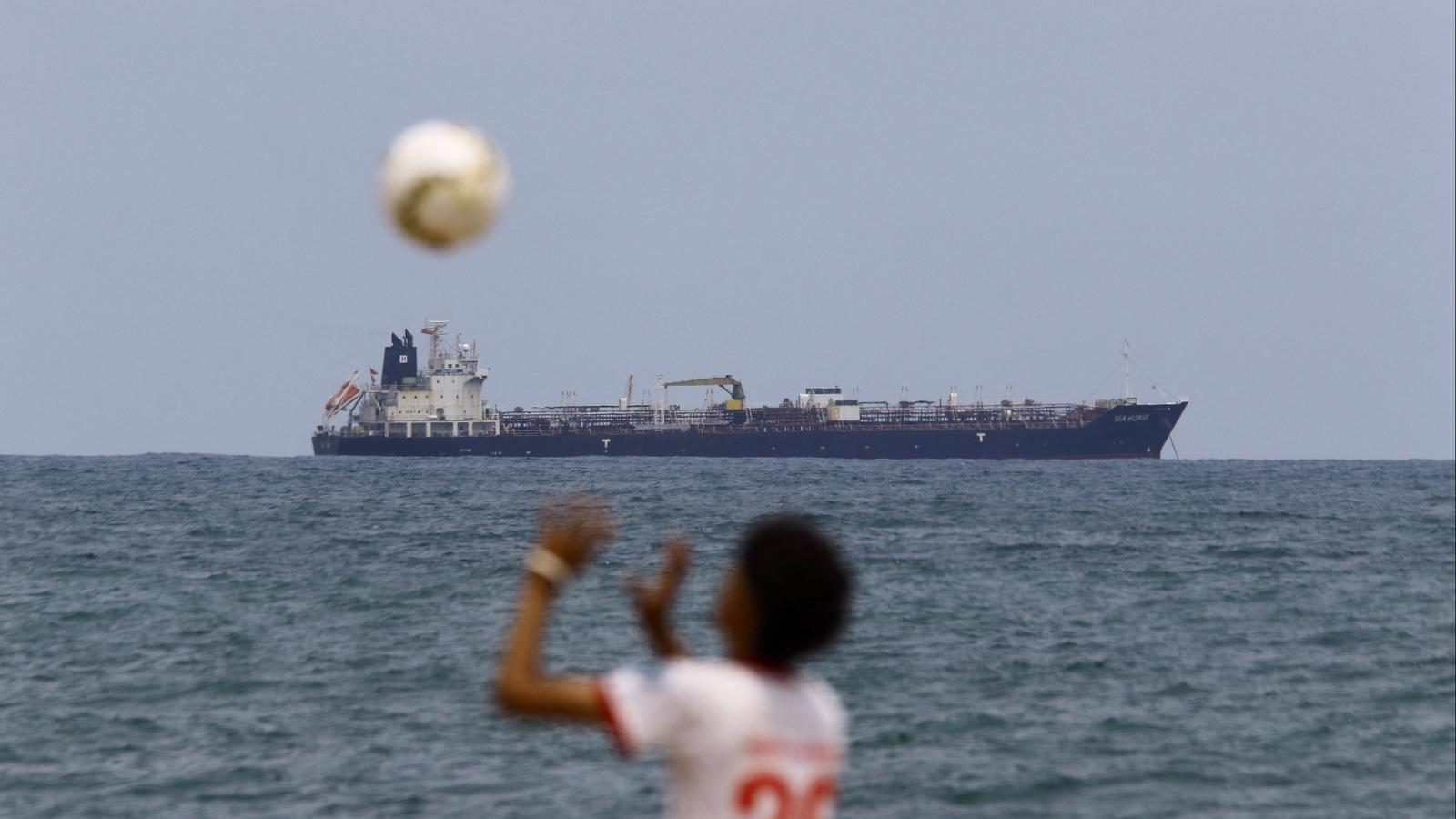
MoscowAfter a three-week journey from the Baltic Sea, crossing the Atlantic Ocean, to the Caribbean, the Russian tanker Anatoli Kolodkin will finally be able to dock in a Cuban port and will break the blockade that Donald Trump has been imposing on the island since January. “If a country wants to send oil to Cuba right now, I have no problem with it, whether it's Russia or other countries. It will have no impact, Cuba is finished.”, said the President of the United States, a few hours before the vessel reaches its destination. The 730,000 barrels of crude oil that the ship is carrying – about 100,000 tons – are estimated to alleviate Havana's fuel crisis for a month. At the same time, they will offer Vladimir Putin a geopolitical victory in the dispute with Washington over spheres of influence.
The Kremlin spokesman, Dmitry Peskov, has expressed himself “satisfied” with the news, has stated that it is the “duty” of the Russian government to provide assistance to its Cuban friends and has warned that it will continue to do so. Peskov also admitted that the operation has been agreed with the White House. Unlike the tankers confiscated by the American fleet during the blockade of Venezuela, which were seized on the grounds that they were sailing without a flag and were associated with anti-terrorism sanctions, the Russian tanker is co-owned by the Russian state. According to experts, the United States has very few legal mechanisms to intercept the vessel outside its territorial waters, and therefore will do nothing to prevent it from docking at the port of Matanzas. Furthermore, a confrontation with Russia in the midst of the conflict in the Middle East could translate into even more volatility in the global energy markets.
Since the rise in hydrocarbon prices due to the attack on Iran, Trump has partially lifted sanctions against Russian oil and has given Putin some breathing room. Breathing room that is not only economic, in the form of more revenue for the Russian state budget, but also geopolitical. For Moscow, breaking the blockade of Cuba is a statement of intent that allows it to question the triumphal march that the American president wants to make of his second term. If the detention of Nicolás Maduro in Venezuela, without opposition and in the face of the Kremlin's impotence, seemed to open the way to the inevitable loss of Russian influence in the region, now Putin can help to temporarily put a stop to it.
Russian war bloggers are also looking at Iran's resistance as a factor that has forced Trump to postpone the decision to bring down the Cuban regime. Thus, indirectly, the military assistance that, according to Western reports, the Kremlin is providing to Tehran would be helping to contain the North American attacks against Moscow's two partners. Furthermore, the propagandists celebrate the uniqueness of Russia, the only country capable of helping Cuba, while other Latin American governments and European left-wing governments do not dare to challenge the tariffs imposed by Trump.
The island is in a critical situation. The lack of gasoline and diesel has caused major blackouts in the country, the almost total paralysis of the economy, and serious health problems for people. According to the Cuban government, more than 100,000 citizens, including 11,000 children, are waiting in hospitals to be operated on due to the energy blockade, and there is also a lack of medicines and food. China has delivered a total of 30,000 tons of rice to Cuba as humanitarian aid since January, and Russia assures that its oil also falls into the category of humanitarian aid.A partner close to the United States
For Putin, the association with Cuba is even more important than with Venezuela. The Kremlin has become over the last 25 years the lifeline of the island amidst the United States blockade. It has always supplied Cubans with food, fuel, and medical equipment, and they have developed joint financial support schemes to circumvent sanctions. In return, Russian companies have been able to invest in the Cuban economy and extract raw materials, both countries have deepened cooperation in intelligence, and, with the Russian invasion of Ukraine, thousands of Cuban soldiers have fought in the ranks of the Kremlin. However, despite Russia's interests, the arrival of its tanker in Cuba is only a momentary success. Trump is determined to deprive Moscow and Beijing of a strategic nerve center located an hour's flight from Florida, and Marco Rubio wants to make the fall of the Cuban regime, almost 70 years later, the legacy for a future presidential candidacy. The unknown is whether Putin, with his hands tied by the war in Ukraine, will show the same determination as his North American rivals to try to influence the island's destiny.
