US Supreme Court appears skeptical of Trump's attempt to revoke birthright citizenship
The Republican attended the hearing, becoming the first sitting president to attend a session of the high court

-
CAT -
CAST
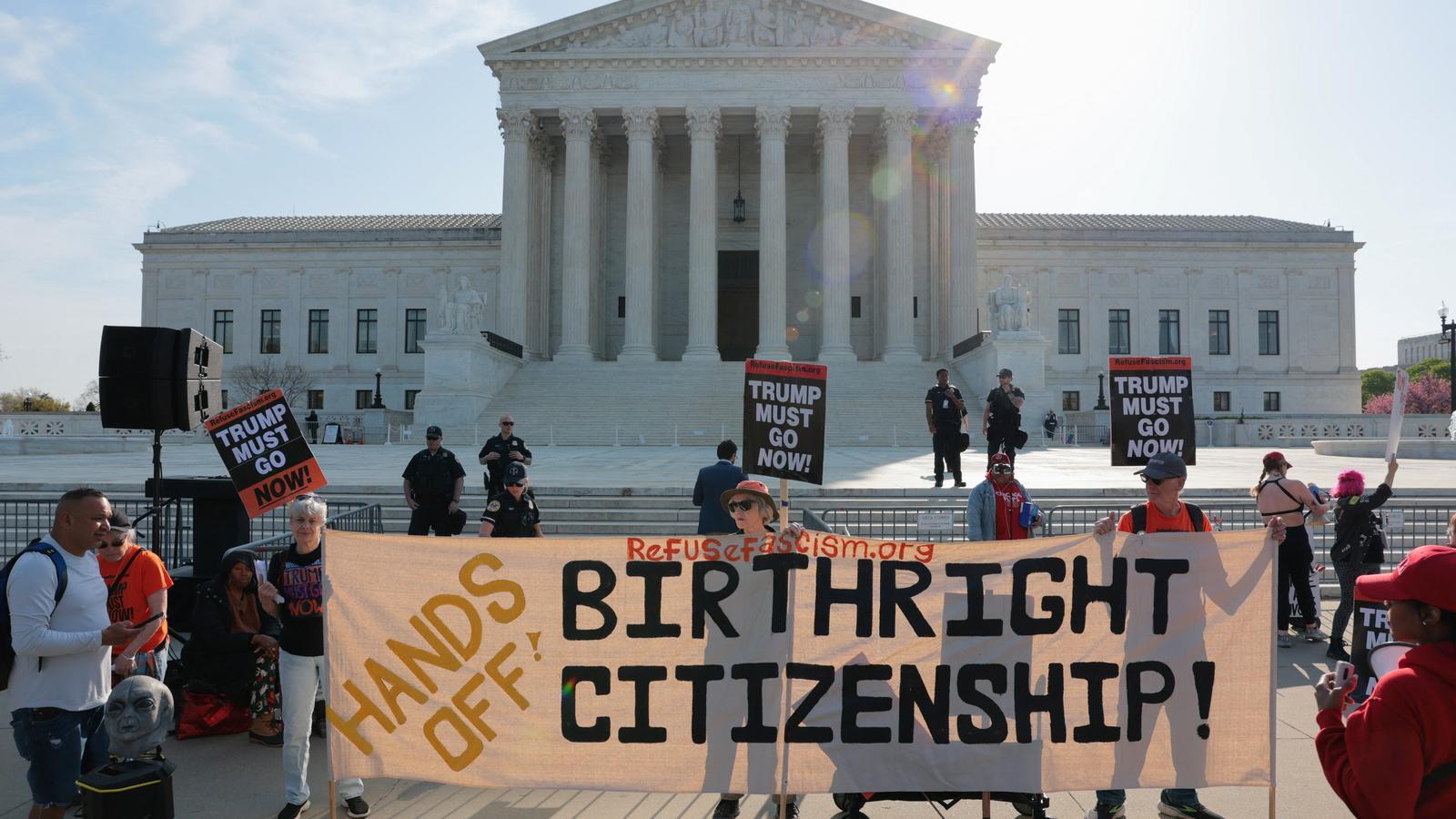
WashingtonThe Supreme Court of the United States began proceedings this Tuesday to determine the legality of Donald Trump's executive order to limit birthright citizenship.And, in an unprecedented gesture, the president appeared to listen to the oral arguments. It is the first time a sitting president has attended a Supreme Court session, highlighting how important this case is to the president.
Hours after being sworn in, Trump signed an executive order revoking the right to acquire citizenship solely by being born in the United States. The aim is to prevent the children of immigrants – with or without papers – from obtaining US nationality. This is one of the main issues with which Trump wants to advance his anti-immigration agenda, but Supreme Court justices have shown skepticism this Wednesday, according to some American media. The decree has ended up on their desks because it directly contradicts the 14th Amendment to the Constitution.
This amendment states that “all persons born or naturalized in the United States are citizens,” and now the Supreme Court must review whether this right, enshrined in the Constitution since the 19th century, guarantees citizenship to all persons born in U.S. territory. The amendment was ratified in 1868 after the Civil War, which ended slavery in the United States and overturned a Supreme Court decision that had declared that people of African descent could never be American citizens.
Trump, wearing a red tie and a dark suit, sat in the front row of the public gallery of the courtroom, according to media present at the court. Some of the justices, including Chief Justice, the conservative John Roberts, questioned the lawyer from the Department of Justice who defended the measure.
The U.S. Solicitor General, John Sauer, representing the administration, began his arguments by saying that “unrestricted birthright citizenship contradicts the practice of the vast majority of modern nations,” according to Reuters. He added: “It operates as a powerful magnet for illegal immigration and rewards illegal aliens who violate immigration laws.”
According to the New York Times, top conservative judges have raised questions about the constitutionality of the president's order. However, some have also been tough on a lawyer for the American Civil Liberties Union (ACLU), which filed the legal challenge to the president's decree.
The court, which has a 6-3 conservative majority, has supported Trump on other immigration-related policies since he returned to the presidency last year. According to some estimates, an eventual Supreme Court ruling upholding the administration's opinion could affect the legal status of up to 250,000 babies born each year in the U.S.
