The United States wants to be mediators in Ukraine again
Rubio meets with the head of Russian diplomacy and assures that he wants to play a role in ending the war

BarcelonaIt was a long time ago the meeting between Donald Trump and Vladimir Putin in Anchorage, in Alaska, where the American president received his Russian counterpart – against whom an arrest warrant from the International Criminal Court is pending – with a red carpet. That August, the leaders spoke of a possible general peace framework in Ukraine that would involve Kyiv ceding the Donbas region. The optimism of the meeting crystallized in three-way negotiations in Geneva, in February of this year, which were abruptly interrupted without any agreement. Since then, it seemed that the White House – distracted by the war in the Middle East – had set aside diplomacy in Ukraine.
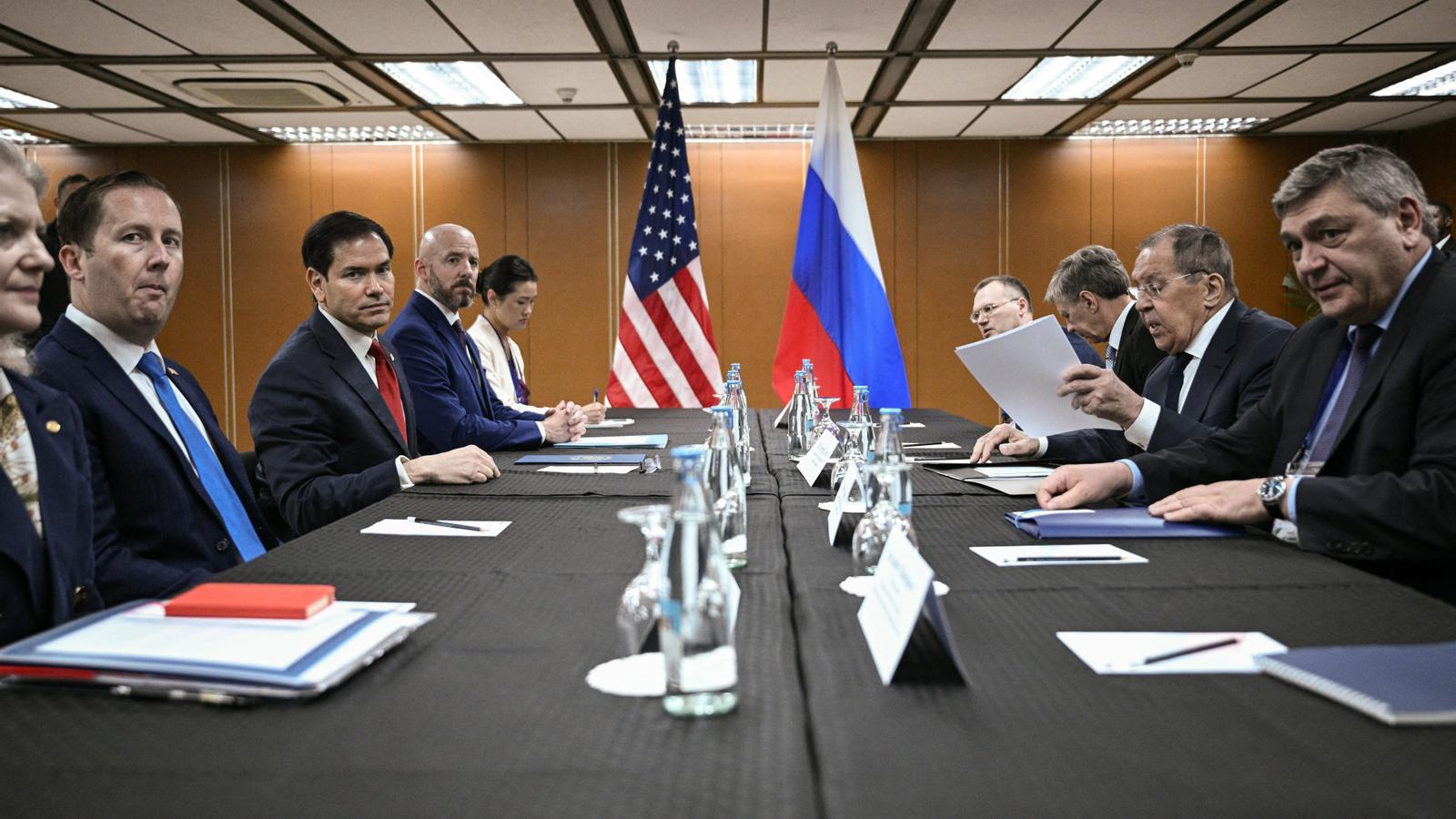
But this Thursday, US Secretary of State Marco Rubio met with Russian Foreign Minister Sergey Lavrov to try to regain the mediating initiative in Ukraine. During the conversation, within the framework of the ASEAN summit (Asian nations) in Manila, according to the Kremlin, the Russian leader informed his counterpart of "the real situation" at the front, and reproached him for "arming" Kyiv.
In fact, while the Trump administration began by cutting off arms shipments to its ally, it has gradually opened the tap and this July granted Ukraine a license to manufacture Patriot missiles on its territory. A shift that has also been reflected in Washington's rhetoric: recently, Marco Rubio has called the Russian military campaign a "strategic failure" and has stated that Russia has no chance of winning the war.
Perhaps that is why he believes that now is a good time to negotiate again. Washington has not given many details about the meeting with Lavrov, but has made it clear that it wants to play a mediating role in Ukraine again: "We must have a relationship with the Russian government, even if we have points of disagreement. And in the case of Ukraine, perhaps we have an opportunity, if we can play a constructive role, to put an end" to the conflict, Rubio stressed.
But the Kremlin has cooled expectations and, through its spokesman, Dmitry Peskov, has stated that it is not very optimistic about reaching a quick agreement to end the war. Nevertheless, Peskov has invited American envoys Steve Witkoff and Jared Kushner to Moscow when they are available to continue negotiating.
Points of contention
What, then, do the United States propose? From the brief statements issued by the respective offices of the leaders, it appears that the meeting — which lasted only 35 minutes — has not led to much progress in bringing positions closer. Rubio has limited himself to lamenting the number of deaths and has insisted that the central challenge remains finding an agreement "that both sides can accept." "We have tried, and we will continue to try, to see if we can find a middle ground that allows for this."
However, the Kremlin assures that Washington has not yet given up on the proposals put forward by Putin in Alaska, which would imply Moscow controlling Donbas, so this could be the starting point for future negotiations. With the same proposal on the table, then, the points of contention remain entrenched. Kyiv refuses to cede territory without real guarantees and demands a security presence that prevents future Russian incursions. And Moscow maintains that any guarantee must include its veto right and that Ukraine must be neutral.
