The United States Senate asks Trump to end the war in Iran
Four Republican senators vote against the military offensive in the Middle East, revealing the division that exists within the Republican Party
-
CAT -
CAST
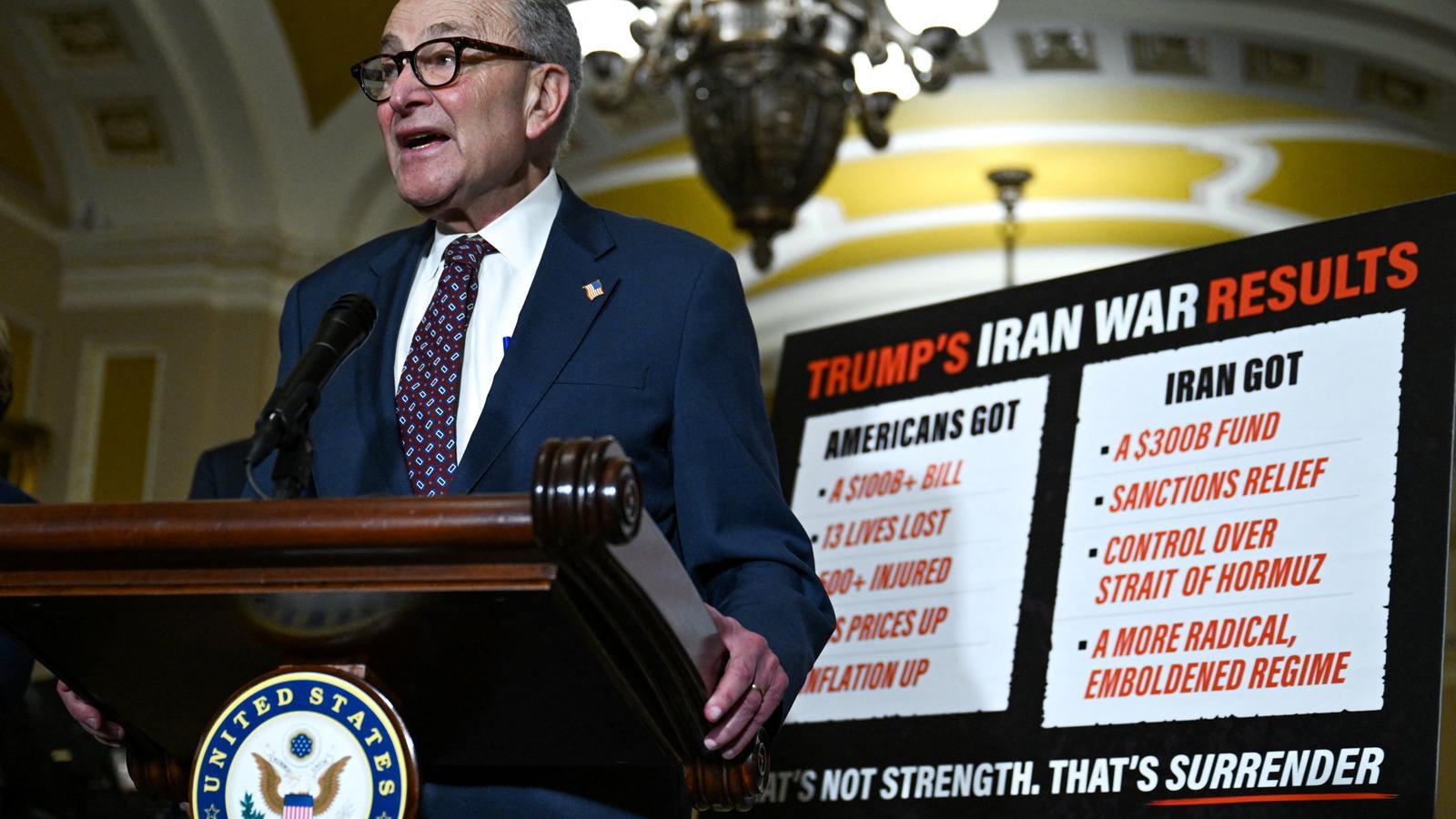
WashingtonThe United States Senate voted this Tuesday to prevent President Donald Trump from continuing the war against Iran or, at least, from obtaining Congress's authorization to continue it. The resolution was approved thanks to the favorable vote of four Republican senators and the fact that two others were not present during the vote. This is the most significant display of rejection of Trump and his policies by the Senate, at least during this second term, which ratifies the decision that Congress already approved in early June.
The resolution is not a law and, therefore, it is difficult for it to force the president to change course if he decides to continue with the war. However, it is relevant because it reveals the extent to which the Republican Party is uneasy about the November elections, at a time when polls indicate that the majority of Americans oppose the conflict. Until now, Trump had found almost no opposition within his own party to his policies.
At the same time, this measure, approved by 50 votes in favor and 48 against, comes just a few days after several Republican senators criticized the preliminary agreement that the administration has reached with Iran, as it lifts sanctions on the country and includes a $300 billion fund to rebuild it. Senator Roger Wicker stated last week that the agreement is "completely out of alignment with the president's objectives" and that the aforementioned fund for the reconstruction of Iran "will make the payment to Iran provided for in the Obama agreement of 2015 seem insignificant in comparison".
For the senators, moreover, the fact that the resolution has progressed just as the United States and Iran have reached a peace agreement does not make it any less important, because they believe that the president could resume the war at any moment. This Monday, Trump threatened to "hit" Iran again "very hard" and, this Tuesday, he assured that either Iran accepts that nuclear inspections be carried out on its territory, "or there will be no more negotiations!", he wrote on his social network, Truth Social. The Iranians, however, denied it and assured that this issue had not been addressed during the weekend's talks in Switzerland.
"We have left behind the most active phase of the war, and this is a perfect moment for Congress to consider what the next step should be, instead of allowing one man to make the decision," said Democratic Senator Tim Kaine, who has led his party's efforts to curb the president, on Tuesday.
The role of Congress
Democrats have celebrated their victory and recalled that, according to the Constitution, it is Congress that has the power to declare war. This is because, according to the War Powers Act, approved during the Vietnam War, the president needs the approval of both chambers if he deploys U.S. forces abroad. Otherwise, he must end these operations within 60 days. In this case, Trump has argued that he does not need this approval thanks to the ceasefire agreement he reached with Iran in April, even though both sides have violated it since then.
What is now unclear is what effects this resolution has, a question on which the Supreme Court of the United States has never ruled. It does not require the president's signature, nor can the president veto it, but at the same time it is not a law. Currently, the United States maintains 50,000 soldiers in the Middle East, and it is unclear how far along the talks with Iran are.
