The US launches a new wave of attacks against Iran, shortly after Trump declared the ceasefire over
Iran assures having attacked US military bases in the region as a response
-
CAT -
CAST
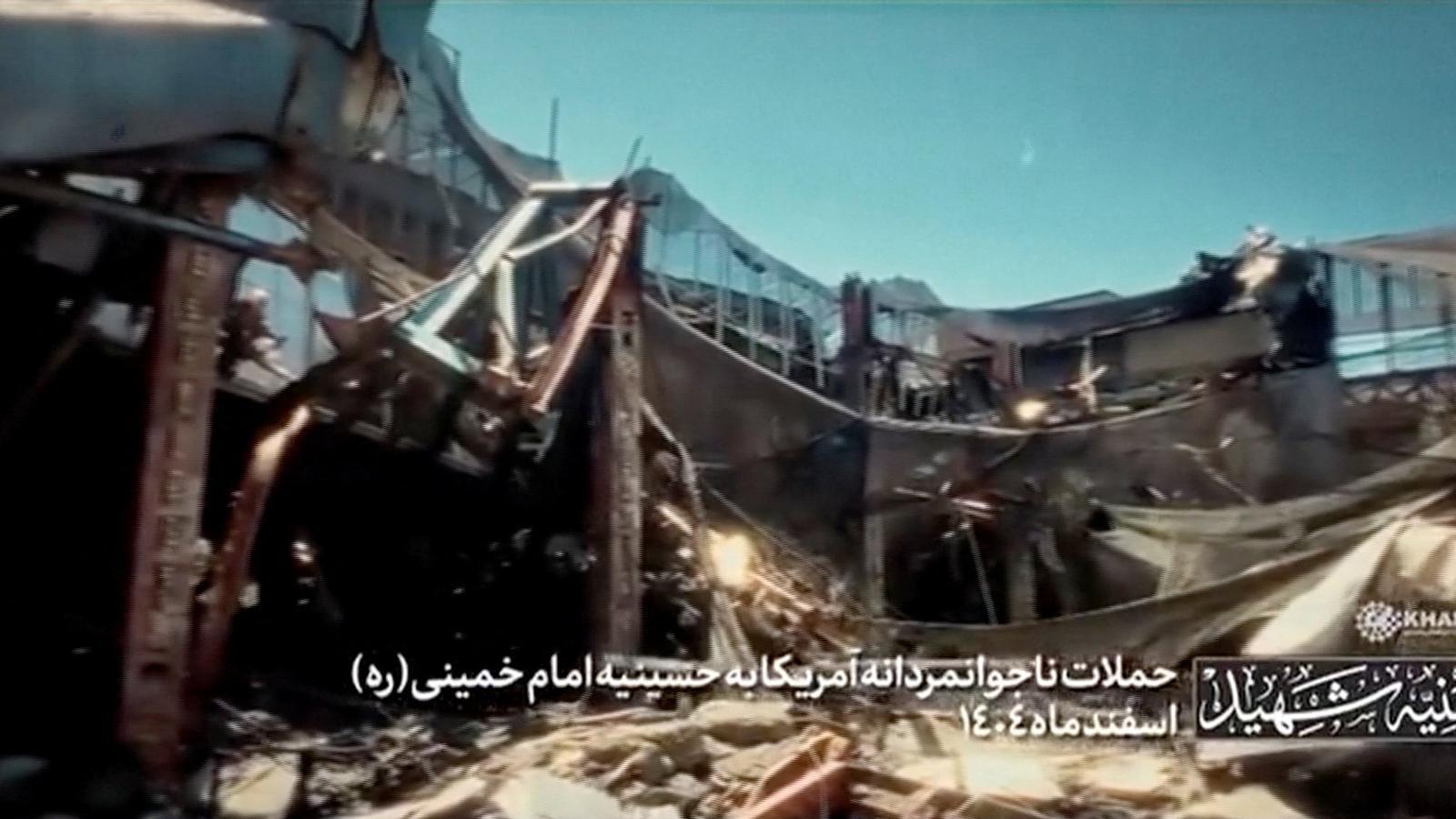
Washington / AnkaraDonald Trump has fulfilled the promise to attack Tehran again after the ceasefire ended. The United States Army Central Command (Centcom) announced this afternoon a new wave of "additional" bombings to "reduce its capacity to threaten navigation through the strait." Iranian state media have also reported new explosions in Sirik and Bandar Abbas, where the US already attacked yesterday.
"The United States holds Iran responsible for the recent unjustified aggression against commercial navigation and civilian crews freely sailing through a vital international waterway," says the Centcom statement published on X.
In response, the Revolutionary Guard has reported that it has attacked two US bases in Kuwait and another in Bahrain. The Iranians have warned that the wave of bombings will continue towards other US military positions in the region if Washington launches new missiles again. In parallel, the president of the Islamic Republic's parliament and one of the main negotiators, Mohammad Baqer Qalibaf, has warned the Americans that "the Strait of Hormuz will only be opened with Iranian agreements, not with American threats." "The US has not yet learned that being a thug and breaking your word no longer comes for free. I said it clearly: if they hit, they will be hit back," he wrote this morning on X.

From the NATO summit held in Ankara, the US president had lashed out on Wednesday morning against the ayatollahs, whom he called "scum" and "violent people": "For me, the [ceasefire] agreement is over." Trump promised a new wave of attacks: "I warn you: we will hit them hard tonight.
Trump once again raised his tone against the Iranians and has declared the memorandum of understanding, which was to serve as an initial ceasefire agreement between Washington and Tehran, as "finished." Nevertheless, the American leader contradicted himself and pointed out that the "magnificent negotiators" Americans "can maintain" talks with Tehran to end the war.
However, the US president has ruled out that the war will resume on a large scale and wants to prevent the conflict with Iran from becoming eternal. "We are not looking for a long-term conflict," he said, and reiterated that any new escalation "will end very quickly." He also linked this forecast to the energy market, assuring that a swift resolution of the conflict will cause oil to flow normally again and prices to fall. According to Trump, the situation in the region will favor an increase in crude oil supply and contribute to stabilizing international markets.
The announcement of the rupture of the ceasefire signed on June 15 between the United States and Iran, which has caused the price of oil to rise again and stock markets to fall, comes after missiles once again flew over the Strait of Hormuz this morning. The Pentagon has opened fire on several Iranian positions and Tehran has responded with bombings against US bases in neighboring Gulf countries. One of the most immediate effects of the exchange of attacks between the two powers has been the increase in the price of crude oil by almost 5%, a testament to its volatility. Before the crossfire resumed, the Brent crude barrel had calmed down and was trading around $70 again, the reference price before the war broke out at the end of February.
Wednesday in the early morning, several officials of the Iranian regime who have been involved in the negotiations issued parallel statements accusing the White House of having failed to comply with the memorandum signed in June. The Iranian Deputy Foreign Minister, Kazem Gharibabadi, stated that the reactivation of US sanctions on Iranian oil and the attacks in recent hours constitute a violation of the Islamabad memorandum, the preliminary agreement signed in June. "Iran seriously warns of the consequences of violating the pacts by the United States: it will adopt firm measures to safeguard its interests and national security," Gharibabadi wrote on X.
The statement was published after the US Central Command (Centcom) announced on Tuesday afternoon (local time) that it had reopened fire against Iran. Among the targets were Iranian air defense systems, coastal surveillance systems, and launch positions for drones and anti-ship cruise missiles, according to the latest Pentagon update. In the latest notification, it claimed to have shot down about 80 targets and "more than 60 vessels belonging to the Revolutionary Guard." All this, in response to Iranian attacks on commercial vessels between Monday and Tuesday: "The unjustified aggression by Iranian forces is a clear and dangerous violation of the ceasefire".
This morning, Iranian state media reported explosions east and west of Bandar Abbas, a city located on the Iranian coast with a strategic position in the Strait of Hormuz and home to the main base of the Iranian navy. In May, Bandar Abbas was already targeted by US projectiles. In Sirik, in the south of the country, explosions have also been reported, leaving several injured, according to state radio IRIB. Last May, Washington already attacked Iranian installations in an escalation that threatened to break the ceasefire. But on this occasion, not only the truce is at risk, but also the preliminary agreement signed in June.
Between Monday and Tuesday, several attacks had been reported against commercial ships passing through the Strait of Hormuz, amid the new attempt to reopen the maritime passage through which 20% of the world's crude oil trade passes. One of the ships, which was transporting Qatari liquefied natural gas, was in waters near the coast of Oman, according to the International Maritime Organization. The sultanate's Ministry of Foreign Affairs accused Tehran of the attack and condemned the action, stating that it was an attack "against the security of international maritime navigation".
NATO Support
The bombings have been approved by Donald Trump since the NATO summit in Ankara, from where he met with various US officials, including the chief of staff, Dan Caine; the Secretary of Defense, Pete Hegseth; and the Secretary of State, Marco Rubio, according to government sources to the New York Times. During the meeting, the Secretary General of NATO, Mark Rutte, described the Pentagon's attacks against Iran as "absolutely necessary" this Wednesday, and emphasized that it is "fundamental" for US troops to "react firmly" to Iran breaking the ceasefire. In fact, Rutte announced in statements to the media that the war in Iran would be on the table during the meeting with the leaders, although the rest of the allies flatly refuse to get involved in the conflict initiated by Trump and Benjamin Netanyahu. The Atlantic Alliance is a defensive and not offensive military understanding, committed to the integrity of its members' territory.

However, the President of the United States insisted that he is "disappointed" with European allies because they have not become involved in the war in the Middle East and, furthermore, have been critical of the attack he launched together with Israel against Iran. Thus, Trump lamented that his counterparts are only willing to get involved "after the war" to ensure the opening of the Strait of Hormuz. "This is not the spirit," he added.
