Margaryta Yakovenko: "The Russian family that occupies our house leads a model life"
Journalist and author of the book 'Occupation' (Seix Barral)
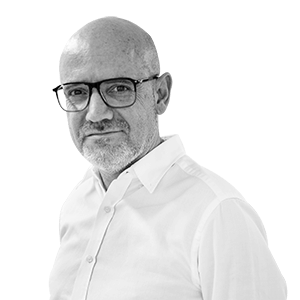
BarcelonaMargaryta Yakovenko (Tokmak, Ukraine, 1992) arrived in Spain at 6 years old, but every summer she returned to her hometown to spend it with her family. In 2022, with the Russian invasion, everything changed. Now Tokmak is an occupied city to which she cannot return. This is the common thread of the book Occupation (Seix Barral).
What is Tokmak like?
— It is a prototypical city of the Soviet era, when it reached 50,000 inhabitants and was organized around a single diesel engine factory. It is a transit city, with a population that came from all over the former USSR. A road crosses it that you have to take no matter what if you want to go from Crimea to Russia. When I was born, Tokmak was a city in crisis. The factory was closing and the city was losing 20,000 inhabitants. Everything was falling apart. Everything had an air of abandonment, which is the air I remember from my childhood. Lately, however, it was starting to flourish.
Remember the moment of the invasion?
— Yes, I remember waking up at 7 in the morning and getting the first news through the family WhatsApp group. I remember an audio message with the trembling voice of my aunt, who lived in Mariupol, explaining that they were bombing.
Did they not expect it?
— Nobody expected it.
When was Tokmak occupied?
— In March, a few weeks after the invasion began.
His grandfather lived in Tokmak, who died because the medicines he needed did not arrive.
— In war, the majority of victims are not produced at the front but in the rear, where there is no medical assistance. And they are not counted. And in Ukraine, the elderly were left alone and thousands must have ended up dead.
Regarding his grandfather, he explains that he had been a Soviet official and had even voted against Ukraine's independence. How do you think he experienced the invasion?
— As a great betrayal of his values and all that he had believed in: for him, the Soviet Union was one people. He believed that our friends could not be the Americans, but the Russians. He never understood Putin's motivation for invading Ukraine.
Putin thought that all Russian speakers in Ukraine would support the invasion...
— In Putin's mentality, Ukrainians who speak Russian have been subjected to a nationalist government that prevented us from developing our culture, and that is not true. In fact, Russian is still spoken in Ukraine today.
Writing the book, he discovered that his great-grandparents had also been Russian colonists displaced to Ukraine by Stalin.
— Yes, they repopulated areas that had become empty with the great famines. My grandmother was already born in Ukraine, but since she lived in the USSR she considered it all the same country, even though her passport did state that she was ethnically Russian.
And explain that after his grandfather's death, there is now a Russian family living in his house. How does the occupation work? Can they just keep everything without any further ado?
— In the occupied territories, Russian law is now applied. Ukrainians who have stayed, if they want to keep ownership of their homes, must change their passports and adopt Russian nationality. Their pension is calculated according to the Russian system, all money must be transferred to Russian banks... With empty houses, what they do is give a period of time in case the legitimate owners want to return and reclaim them, but when you try to go there, they don't let you. Then they award them to themselves.
Don't they let you return? And how do they know you are not pro-Russian?
— No. When you arrive at Moscow airport, the immigration service confiscates your mobile phones and looks at everything. They even find messages you have deleted. It is called "the filtration". Some relatives waited seven hours for them and in the end they were told no, without any explanation.
Maintain contact with people who remain in the occupied zone?
— Yes, and they are very scared. Thanks to them I know that the other day a Ukrainian projectile fell near the house and the windowpanes flew out. You assume that even if Ukraine recovers the area, the house will not stand, because there will be a battle. With the occupation they also steal a part of your childhood, and besides you don't know if you will be able to return.
And what do you know about the Russian family that lives there now?
— I know he is a military doctor and they have a young son who goes to the same school I used to go to. I know they want to do renovations, which shows they intend to stay here forever. I know he disappears for weeks because they send him to the front. And I know they pay the bills, which are still in my grandfather's name. They lead a model life.
Is there repression against the local population?
— There have been people who have been fined for, according to them, showing Ukrainian nationalist tendencies or simply saying that you are against the war.
Has writing the book changed your perception of identity?
— It has made me reflect on the little power we have to decide about our identity. We don't choose where we are born, what language we speak, or what education we receive. But all of this ends up shaping who we are. It can be changed later, but my mother tongue will always be Russian. And I have also learned not to feel guilty, because before I thought I wasn't Ukrainian enough. And I am aware that everything can go to hell in an instant, and I don't know if this is positive, because it makes you more distrustful.
Do you think this nightmare will end someday?
— The return to previous borders is a matter of time, but perhaps we will have to wait twenty years, when Putin's regime falls and Russia enters an economic and political collapse. Because there is no figure who can replace him. At the time of Putin's death, we will see another crisis like the fall of the Soviet Union.

