Yemen's Houthis enter war attacking Israel with the key to boycott (more) the world economy
Iran-aligned group launches projectiles at Israel for the first time in conflict

-
CAT -
CAST
BarcelonaWhen Tehran was attacked by US and Israeli drones and missiles on February 28, Iran's allies responded swiftly. Hezbollah, the Shiite armed group from Lebanon, did not wait. The moment Ali Jamenei's death was confirmed, it launched a barrage of over 90 rockets and drones at northern Israel and against the monitoring base on Mount Hermon, in Israel. Iraqi militias attacked the US embassy in Baghdad and forced an evacuation of diplomatic staff. Even Syrian militias – weakened since the fall of Bashar al-Assad – launched projectiles towards the border area with Turkey. But, until today, a key ally of the so-called axis of resistancehad refrained from formally entering the conflict: the Houthis of Yemen.
Despite having expressed their support for Iran, the Houthis had delayed their participation, stating that their intervention in the war would be a matter of time. On Friday night, the spokesperson for the Houthi military wing, Yahya Saree, hinted that the time had come: "We confirm that we are about to carry out a direct military intervention." And he pledged to enter the war if any new alliance with the United States and Israel against Iran occurred or if the Red Sea was used to "carry out hostile operations" against Tehran or against any Muslim country.
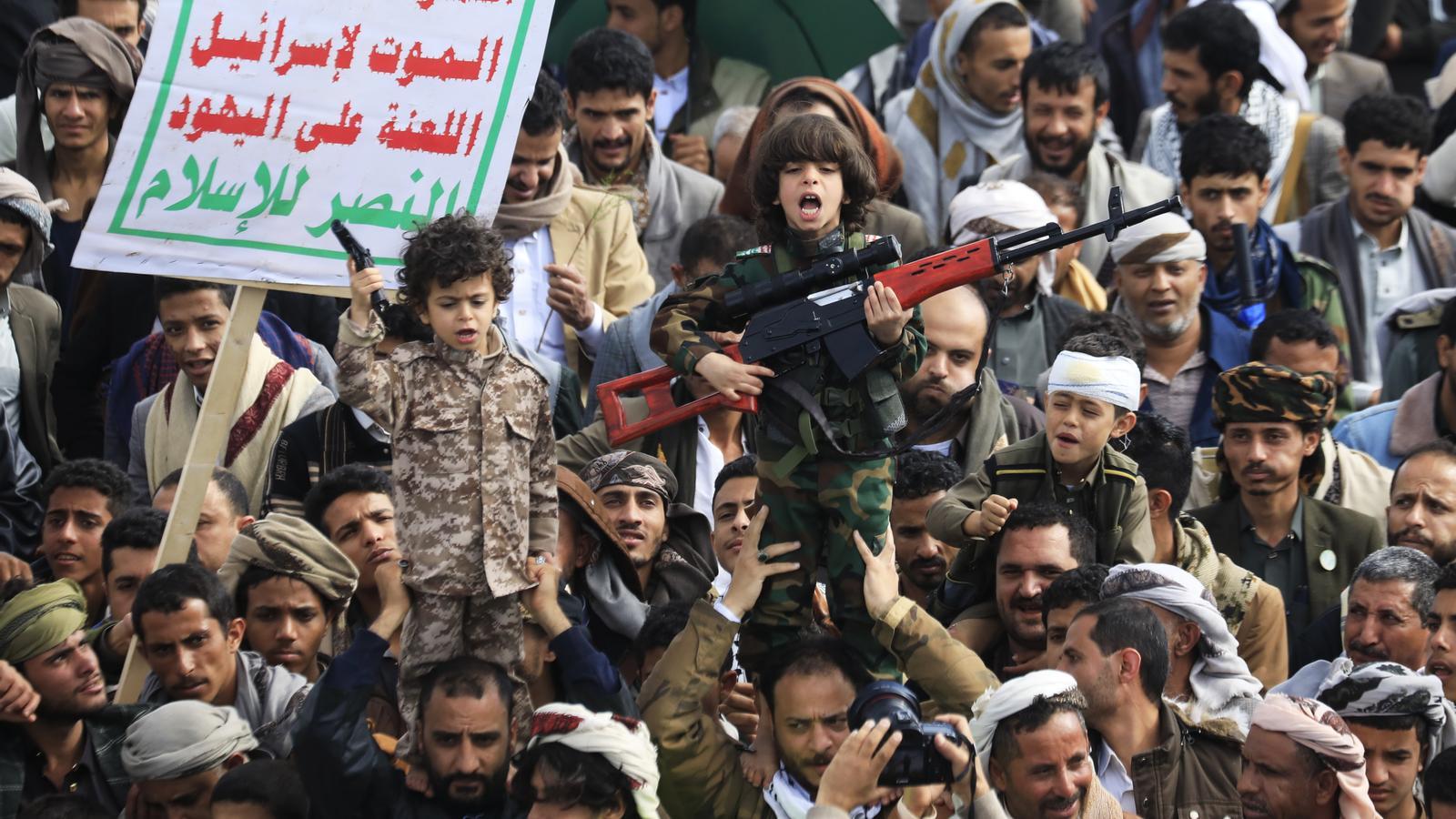
This morning, the group pulled the trigger. It has confirmed that it has launched a wave of ballistic missiles towards southern Israel, in what has formally been understood as an entry into war. The projectiles – the spokesperson assured in a televised statement – were aimed at "sensitive military targets" and were launched in coordination with Iran and Hezbollah in Lebanon. The operation, Saree said, "has successfully reached its objectives." But the Houthis warn that the attacks are just the first phase of a direct military intervention and that they will continue "until the aggression on all fronts of resistance stops."
For its part, Israel, which detected a missile launched towards its territory from Yemen this morning, states that its air defense systems have intercepted the projectile. Hours later, they admitted to intercepting a second one. No casualties have been reported.
The group frames the attacks as an act of solidarity with Tehran and its allies, besieged by the joint offensive of the US and Israel. And it comes the day after Iran promised "historic retaliation" for the Israeli attacks on energy and nuclear facilities fundamental to the Islamic Republic.
Another key strait for global trade
It had long been speculated that the Houthis would enter the conflict, and several analysts pointed out that this could happen if the offensive dragged on. "The [Houthi] ties to Iran are not as deep as those of Hezbollah in Lebanon. But if Tehran asked for help, they could not say no to an ally that has armed and trained its forces in recent years," says Lyse Doucet, chief international correspondent for the BBC.
Thus, while diplomatic efforts seem to be fruitless, these allies of Iran could bring a new geopolitical weapon into play, which would further tip the balance in favor of Iran and put more pressure on the US administration. The Houthis have the ability to disrupt transit through the Bab el-Mandeb strait, which separates the southwestern tip of Arabia in Yemen from the African coast and connects the Red Sea with global trade routes.
The Bab el-Mandeb strait ("Gate of Tears, in Arabic) is the gateway to the shortest route between Europe and Asia, making it one of the most important maritime corridors in the world, and allowing vessels to access the Suez Canal. At its narrowest point, it measures only 29 kilometers.
In times of peace, 12% of world trade, 9% of oil, and about 20% of natural gas transited through it. But with the start of the war in Gaza in 2023, the Houthis launched a campaign of drones and missiles against ships in the Red Sea, with the aim of forcing Israel to stop the offensive in Gaza and allow aid to enter the enclave. The direct consequence was the temporary interruption of transit through this fundamental corridor and the forcing of shipping companies to reroute around the southern tip of Africa.
Despite US efforts to stop the Houthi attacks and the ceasefire signed in 2025, many shipping companies have preferred to maintain their trade routes via the Cape of Good Hope. Before the war in Iran, transit through the strait had already been reduced by three-fifths. However, with the Strait of Hormuz already blocked, a second closure of Bab el-Mandeb could further drive up gas and oil prices, which are already at historic highs.
But opening this front also implies grave risks for the Houthis themselves. Bab el-Mandeb is the main route for Saudi Arabia's oil exports, which is the great patron of its rivals in southern Yemen. Boycotting the passage of Saudi crude could have a very high cost for the Houthis, as they could be forced to fight on two fronts at once.
