The great European anti-Putin coalition also turns against Trump
The European Political Community is seen marked by the distancing between the United States and Europe
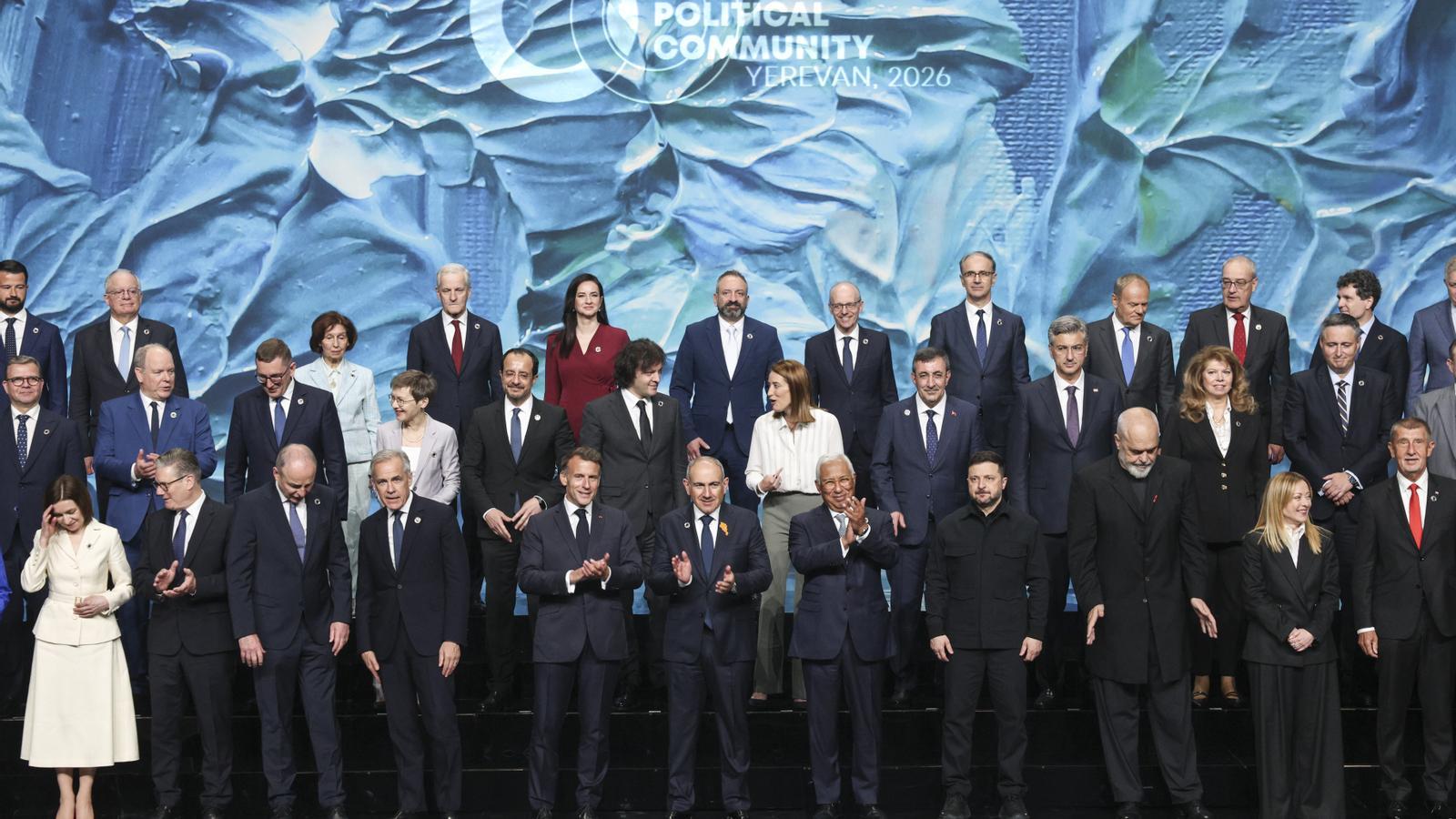

-
CAT -
CAST
BrusselsThe return of Donald Trump to the White House and his constant threats against European states have led the European Political Community to unite not only against Russia, but also now against the United States. Emmanuel Macron promoted this alliance after the start of the war in Ukraine. It is an organization that goes beyond the territory of the European Union and includes, for example, countries like the United Kingdom, Turkey, and various states that lie between Russian influence and proximity to the European bloc, especially from the Western Balkans. Those not invited, however, are Belarus and Russia. And, in fact, the raison d'être of this organization is the desire to isolate Vladimir Putin's regime and promote –beyond the EU borders– a more sovereign European alliance with respect to the Kremlin. And now, also, with respect to Washington.
withdraw U.S. troops from NATO bases in Europewithdraw US troops from NATO bases in Europe. A new dispute between European leaders and Trump that further erodes transatlantic relations.
As usual, European leaders have come out to defend a more autonomous Europe, one that ceases to depend on increasingly unreliable foreign powers, such as the United States, Russia, or China. One of the clearest in this regard has once again been the President of the European Commission herself, Ursula von der Leyen, who has announced that they will discuss with the other leaders how to move towards an "independent Europe" that gains energy, commercial, and, above all, military sovereignty. "We must strengthen our military capabilities to be able to defend ourselves and protect ourselves," said the German conservative after the new string of threats from Trump against EU member states.
Along the same lines, the head of European diplomacy, Kaja Kallas, has called the US president's desire to withdraw American troops from European territory "surprising" and sees it as another sign that EU allies "must do more to strengthen the European pillar of NATO".
In contrast, the NATO Secretary General himself, Mark Rutte, has sought to downplay the clash between Trump and Merz, assuring that, despite the White House's "disappointment" with European allies regarding the war in Iran, European leaders have already "gotten the message" and are becoming more involved in the conflict. The reality, however, is that EU heads of state and government are becoming increasingly critical of the US role in the Middle East war and, in general, of the Trump administration.
Exceptionally, but very symptomatically, Canada has also been invited to participate in the summit of the European Political Community. The Canadian Prime Minister, Mark Carney, is one of the Western leaders most critical of Trump and will be the first leader from the other side of the Atlantic to participate in the meeting. Another diplomatic gesture that shows this body aims to unite countries opposed to the law of the strongest that Trump wants to implement, and in favor of respect for international law and multilateralism.
The battle for spheres of influence
Beyond Trump, European leaders also wanted to meet in Armenia as a gesture of support for one of the former Soviet republics that lies between the areas of influence of Brussels and Moscow, and they want to promote its rapprochement with Western Europe and, at the same time, the breaking of ties with the Kremlin. It is also the first time that, after the Caucasian country began the procedures to join the European Union in 2024, EU leaders and Armenians are holding an EU-Armenia summit. In fact, it is planned that EU leaders will announce the dispatch of a team of EU experts to Armenia to help the authorities of the Caucasian country fight against Russian interference, especially through cyberattacks.

