91 years and no emergency room visits in a year: this is how chronic patient care is to be changed
The Vall d'Hebron Hospital reduces by a third the emergency visits of chronic patients with heart failure or lung disease

-
CAT -
CAST
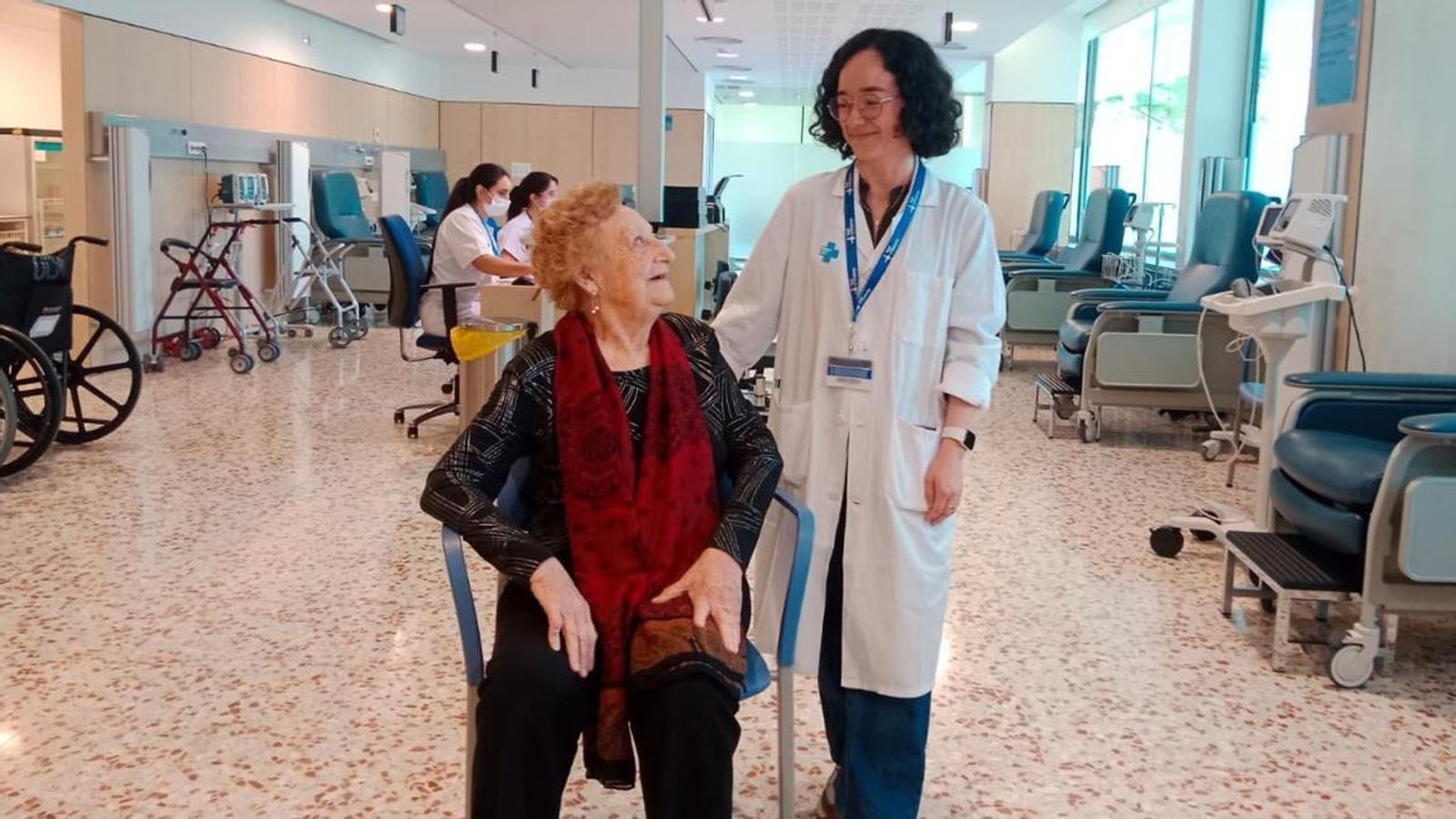
BarcelonaWhen Carmen Boer is asked about her health, she responds with a long, ironic "Oof..." before quickly reviewing her list of ailments. This year she will turn 91, she has overcome two cancers – one breast and one colon – she has heart failure, chronic bronchitis, and an incurable kidney disease. Every day she takes a dozen medications. "Ten or eleven," she says with a smile, without specifying. Last year she went to the emergency room six times due to decompensation, and on three occasions, she had to be hospitalized. However, since she became part of a program for complex chronic patients at Vall d'Hebron Hospital, she has not returned to the emergency room or required any admission.
The Barcelona hospital has reduced emergency room visits by 33% for patients like her, who have various chronic diseases, such as heart failure or obstructive pulmonary disease (COPD), with a program implemented in 2022 in the Barcelona Nord Integral Health Area. Primary, intermediate, and hospital care are coordinated to better monitor these patients and anticipate potential decompensation of any of their pathologies. This way, emergency room visits and hospitalizations are reduced, and patients' quality of life is improved. "I am delighted," explains Carmen, who still lives alone and claims she doesn't need anyone's help.
The profile of patients treated by this unit is over 80 years old and with a certain degree of frailty, but they are still autonomous in their daily lives and most live at home. According to the program, Vall d'Hebron's computer system generates a daily automatic list of complex chronic patients who have been discharged for the second time in the last six months from the emergency service, with or without hospital admission. A case management nurse reviews the list, identifies patients treated for decompensation of heart failure or COPD, and refers each patient to the most appropriate resource according to their needs.
Progressive aging of the population
Depending on their health status, patients are referred to the primary care center, an intermediate care facility – such as the Integral Support Team for Complexity (ESIC), located at CAP Casernes, or the Sant Rafael Day Hospital – or to the pneumology or cardiology services at Vall d'Hebron. According to a study published in the journal Medicina Clínica, in a group of 126 elderly people with multimorbidity and recurrent visits to the emergency department, the implementation of the program managed to reduce the number of visits by one third. The majority of patients who participated in the study (68.2%) highlighted the improvement or maintenance of their quality of life.
"Finding the most appropriate care level for each patient, based on their clinical needs, leads to an improvement in their care, as well as more efficient management," says Mónica Zuleta, from the Geriatrics Service at Vall d'Hebron. Experts advocate for the importance of this program in a context of progressive aging of the population, as there will be more and more people who can benefit from this type of service. Patients highlight improvements in aspects such as mobility, anxiety, depression, pain perception, autonomy, and self-care.
