The far right would win in a new state of Germany and the post-communists would prevail in Berlin
The CDU would enter the parliament of Mecklenburg-Western Pomerania by the minimum in a new setback for Chancellor Friedrich Merz
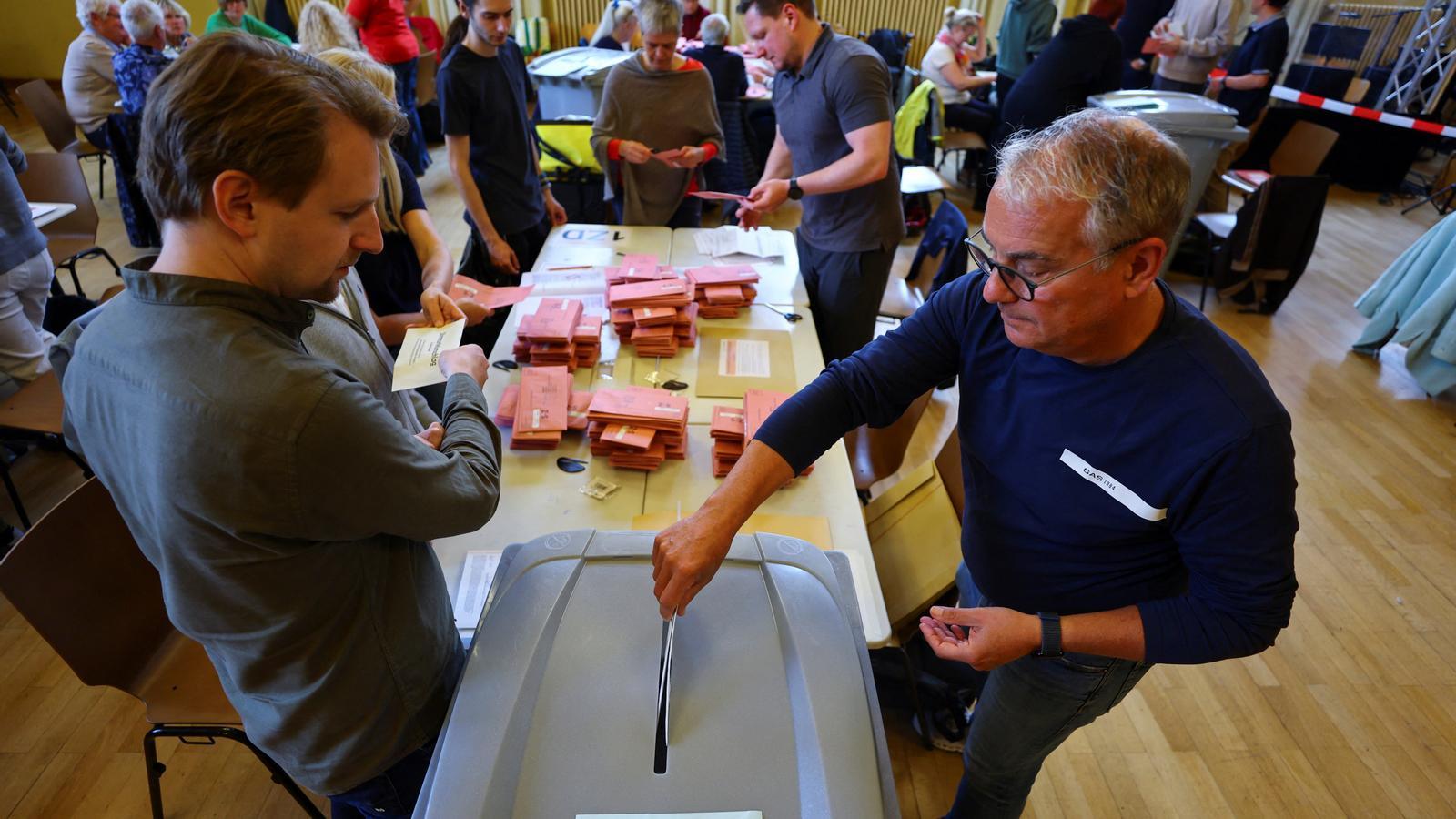
BarcelonaThe far right would win this Sunday's elections in the German state of Mecklenburg-Western Pomerania, followed by the Social Democrats, who ultimately would not manage to prevail over Alternative for Germany as some polls had predicted. The German chancellor's party would obtain the worst result in its history in this state and would manage to maintain representation by just five tenths. This is the scenario drawn by the exit polls from the German public television stations, ARD and ZDF, which also indicate that in Berlin the post-communist Left party (Die Linke) would win the elections, followed by the CDU and the AfD.
The defeat of the CDU in the state of Mecklenburg-Western Pomerania is especially serious. The party of the German chancellor, Friedrich Merz, would achieve between 5 and 5.5% of the support, entering the regional chamber by the narrowest of margins, as the law establishes a minimum threshold of 5% to obtain representation. Proof of the seriousness of the result for the CDU is that Merz himself reacted quickly when the poll was known: “We cannot sugarcoat the result in Mecklenburg. It is a disaster,” he declared from the party headquarters in Berlin. "The CDU fought, but was crushed in the confrontation between the SPD and the AfD," he asserted.
However, he has refused to resign and has promised to work to reverse the defeat at the polls for the Christian Democratic party, which worsens with every electoral call. Merz's recipe to get his party back afloat involves, as he has maintained in recent weeks, pushing for reforms at the federal level. "I assume this responsibility, because I want to move our country forward," he remarked this Sunday. "What needs to be done now requires firmness and patience. I will provide it as party president and, above all, as chancellor."
Be that as it may, the setback for the CDU is twofold. In Berlin, where until now it governed hand in hand with the SPD, The Left would prevail over both the Christian Democrats and the Social Democrats. If the victory is confirmed, it would be the first time that the post-communists, the party furthest to the left on the German political spectrum, win the elections. It is also the first time they surpass the SPD. Although the post-communists have been part of the government in previous legislatures hand in hand with Social Democrats and the Greens, the mayoralty of the city-state has always fallen to the CDU or the SPD.

After the overwhelming victory, at the beginning of September, of the far right in the state of Saxony-Anhalt, where the AfD fell three seats short of an absolute majority, this Sunday's elections were read as a litmus test for Friedrich Merz's government. With the CDU achieving the worst result in history in Mecklenburg-Western Pomerania, the outlook does not improve for the general elections, which are scheduled for 2029. The latest polls point to a decline for the conservatives to 20% of the vote, seven points less than the AfD, which leads the polls.
In the Christian Democrat ranks, alarm bells have been ringing for months, and the dismal results in the latest trips to the polls have meant that a debate has begun within the party about what to do for the future. Among the conservatives, voices have emerged that are beginning to see the strategy of the cordon sanitaire against the far right as exhausted, a particularly sensitive issue in the country due to its Nazi past.
Polarization is also putting the grand coalition led by Merz on the ropes. The two partners, the CDU and the SPD, often clash when proposing economic or social measures, and the shift of the electorate towards the far right and the radical left makes the sometimes opposing directions in which social democrats and conservatives are moving increasingly evident.

