Ukraine's new strategy to alter the course of the war: "The turning point is happening right now"
Drones are mortifying trucks in occupied territories and threaten to isolate the Russian southern front

-
CAT -
CAST
MoscowA window of opportunity for Ukraine. This is how various military analysts describe the situation of the conflict with Russia, after Kyiv has taken the lead in the dominance of medium-range drones, those sent about 150 kilometers from the front line and crucial for disrupting enemy logistics, which are sent about 150 kilometers from the front line and are crucial for disrupting enemy logistics. The Ukrainian army has managed to slow down the Russian offensive on the southern front and is now threatening the roads that supply weapons, food, and fuel to the soldiers. If it is capable of isolating the Russian lines, it could even launch a counter-offensive, some experts point out. However, Moscow will react sooner or later.
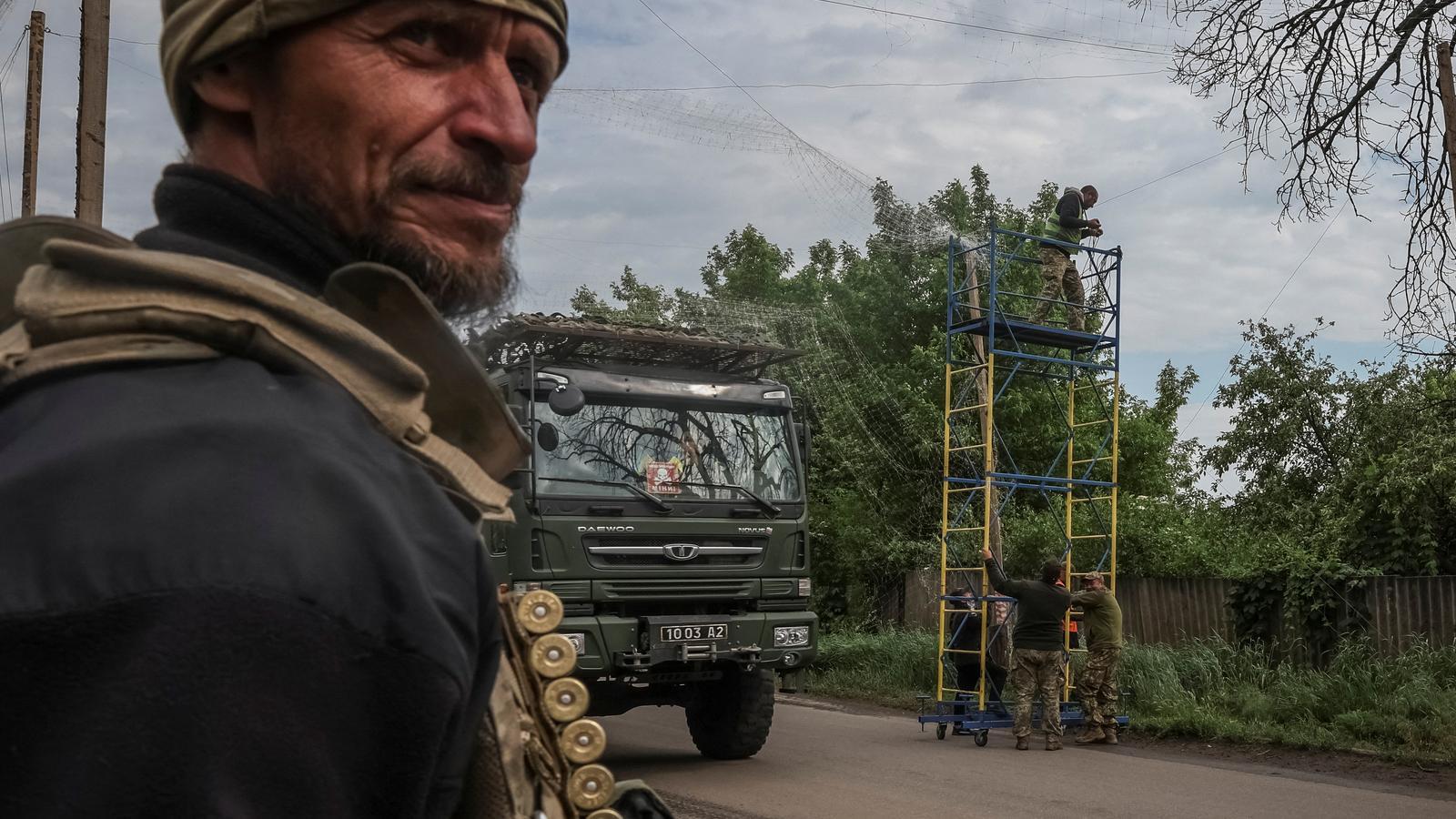
“Roads that until recently were safe and inaccessible to drones have become a battlefield,” explains independent Russian military analyst Ian Matviéiev. Ukrainian aircraft have extended their range from 75 to 150 kilometers and are managing to hit dozens of trucks daily. Often these vehicles, which travel along the route connecting Crimea with southern Russia through the occupied territories of Kherson, Zaporizhzhia, and Donetsk, end up burnt out on the roadside. “It has become a death corridor,” he assures.
“For a modern army, a loss of 50% or 60% of supplies would be critical in the long term,” indicates the observer.“For a modern army, a loss of 50% or 60% of supplies would be critical in the long term,” indicates the observer.In a very optimistic projection for Kyiv's interests, experts believe this is the first step so that, once Russian soldiers are blocked, Ukrainian troops advance into the regions of Kherson and Zaporizhzhia and even reach Crimea. In this way, they add, Donbas could be attacked from the west and south. "The turning point in the war is happening right now," concludes Matviyev.
From the American think tank the Institute for the Study of War (ISW) also believe that Ukraine's partners have a "rare and temporary" opportunity to help Volodymyr Zelensky to "exploit favorable dynamics while he has an advantage." This superiority in mid-range, they insist, "is not permanent" and Russia "will very likely develop countermeasures to mitigate these advantages."
More cautious is the former Ukrainian security services official Stupak. "It's a great strategy," he declares, and acknowledges that it "seems" like a turning point, but that "everything could change." He recalls that many times Kyiv was convinced it had developed the definitive technological breakthrough until Moscow managed to counteract it. "Right now we have a window of opportunity until November when Russia is exhausted and we approach a stalemate," he opines.
Russia gets stuck
The Russian offensive launched after the winter has stalled. Analyst Clément Molin has compared figures from various groups monitoring advances on the front and has noted that, despite some differences, they all agree that Kremlin troops are progressing very slowly. In the first five months of this year, Russia has conquered approximately 540 square kilometers, less than what it achieved in June 2025 alone. Between January and May of last year, the Russian army occupied more than 1,350 square kilometers of Ukrainian territory. The sector where Kremlin soldiers are advancing the most is Donetsk, Putin's great obsession, to whom his generals have promised full control of Donbas before the end of the year, an objective that does not seem realistic and which casts doubt on the quality of the information the Russian president receives.
One of the keys to this stalemate on the front is that infiltration tactics "no longer work as well as before," as the Russian military channel Ribar acknowledges. This type of operation involves sending soldiers alone or in pairs beyond enemy lines to take positions in the so-called death zone while awaiting reinforcements. A method that had been fundamental to Russian conquests, but which drone supremacy has made almost impossible.
The ISW is confident that these maneuvers "will continue to degrade," but Stupak warns that infiltrations remain useful in urban environments, where Ukrainian pilots find it very difficult to detect and kill these soldiers.
