The USA bombs five Iranian oil tankers and Tehran responds to it with attacks in Jordan
The price of oil climbs above 100 dollars for the first time since July

-
CAT -
CAST
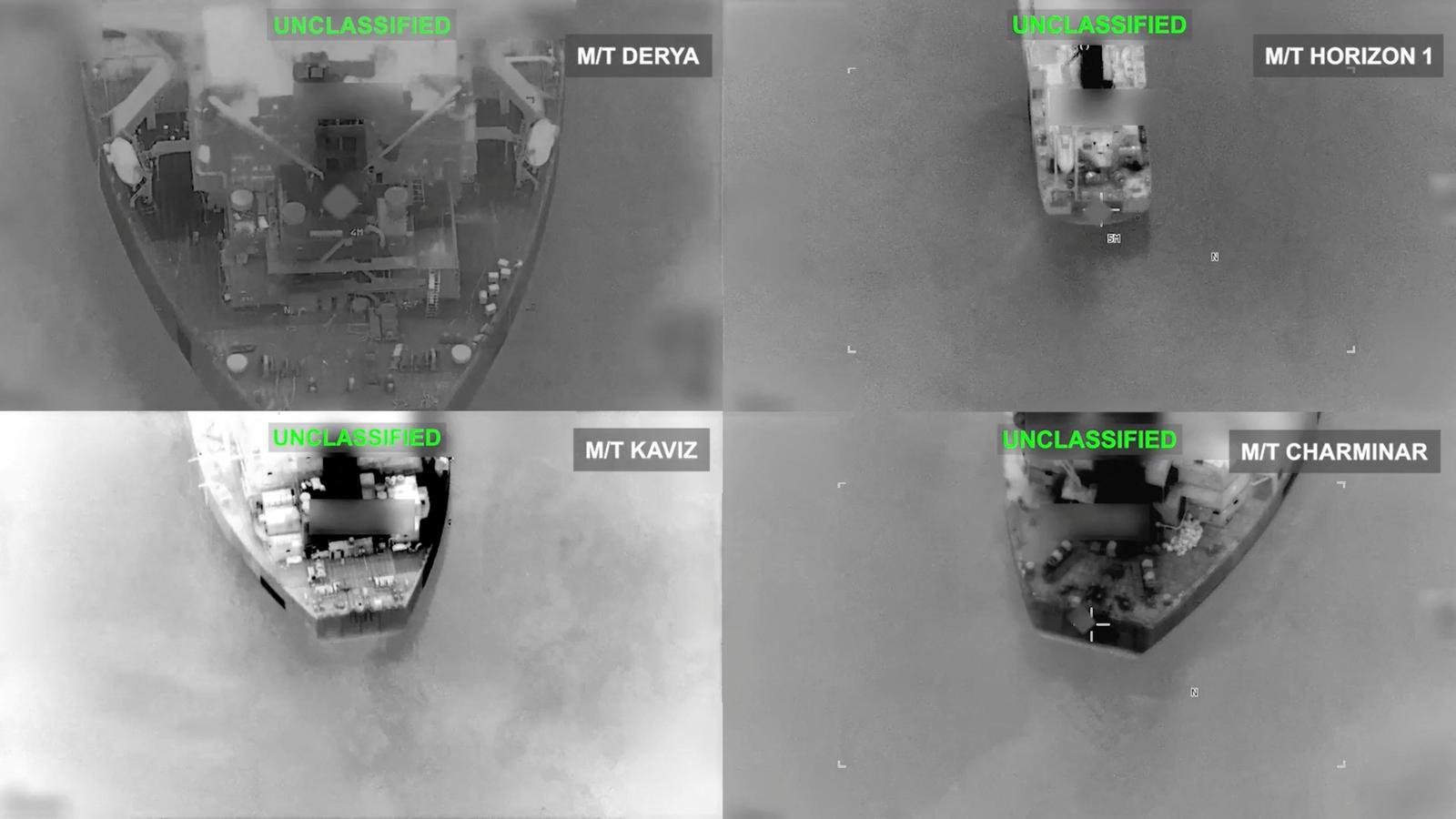
WashingtonThe United States has announced in the last few hours the destruction of five Iranian oil tankers in the Gulf of Oman and near the island of Kharg as retaliation for Tehran's alleged attempts to attack one of the US Navy's ships, in a new episode of hostilities between the two countries after the conflict escalated again last week. In retaliation, the ayatollahs have responded to the sinking of the ships by launching "heavy missiles" against a US base in Jordan.
In a statement, the US military command detailed that it "ordered the crews to abandon the ships before firing." It also assured that the attack comes two days after an American military vessel evaded a missile attack by the Revolutionary Guard, which ended without injuries.
The Iranian response was in the form of a missile attack against a US military base in Jordan. Jordanian air defense systems were able to intercept 18 of the 20 ballistic missiles launched from Iran, and the other two impacted in unpopulated areas without causing injuries. The Revolutionary Guard also claimed that it had attacked two US military vessels and ten oil tankers in the Gulf, after having alerted their crews, near the ports of Kuwait and Bahrain.
The new episode of bombings has once again sent the price of oil soaring above 100 dollars for the first time since July. The Revolutionary Guard has said that they will escalate their response to any other future attack and that they will fire at 20 targets for every two or three Iranian targets that the Americans hit. The ayatollahs have incentives to exacerbate the crossfire and continue to inflate the price of oil: there are less than two months left until the midterm elections in the United States and the military campaign is becoming increasingly burdensome for Trump's party.
In a new record, on Wednesday the price of a gallon (3.7 liters) of gasoline soared to 5.94 dollars. A runaway figure for many Americans, for whom seeing the price of gasoline above 4.5 dollars is already unaffordable.
The conflict, stalled
After a month of August of relative calm, and despite the White House insisting that it is focusing on the economic war to topple Iran, in recent weeks the clashes have not stopped escalating. More than half a year after the US president, Donald Trump, initiated the war, and two months after the diplomatic fiasco in Versailles, where a ceasefire was announced to give space to diplomacy, the conflict remains deadlocked.
The new episode comes after Washington and Tehran engaged in crossfire last week in which US forces bombed the south of the country. Subsequently, the Iranians accused the US of having committed "war crimes" after one of its missiles killed four people at a wedding that was being held in the south of the country. According to Iranian media, among the four dead at the wedding being held in Sirik were a 4-year-old boy, Amir-Ali Karimi, and a 16-year-old adolescent, Mohammad Mollahi.
Meanwhile, the southern regional front is also heating up. On Tuesday, the Houthi movement of Yemen, an ally of Iran, attacked four cities in Saudi Arabia, with a toll of more than 70 injured and several oil facilities damaged. Riyadh has already said it will respond, and Pakistan claims it is considering carrying out attacks against Houthi militants in Yemen at the request of Saudi Arabia.
The new front led by the Houthis further complicates the energy market. With the Strait of Hormuz blocked, the Saudis had redirected much of their crude through the south of the country, passing through the Bab el-Mandeb Strait. If the oil flow ends up being as stifled as in Hormuz, the energy crisis would enter a much more complicated phase.
