At least 18 injured in two explosions in Damascus during Macron's visit
The detonations occurred a few meters from the hotel where the French president was staying, who had already left the area
-
CAT -
CAST
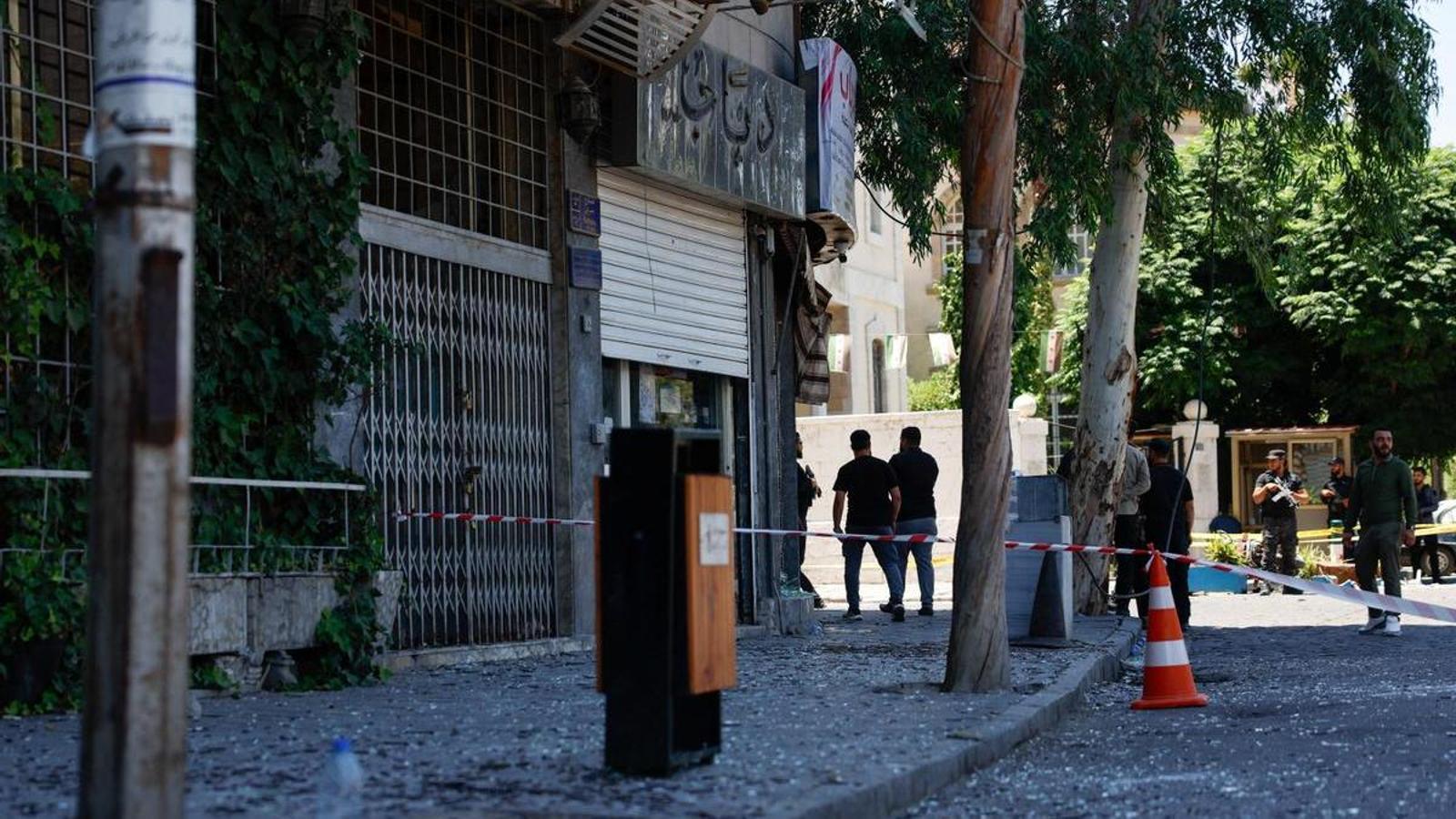
BarcelonaAt least 18 people were injured in two explosions this Tuesday in Damascus, the capital of Syria, during the visit of French President Emmanuel Macron. Among the injured there would be four police officers, according to the Syrian Arab News Agency. The visit of the French president is the first by a European head of state since the overthrow of Bashar al-Assad in December 2024.
The explosions, stemming from rudimentary explosive devices placed in a car and inside a trash can, took place in a crowded area near the Four Seasons Hotel, where Macron spent the night and met with several members of civil society this morning. However, Elysée sources cited by Reuters confirm that the leader was not at the accommodation at the time of the events and did not even hear the explosions.
In fact, the first explosion occurred shortly after Macron's entourage left for the presidential palace to meet with his Syrian counterpart, Ahmed al-Sharaa. Moments later, and a few meters away, a second device exploded next to an ambulance parked at the scene, where about 25 people had gathered.

Syrian security forces had detected the two bombs minutes before the moment of the explosion, but they exploded while they were working to defuse them, according to the Syrian Ministry of Interior. After the detonations, several roads were blocked and several security measures were implemented. Syrian television shows images of columns of smoke rising over the sky of Damascus.
Normalization in offices and insecurity in the streets
Despite the incident, the French president indicated that he maintains the planned agenda and assured that "nothing will be able to suffocate the aspirations of Syrians to live in a fully sovereign, safe, plural, and united Syria," in a message on the social network X. The visit, described by the French media as "historic," marks the resumption of bilateral relations between France and Syria, interrupted after the attack on the French embassy in Damascus in July 2011.
Macron intends to showcase European support for the country's reconstruction process and the will to normalize relations with the Syria that emerged after the fall of the Assad regime. The French leader, who already pushed for the lifting of some European Union sanctions against Syria after a meeting with Al-Sharaa in Paris in May 2025, is traveling to the Syrian capital accompanied by a delegation that includes French investors and businessmen, with the aim of exploring new avenues for economic and commercial cooperation.
For his part, Ahmed al-Sharaa, former commander of Al-Qaeda, seeks to consolidate international support and attract partners to help him fulfill his promise to build a new inclusive order in the country. The Syrian leader wants to project an image of political and social transformation, after five decades of authoritarian rule by the Assad family and nearly thirteen years of civil war.
Despite his efforts, Tuesday's attack highlights the insecurity that Syria is suffering. Just last week, the explosion of a bomb in a Damascus cafe killed nine people and injured about twenty. Since the change of regime, the country has been the scene of several violent clashes between pro-government forces and members of minority religious and ethnic groups, which have already left hundreds dead.
To this context is added the reactivation of the jihadist group Islamic State, which last February announced the start of a "new phase of operations" against Al-Sharaa's government. Although no group has claimed responsibility for Tuesday's explosions, the attack demonstrates that instability remains one of the main challenges for the new Syrian executive.

