Damascus hears an explosion again while it tries to present itself as a guarantor of regional stability
The attack, which has not been claimed, has killed at least six people and comes at a delicate diplomatic moment

-
CAT -
CAST
DamascusFrom the entrance of the Al Hamidiyyah souk, the commercial heart of Damascus, the explosion sounded like the echo of another era. The windows of some shops had trembled and, for a few seconds, no one knew what had happened. Then the sirens arrived. Ambulances and security vehicles tried to make their way through the traffic of a city that, in the middle of rush hour, was full of families strolling, tourists exploring the historic center, and residents seeking refuge from the heat in the city center cafes.
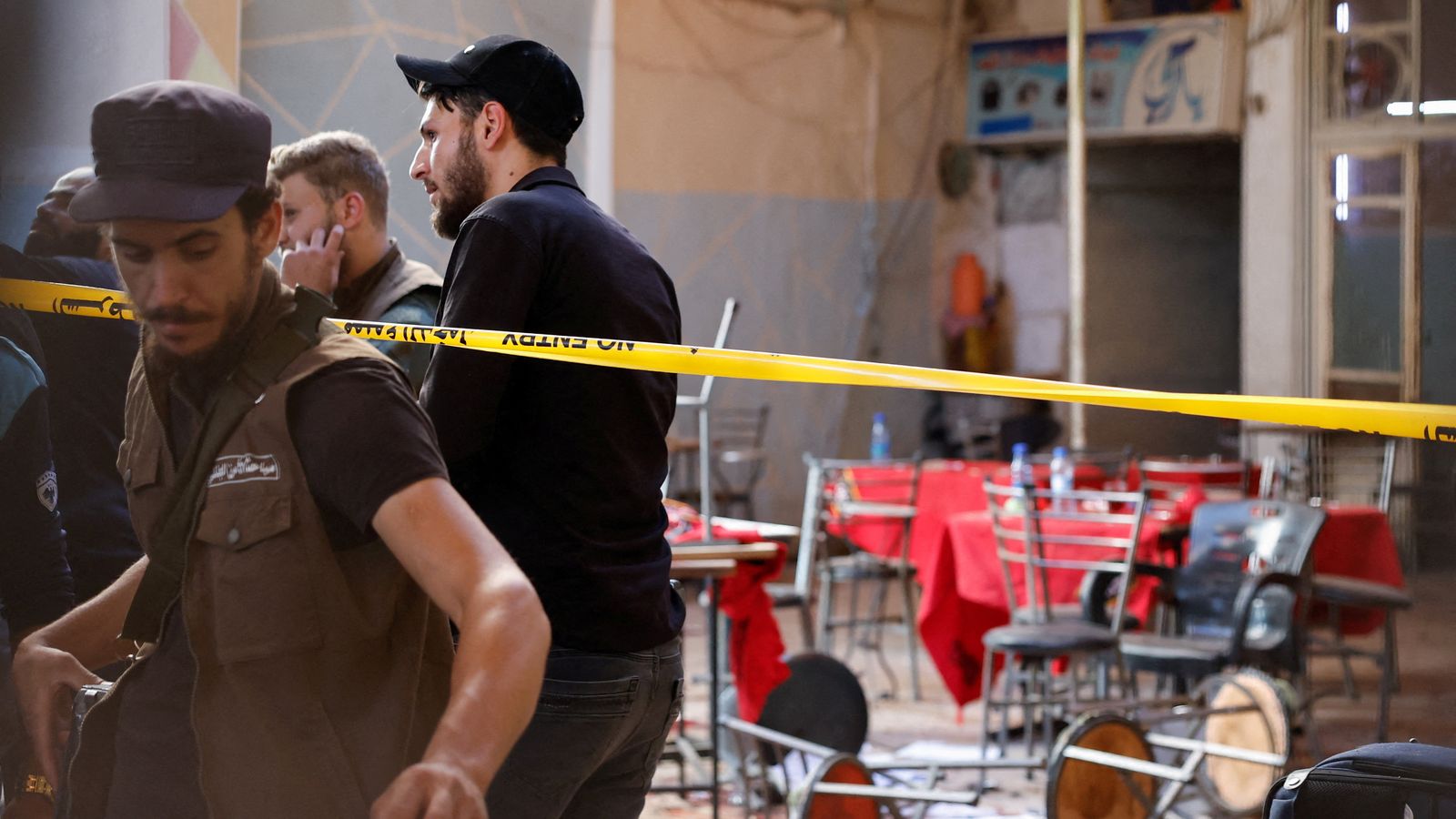
The explosion occurred a few minutes later, next to the Palace of Justice, in the Nasr district. According to the Syrian Ministry of Health, at least six people were killed and twenty-two more were injured. State television reported that the explosion was caused by a device placed in a cafe, while authorities are investigating whether it was a suicide attack. So far, no group has claimed responsibility.
The area was quickly cordoned off by security forces as dozens of curious onlookers gathered in the nearby streets. Within minutes, images from surveillance cameras began to circulate in WhatsApp groups and on social media that, according to various witnesses, showed a woman completely covered with a veil carrying a bag considered suspicious. This version, repeated by shopkeepers and workers in the area, has not been officially confirmed.
"The surveillance cameras recorded a woman dressed in black from head to toe carrying a bag," explains Hassan, an employee of a shawarma restaurant located a few meters from the Palace of Justice. The scene contrasted sharply with the atmosphere that prevailed in Al Hamidiyyah just minutes before. Under the historic metal roof of the souk, groups of visitors strolled through shops selling spices, sweets, and fabrics. Tourists from the Gulf states mingled with Syrian families shopping, while cafes were once again filled with customers smoking shisha or drinking fruit juices. A scene that symbolized the return to normality and the recovery of regional tourism after more than a decade of war.

For a few moments, however, Damascus once again recalled the years when explosions were part of everyday life. Local merchants acknowledged that the noise had transported them to the worst moments of the conflict and to the era of attacks attributed to the Islamic State. Thursday's explosion is the deadliest since the suicide bombing in a capital city church in June 2025, which left twenty-five dead and which authorities attributed to cells linked to the jihadist group.
the suicide bombing in a capital city church in June 2025, which left twenty-five dead and which authorities attributed to cells linked to the jihadist group.
Delicate diplomatic moment
The governor of Damascus declared after the explosion that there are "groups" trying to destabilize the country at a particularly delicate moment for Syria's transition. The new authorities, led by self-proclaimed president Ahmed al-Sharaa, have made security one of the pillars of their legitimacy. Although violence has considerably decreased in the capital, incidents like this serve as a reminder that threats continue to exist.
The explosion also coincides with a particularly symbolic diplomatic moment. While emergency services were working in the center of Damascus, Syrian Foreign Minister Asaad al-Shaibani was in Beirut to strengthen a new phase in relations between Syria and Lebanon. Alongside Lebanese President Joseph Aoun, he advocated for cooperation based on border control, the fight against smuggling, and the principle of non-interference in the internal affairs of the other country.
However, the issue that many expected to discuss has barely appeared in public debates: Hezbollah. In recent weeks, speculation had grown about a possible role for Damascus in facilitating the disarmament of the Shiite movement, after US President Donald Trump had even suggested that the new Syria could play a more effective role than Israel in containing its influence in Lebanon. Al-Shaibani stated that the issue was not on the agenda of the meetings, although he left open the possibility of maintaining contact with Hezbollah if the interests of both countries required it.
Thursday's explosion, which was heard from the capital's most iconic souk, served as a reminder of the paradox facing the new Syria. While it seeks to present itself as a stabilizing force for its neighbors, it still has to convince its own citizens that violence is definitively a thing of the past.
