Rutte says that NATO can respond to hybrid attacks, even if it does not do so "publicly"
Estonia attributes to Russia a fire that there was in the summer in a military robotics factory

-
CAT -
CAST
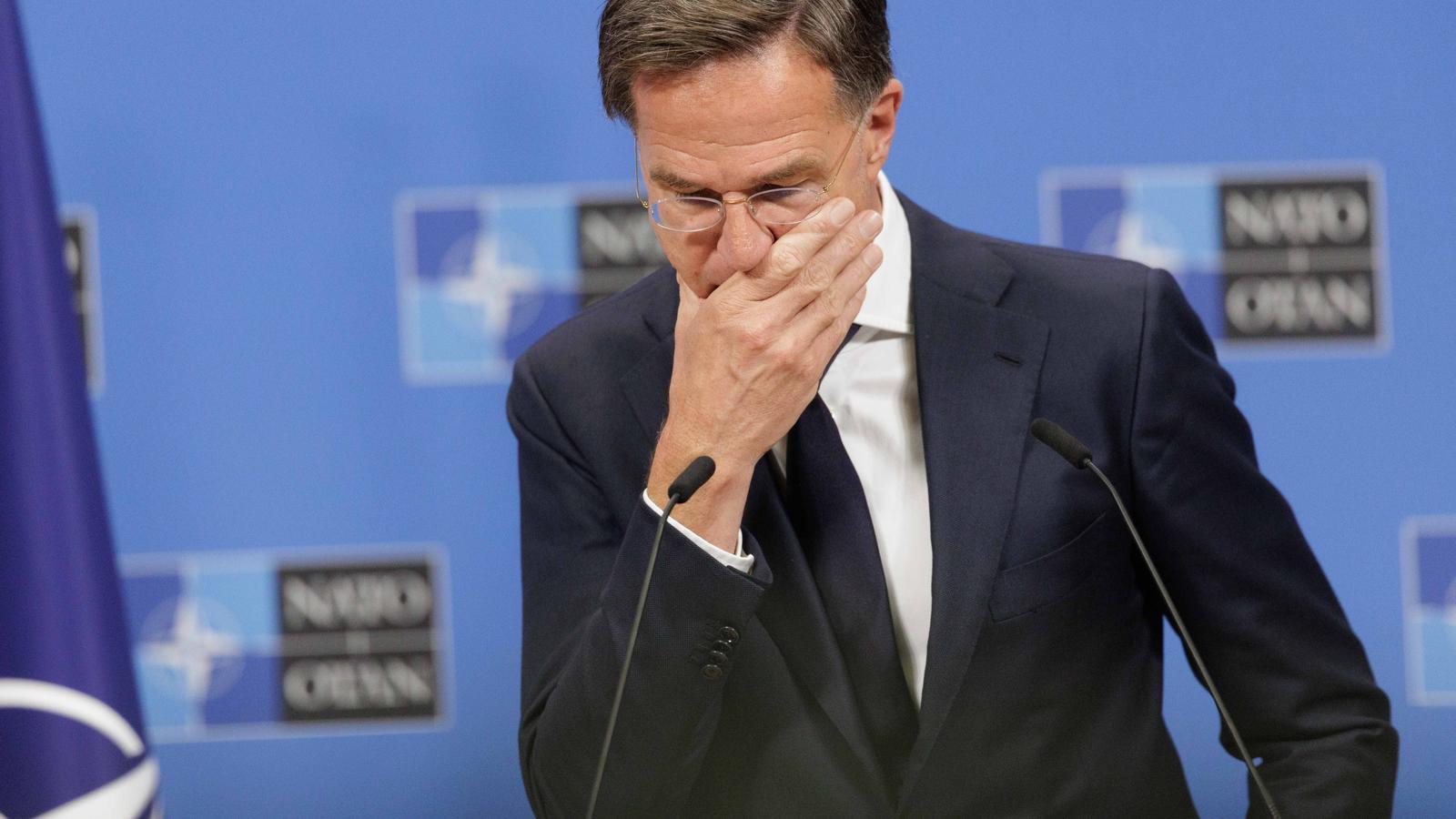
BrusselsNATO is prepared to respond to Russia's hybrid attacks. This was defended by the organization's secretary general, Mark Rutte, who clarified that these "response options" will not always be "public" nor will they be "symmetrical or proportional". "It will not always be 'an eye for an eye', but we have the response options we need", asserted the leader of the military alliance in a press conference after meeting with the Prime Minister of Lithuania, Mindaugas Sinkevicius, in Brussels.
The Atlantic Alliance is under increasing pressure in the face of the increase in sabotage, cyberattacks, drone interceptions, and fires coming from Russia. While the EU seeks joint response mechanisms, the secret services of some member states warn that this type of incident will be on the rise. The Baltic countries and Poland are those that suffer most from the Russian threat and also those that, for years, have warned most clearly of the danger.
This Tuesday, Estonia attributed to Russia a fire that took place in August at the Estonian defense company Milrem Robotics, which provides unmanned ground vehicles to Ukraine. The country's Prime Minister, Kristen Michal, has asserted that the origin was a Russian attack commissioned by the Kremlin's security services, according to information gathered by Estonian intelligence services. "The modus operandi of the Milrem attack is consistent with other acts of sabotage carried out in Europe in the name of Russia", stated the Lithuanian national security agency in a statement, which concluded that "the attack is directly attributable to the Russian Federation". For its part, the Kremlin has denied its involvement and has described the accusations as unfounded.
In this context of growing alarm, Rutte has met with the Prime Minister of Lithuania and has ensured that he defends "every inch of allied territory against any threat, wherever it may come from". "We are by your side in the Baltic Sea", he said.
Call for calm
The organization's secretary general has called for "calm" in the face of hybrid attacks and to continue providing support to Kyiv. "The best response to any gray-zone attack is more support for Ukraine instead of less," he argued. Likewise, he added that Russia "is not in a good position" regarding the battlefield, where it has nearly 40,000 casualties per month. "These figures are devastating," he said.
Rutte's commitment involves continuing to invest in weaponry and deploying more resources to the eastern flank. In this sense, he explained that NATO is reinforcing integrated air and missile defense near the Russian border to offer "more protection" against aerial threats. Likewise, he announced more cheap anti-drone defenses, so that high-end aircraft do not have to be used against low-cost threats.
For his part, Sinkevicius also called for calm, especially after several European leaders and intelligence agencies warned of the growing risk of a Russian attack on NATO territory. The Lithuanian prime minister said it is important to be open about the challenges posed by Russia, but rejected the "exaggerations" that claim there could be an attack in the "coming months or weeks." "Is there any evidence, real evidence, that our intelligence services have provided, that Russia is preparing or something similar? There is none," he said. Nevertheless, he stressed that "the risk persists" and that it is necessary to "work with calm".
