Russians resign themselves to Ukrainian drone attacks: "What can we do?"
Sociologists detect a dissociation mechanism among citizens, who refuse to accept the reality of war

-
CAT -
CAST
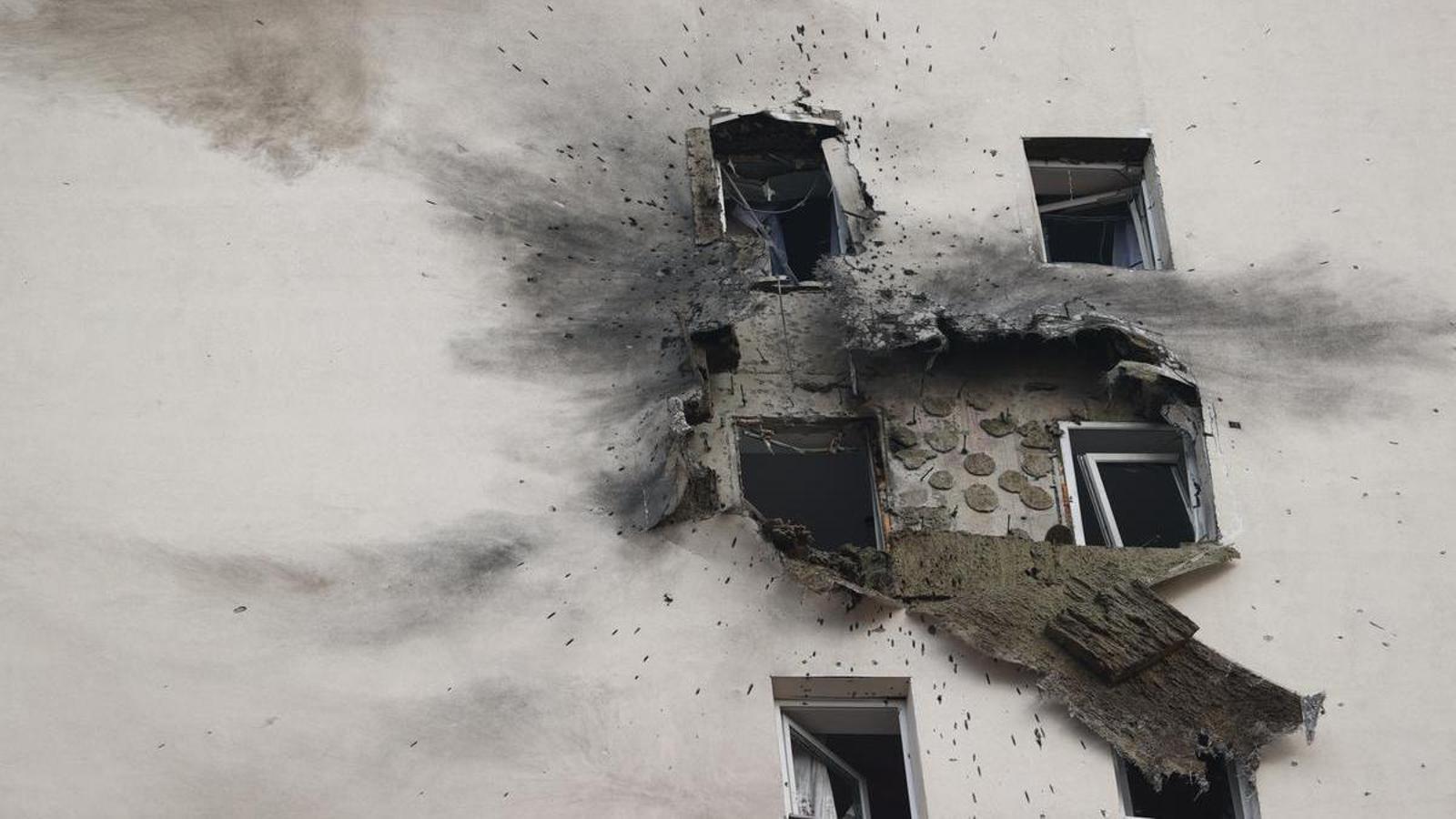
MoscowIn the great Russian metropolises there are no air-raid shelters, no emergency protocols, the sirens do not sound when drones approach. People record from home, between fascination and unreality, how the aircraft fly over buildings with an unsettling parsimony until they crash. No one wants to think that these explosions could affect their apartment or that they could be the next victims. In the fifth summer of the war, the bulk of Russian urban society refuses to accept that it is at war, even though it is becoming increasingly difficult for the Kremlin to hide the ravages of the conflict within its cities.
The inhabitants have had to get used to frequent internet outagesIn Saint Petersburg, for the second consecutive year, the traditional naval parade at the end of July has been canceled. Residents have had to get used to frequent internet outages and airport restrictions, which could not prevent drones from spoiling the premiere of Putin's international economic forum and darkening the city's sky in early June. Now the governor of Leningrad hopes that these inconveniences will not be a brake on tourism, and for this reason he has announced that he will distribute paper maps to visitors.
discarding negotiations and betting on achieving their objectives through military meansSociologists describe this process of “normalization” as a dissociation mechanism for citizens when they find themselves at the mercy of danger. “When drones hit houses in Moscow, from the outside it may seem to us that, finally, people should get the hint and understand everything, but it’s not like that – an researcher comments to ARA from exile –. They cannot notice that it is right in front of their eyes because, if they were aware of it, they would see their existence threatened, it would be incompatible with their lives,” he concludes.
Also in statements to this newspaper, another sociologist You cannot express your opinion, but at least you can not participate in bad things. who has recently visited Russian regions to analyze how these kinds of incidents are experienced there, states that he has not found any panic reactions. “People are scared for the first two days,” he recalls. According to him, the population does not understand the current situation as a war because it does not fit with their idea of the generations who suffered the German invasion in 1941. “War is horror: you have to flee, you have to hide your children, seal the windows with paper, go to a shelter… This parallelism does not exist, it is not perceived in the same way,” he assures.
Few prospects for peace
This dissociation also explains why the monitoring of events at the front by the Russians remains at its lowest levels since the beginning of the conflict. According to the latest Levada Center poll, 45% of citizens are following news from the front line, a figure that has practically not changed since the beginning of the year. At the same time, support for a negotiated solution to the war is slightly falling. If at the end of 2025, 67% were in favor of starting dialogue immediately, now 60% support this option.
However, the majority demand for peace, almost always on Russian terms, shows that war fatigue is still predominant in society. On the other hand, Vladimir Putin's latest statements dismissing negotiations and opting to achieve his objectives militarily influence people's state of mind. Igor, the Ukraine veteran, wants no agreement whatsoever. “We must crush all the Nazis who remain and then victory will come,” he insists. Another neighbor, Iulia, also sees no peaceful way out. “If Zelensky intends to continue, there will be no peace. What a pity for our boys, who are dying for nothing,” she concludes.
