The attacks of Russia and Ukraine belie the truce that Trump invented
The Kremlin says that it is a "very good idea" from the American president, but neither of the two parties confirms the agreement

-
CAT -
CAST
MoscowRussia and Ukraine have maintained their cross-attacks against energy infrastructure in recent hours, despite the fact that this Monday the President of the United States, Donald Trump, announced a ceasefire on attacks against these types of targets. Russia has attacked gas stations in Kyiv and energy and port infrastructure in other regions, while Ukraine has bombed an oil refinery in the Russian region of Samara.
The facts, therefore, have contradicted Trump just hours after he announced an agreement to avoid these types of attacks. In a post on Truth Social, the US president stated that it was a measure aimed at curbing a rise in global diesel prices which, according to him, is caused by the conflict in Eastern Europe, and not by the one in the Middle East. However, he did not provide further details and Volodymyr Zelenskyy reacted by saying that he did not trust that Vladimir Putin is willing to comply with this truce.
This Tuesday, Kremlin spokesman Dmitry Peskov described Trump's announcement as a proposal and considered it a "very good idea," although he added that it will not be enough to lower global fuel prices. "It is necessary to guarantee the security of maritime transport and commercial navigation here, including oil tankers," he said, and once again urged the removal of sanctions on Russia's energy supply.
The Ukrainian president was not talking about a moratorium on bombing energy facilities, but about ending "the destruction of critical infrastructure." He said he has proposed to his partners, referring to the Americans, to "secure" an agreement with Moscow to make it possible. "If our partners are willing to guarantee that Russia genuinely refrains from attacking our electrical system, critical infrastructure, and food supply routes, then, of course, we are willing to guarantee a corresponding pause in our attacks," he wrote on X.
At the same time, Zelenskyy asked that this "relief of pressure on gasoline and diesel" does not become a temporary measure that the Russian side ignores after the legislative elections next weekend. "The war must be ended, and a step in de-escalation regarding critical infrastructure could be the first step towards peace," he pointed out.
Kyiv's move is interpreted as a reaction to Trump's request on Sunday that Ukraine stop attacking Russian refineries. "There are many other targets; let him not attack the diesel, it is hurting the world," he said. Some Ukrainian military observers also do not trust the announcement by the White House leader and interpret it in electoral terms. That is to say, they believe that the United States president is trying to blame Zelensky for the global fuel crisis in the eyes of American voters, and is trying to minimize the impact that his attack on Iran has had on it.
Gasoline shortage
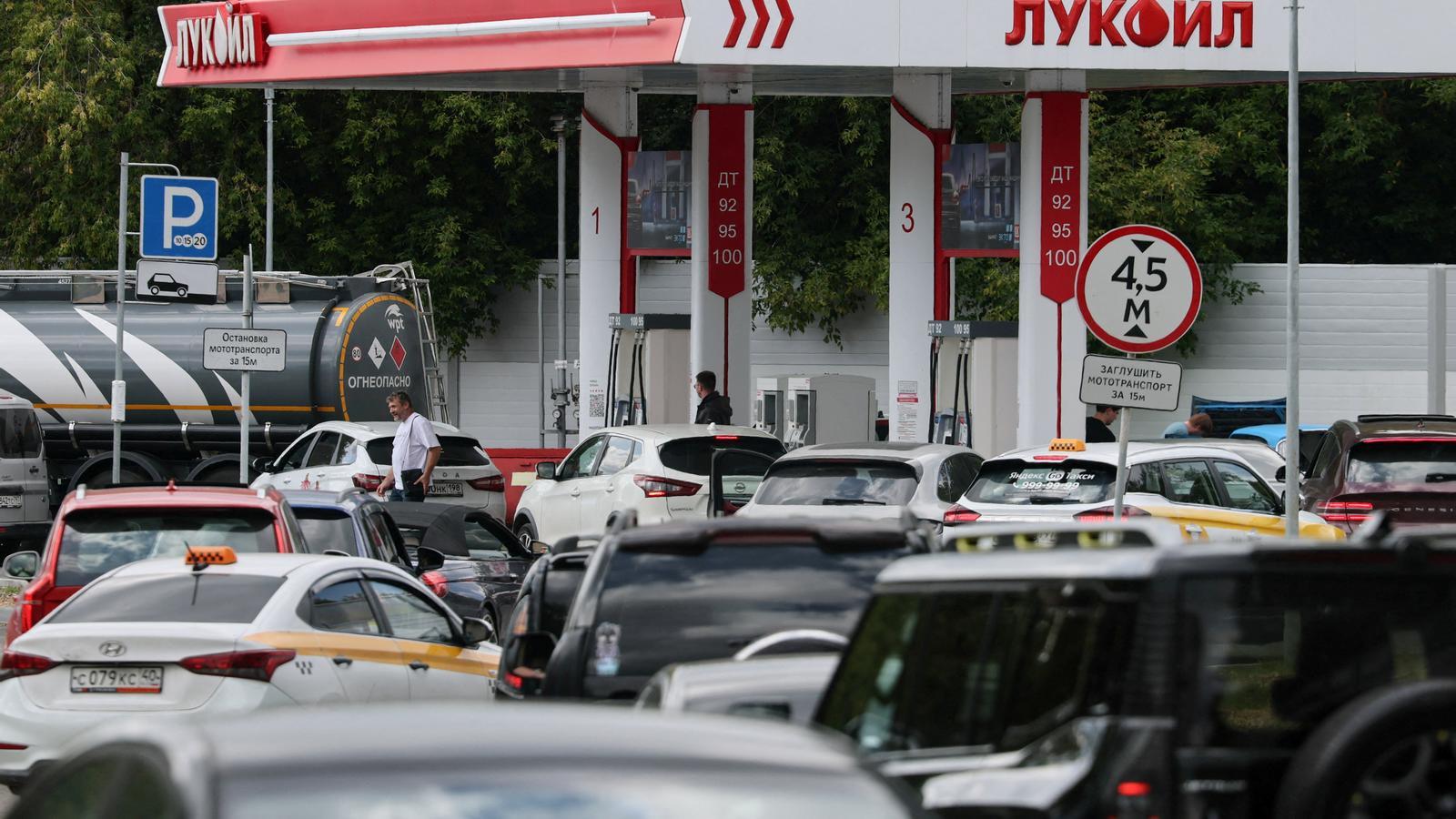
The Ukrainian campaign against Russian export ports, depots, and refining plants has caused gasoline shortages in many regions of the country in recent weeks, including the cities of Moscow and Saint Petersburg. This Monday at noon, Kremlin spokesperson Dmitry Peskov welcomed Trump's demand that Zelensky stop attacks against Russian economic infrastructure. "Any call to the Kyiv regime will be welcomed," he declared. However, when journalists asked him if Russia would reciprocate in kind, he refused to answer.
The Russian army has based a very important part of its military strategy on punishing the Ukrainian energy system. With the arrival of winter, advances on the front slow down even further, and Putin is trying to exploit his ballistic superiority to inflict maximum possible damage on the electrical facilities of Kyiv and other major cities in Ukraine. In this way, he intends to test the resilience of the civilian population, who in winter suffer temperatures of up to 20 degrees below zero without heating, and force Zelensky to negotiate a diplomatic solution to the conflict favorable to Russian terms.

