The United States indicts Raúl Castro and escalates pressure on Cuba
The Department of Justice accuses the 94-year-old former Cuban president of participating in the downing of two small planes from the humanitarian group Brothers to the Rescue

-
CAT -
CAST
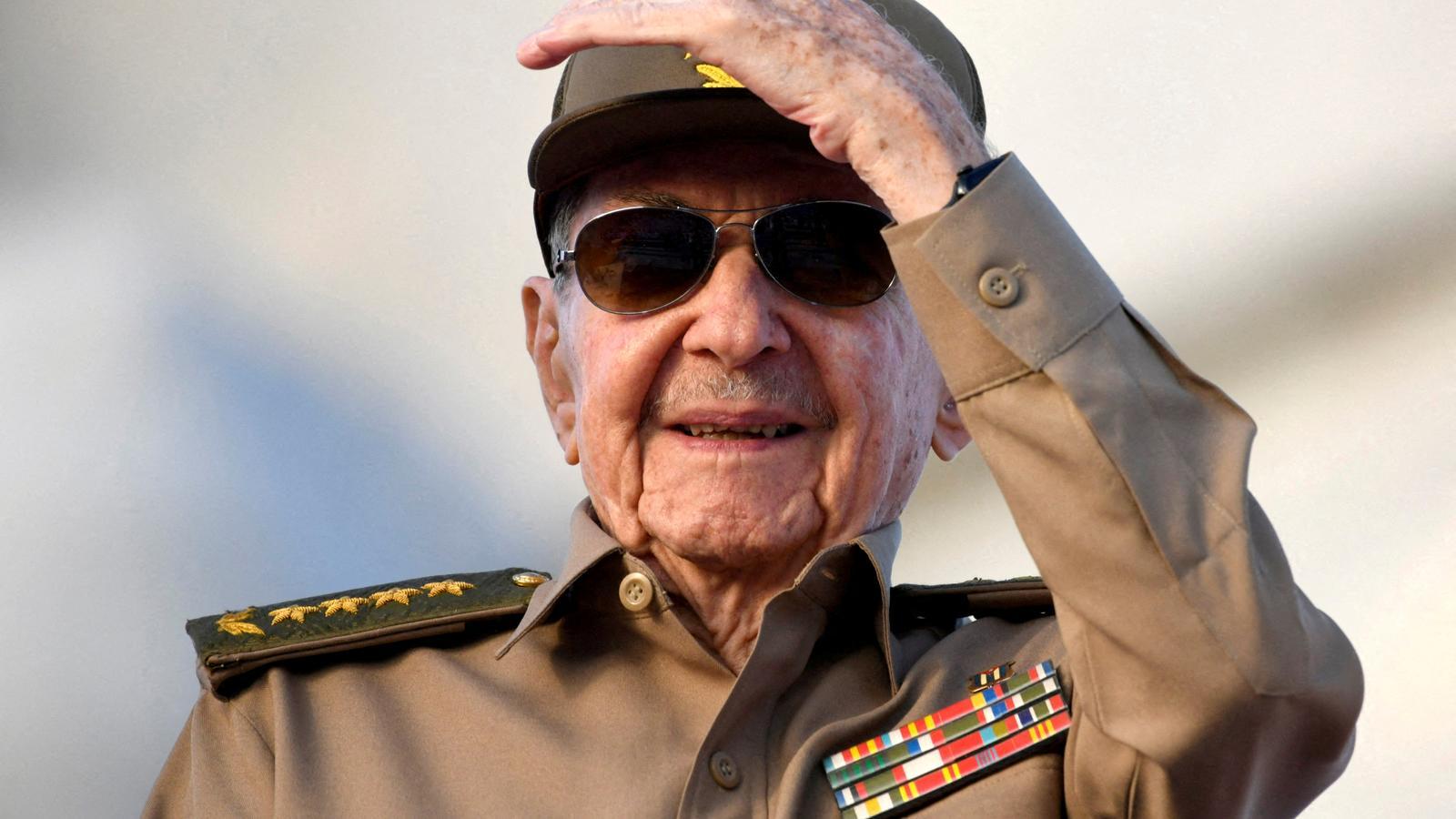
WashingtonThe United States Department of Justice has formally charged former Cuban President Raul Castro, 94, in an unprecedented escalation of the pressure campaign against the Caribbean island. The formal indictment against the younger of the two brothers who led the Cuban Revolution in 1959 represents a frontal attack on the military-economic power structure that currently controls the island. Although the current president is Miguel Díaz-Canel, Castro and a dozen military personnel linked to the Gaesa conglomerate are the ones pulling the strings of the regime. The charges were announced this Wednesday, just as Cuba celebrates its independence from Spain in 1902 thanks to US support.
It had been leaked for days that the US administration was considering a formal indictment against Castro, who will turn 95 in June. The indictment is based on the case of two planes shot down by the Cuban army in 1996, which belonged to the humanitarian organization Hermanos al Rescate (Brothers to the Rescue), founded by exiled Cuban-American citizens. Four people died in the incident, including three US citizens, and it left a deep wound within the Cuban diaspora in Florida. Therefore, among the charges for which he is indicted are conspiracy to murder American citizens, two counts of aircraft destruction, and four counts of murder.
, to emphasize this point, Ratcliffe also mentioned the operation in Caracas to kidnap Nicolás Maduro.
Political and economic influenceThe criminal accusation comes after another unusual scene occurred last week: CIA Director John Ratcliffe traveled to Havana to meet with his counterparts. Ratcliffe warned the Cubans that they had to take Trump's threats against Cuba seriously and that he would only establish "real" talks if there were "fundamental changes." According to CIA sources who spoke to the Wall Street Journal, to emphasize this point, Ratcliffe also mentioned the operation in Caracas to kidnap Nicolás Maduro.
Political and economic influence
Despite not being de facto in power, Castro is the creator of Gaesa and continues to be one of the most powerful figures on the island. Much of the influence that Fidel Castro's younger brother retains is due to the close relationship he developed with military circles during the years he served as Minister of Defense. In fact, he created Gaesa in the 1990s with the aim of strengthening the Cuban defense sector, but today it controls everything from the island's gas stations to luxury tourist complexes. In total, between 40% and 70% of the Cuban economy passes through his hands. The US administration targeting Castro is a symbolic and strategic blow.
the leak of a US intelligence reportunleash a 'horrific' guerrilla war. Brenner also pointed out that Gaesa does not depend on a single head, so a blow against Castro would not mean the decapitation of the regime. Nevertheless, it would cause a major upheaval and could lead to a power vacuum that generates infighting. In the end, figures like Díaz-Canel have more of a bureaucratic role than a governing one.
Castro's indictment is another symptom of the White House's impatience with the Cuban regime. This Wednesday, just hours before the accusation against Castro was announced, Secretary of State Marco Rubio shared a video on X addressing Cubans and accusing Gaesa of being responsible for the energy siege the island is suffering. "President Trump offers a new relationship between the US and Cuba, but it must be with you and not with Gaesa," he says, insisting that Washington is "ready to open a new chapter." Although Rubio speaks to Cubans, the message is directed at Gaesa.
In recent weeks, US government officials have told the press that Donald Trump is increasingly frustrated with his pressure campaign against Cuba. For more than four months, the island has suffered a brutal energy siege by the US, but, even so, it seems the regime is not backing down. That is why, in recent days, the possibility of a military attack against the island has begun to be considered in cabinet meetings. An operation that would hardly be as clean and effective as that of Venezuela.
The growing concern of the White House has translated in recent days into an increase in insinuations of a possible military intervention and more sanction packages. Two weeks ago, the State Department announced new sanctions against Gaesa, and on Monday, it applied a new battery of restrictions against eleven military leaders and members of the Cuban executive. Among them, the Minister of Communications, Mayra Arevich Marín. In parallel, tensions with the Cuban government have increased after the leak of a US intelligence report that depicts the island as a threat to US national security after allegedly acquiring about 300 attack drones.
A message for internal consumption
Beyond beating the drums of war, Rubio's video is also a message for internal consumption. The Secretary of State is known for being hawkish on both Venezuela and Cuba, although the Caribbean island has always been a personal matter. Much of his political brand has been built in Florida, appealing to the Cuban diaspora with the promise of provoking a regime change. Rubio, who is the son of Cuban immigrants, has also created a whole narrative around his identity and Cuba. However, although for many years he liked to portray himself as the son of Cuban exiles, it was later discovered that his parents had left before the Cuban Revolution, under the dictatorship of Fulgencio Batista. Rubio himself eventually acknowledged it.
Provoking a regime change is a matter of legacy for Rubio and another medal to hang on his chest for the 2028 presidential elections. Although there are still two years to go, in recent weeks his figure as a Hispanic has begun to be projected as a possible presidential candidate. His appearance during the White House press conference and the visibility he is gaining as the man who solves problems within the administration put him in an advantageous position against Trump's presumed successor, Vice President J.D. Vance. In this context, Rubio's video addressing the Cuban people is once again a strategy to sustain the
momentum surrounding his figure.
