Putin totters again

-
CAT -
CAST
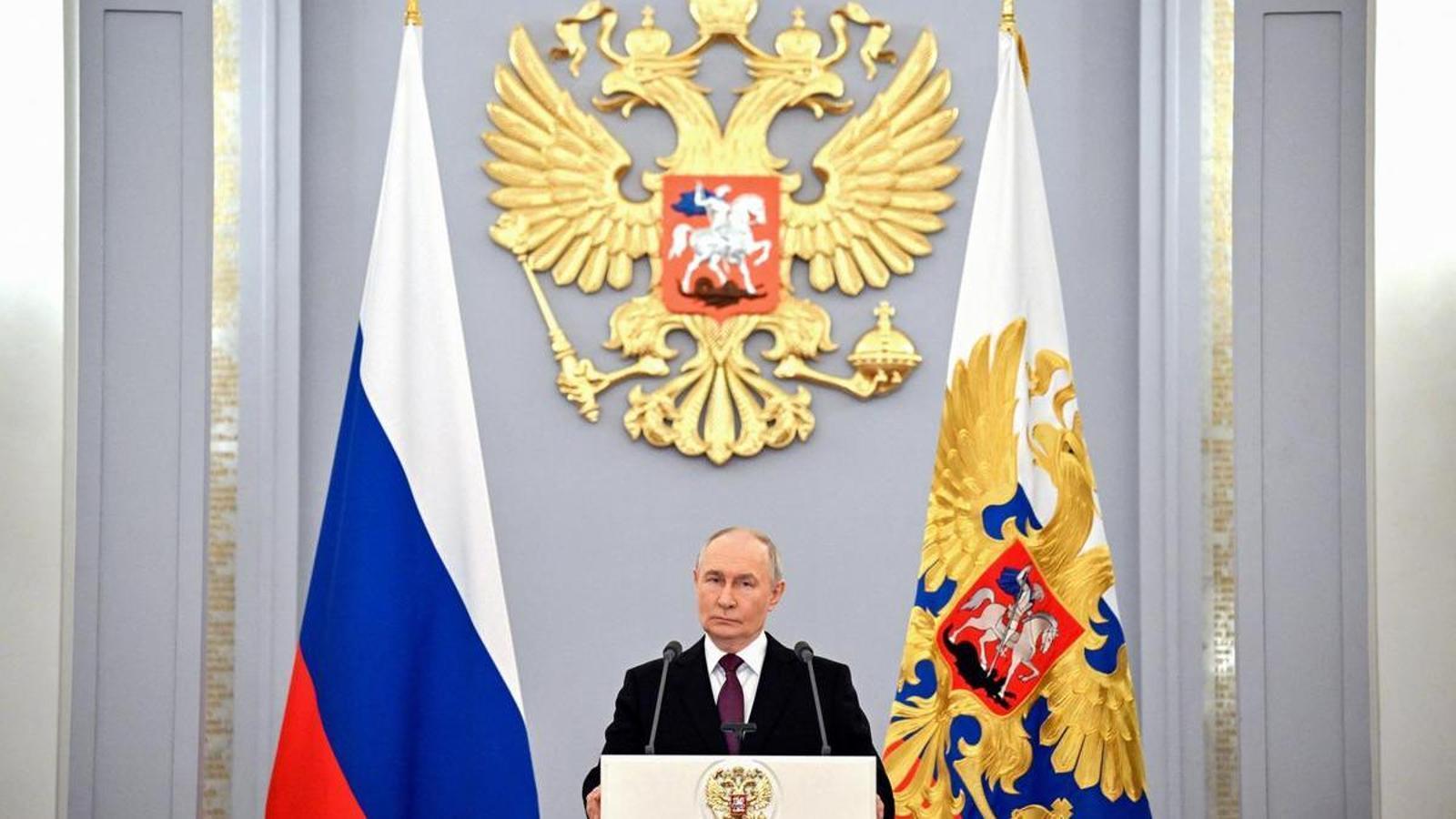
It is not at all common to see Putin take responsibility for political or military errors with words equivalent to self-criticism. Such as acknowledging that Ukrainian drones are putting Russia in difficulty. He said it just ten days ago. The head of the Kremlin promised security to Russians with a tone of humility. Citizens who for weeks have been forced to endure air raid alerts, drone explosions, and the surprise of discovering fuel shortages for their vehicles. Shocks that are added to figures that can no longer be hidden, not in the kitchens, nor in the air shafts, nor on the street sidewalks: half a million Russian soldiers could have died in the war in Ukraine according to the latest data from British intelligence services.
It is clear that the presidential self-criticism is a calculated tactic – Putin knows a lot about this – to get closer to society and dampen its tensions, and at the same time, to appease the rest of the de facto powers with whom he coexists within the state apparatus. In the same way, we must ask ourselves if the people who have massively voted for Putin are now hesitating between confronting him or resigning themselves to doing what the Kremlin master says. All this with indications that both sides – the power and society – know perfectly well what the other thinks. Putin is clear that a majority of Russians have no choice but to swallow his falsehoods. As the writer Mikhail Shishkin explains, it is a society in which the permanent absence of democratic values has pushed it to lie to protect itself. And even more so in the midst of a war. The power knows that citizens – the "servants" – lie even though they pretend to believe the power's lies. And, moreover, they know that the power knows it.
Not even two months have passed since the Financial Times and CNN spoke of "serious possibilities of a coup d'état in Russia", and nothing suggests that tensions within the state apparatus have subsided. Vladimir Putin continues to suspect that the ground is shifting beneath his feet, and that is why he has deployed his self-critical discourse. There is a feeling that all the time lost in Ukraine, the Russian president is trying to recover it at home. Embarking on a journey during which, while attacking Ukraine as much as he can – like the bombing of Kyiv on Thursday morning – he is trying to manufacture a crowd-pleaser and capitalize on it, taking advantage of the fact that there are parliamentary elections on September 20.
In April, according to the most reliable polls, the Putinist party United Russia barely reached 29%, and lo and behold, the June polls attribute 46% and an absolute majority of seats to it. What credibility do these percentages have? And what guarantees are there that the next Duma chamber will not continue to be a simulation of the plenary sessions of the old Central Committee of the CPSU, where ultra-Sovietism and ultra-nationalism always had a super-absolute majority?
Are we really living in the final days of Putinism? Timothy Garton Ash, the British professor who has studied it best, believes so, but he does not dare to set dates. Garton Ash believes that Putin's fall depends largely on Europe's support for Ukraine. Other necessary factors would be not to overestimate Russia and to intensify economic pressure to dissuade it. Without losing sight that there is "another Russia" in formation, anti-Putin, liberal and democratic, with whom we must reckon and whom we must help. The synthesis of Timothy Garton Ash's thought on the moment is this: the only language Putin understands is military and economic force exercised with political will.
