What is being negotiated in Lebanon? The keys to historic conversations
Netanyahu wants Aoun to order the disarmament of Hezbollah, which would expose the country to a civil war
-
CAT -
CAST
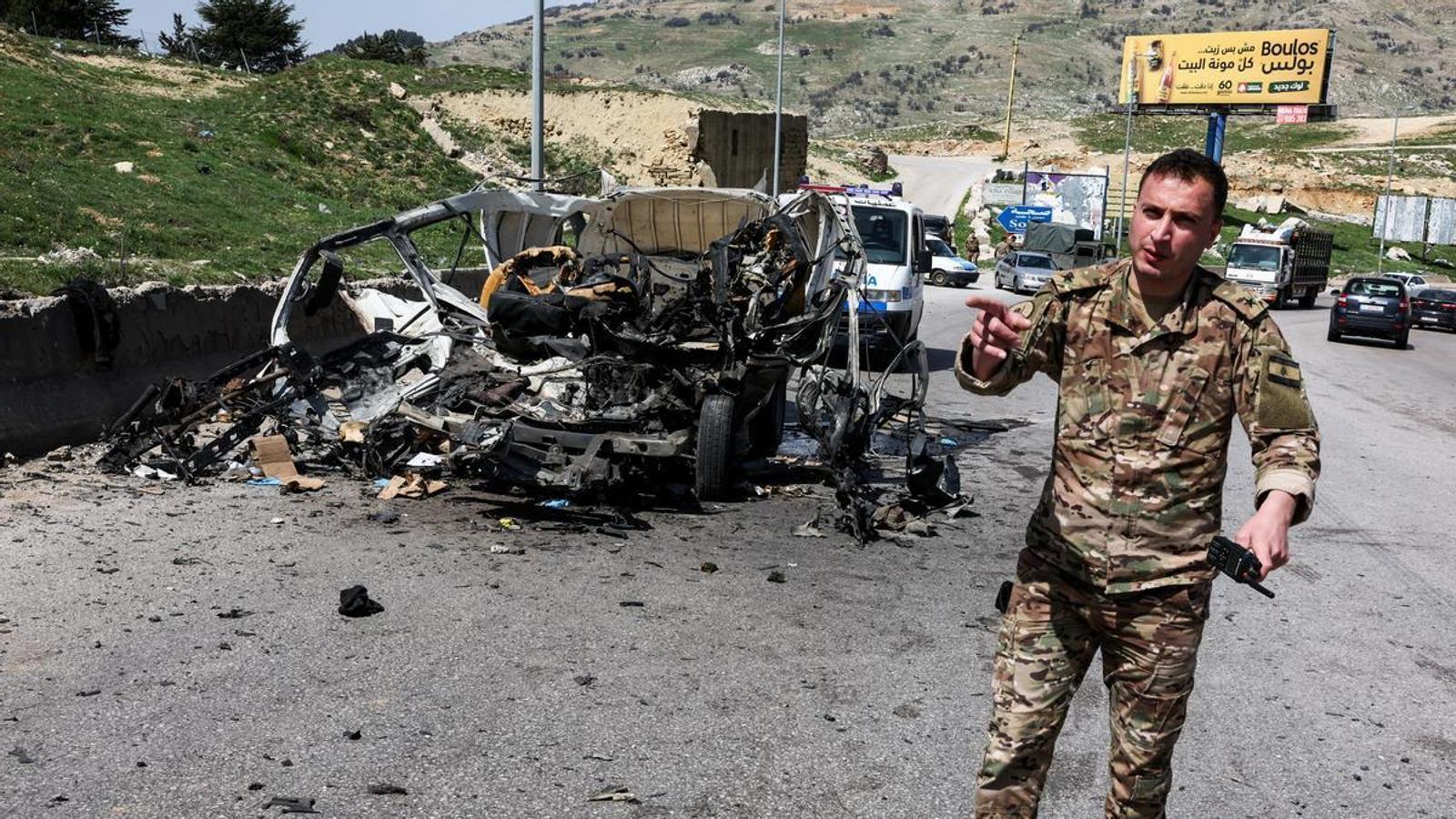
BarcelonaLebanon and Israel have been negotiating since Wednesday, in the first direct talks in 34 years. Lebanon has been dragged into the war by the attack on Iran, and this front threatens the fragile ceasefire agreed between Washington and Tehran, which expires on Tuesday. Trump announced yesterday that Israeli Prime Minister Benjamin Netanyahu and Lebanese President Joseph Aoun would speak by phone.Trump announced yesterday that Israeli Prime Minister Benjamin Netanyahu and Lebanese President Joseph Aoun would speak by phone. It is not yet known if this conversation has taken place. Throughout Thursday, Lebanon conditioned it on a ceasefire, which Trump announced in the mid-afternoon and Netanyahu confirmed at nightfall. On Wednesday, the advisors of Netanyahu and Aoun did meet in Washington. We review the keys to the situation, who the actors are, and why these conversations are not destined to end the violence.
Who is fighting and why
The war is not fought between two states, Israel and Lebanon, but between Israel and Hezbollah, a Shiite movement implanted in the country, linked from a military and ideological point of view to the Iranian regime. Israel intensified airstrikes in Lebanon after Hezbollah, the Shiite militia allied with Iran, launched missiles against Israeli territory on March 2, in retaliation for the attack by the United States and Israel against Iran and the assassination of its supreme leader, Ali Khamenei. Since then, it has expanded a ground offensive in southern Lebanon. It has ordered the evacuation of hundreds of thousands of civilians and has begun to destroy entire villages so that people cannot return. According to the Lebanese Ministry of Health, Israeli bombings have caused more than 2,000 deaths, including hundreds of children and women. Hezbollah's missiles have mainly hit towns in northern Israel, but have also reached cities like Haifa and Tel Aviv. Israel puts the number of dead at two civilians and thirteen soldiers since March 2.
The current conflict follows the 2024 ceasefire, when after the war between Israel and Hezbollah in the wake of the Gaza genocide, the US pushed for an agreement to disarm the Shiite militia. The Lebanese government has since tried to monopolize weapons, but the weakness of the Lebanese state has prevented it. Hezbollah refuses to disarm and argues that its arsenal is an element of national defense against Israel. An armed clash between the Lebanese army and Hezbollah could provoke a civil war.

How negotiations were reached
A week after the start of the current conflict, Lebanese President Joseph Aoun showed willingness to initiate direct negotiations with Israel to stop the fighting, and even to open the door to a normalization of relations. The two countries had not maintained diplomatic relations nor had they had high-level public meetings for 34 years. Israel rejected the offer, but two days after a ceasefire was signed between the United States and Iran, Israeli Prime Minister Benjamin Netanyahu announced the start of negotiations with Lebanon. A ceasefire in Lebanon was one of the conditions that the Tehran regime had set for continuing the diplomatic process.

What the parties want
Lebanon argues that the starting point must be a ceasefire —now announced by Trump, which will have to be seen how it is implemented— and to set the schedule for bilateral negotiations, while Israel wants to prioritize the disarmament of Hezbollah and the establishment of peaceful relations. Netanyahu has said that he will not withdraw from Lebanese positions during the truce and has left the door open to attacks. So far, Israel has maintained bombings on Lebanese populations with the aim of creating a "security zone" north of its border, and has continued bombing what it considers Hezbollah positions in the Bekaa Valley, where it believes the militia protects its arsenals, but attacks on Beirut have stopped. Israel wants the Lebanese government to expel ministers linked to Hezbollah. The disarmament of the group is an impossible challenge for a weakened state, facing a heavily armed militia that retains significant roots in a significant part of the Shiite community.
Where do we come from?
Lebanon and Israel do not maintain formal diplomatic relations and have technically been at war since the creation of the State of Israel in 1948. Israel has carried out multiple incursions into Lebanon, including an occupation of the south between 1982 and 2000, until it had to withdraw in the face of armed resistance from Hezbollah. In 2022, with mediation from the U.S., the two countries agreed on the delimitation of their maritime border.
