Israel threatens Iran's future supreme leader during massive funeral for Khamenei
Tens of thousands of Iranians march in a funeral procession in Tehran to bid farewell to the Ayatollah
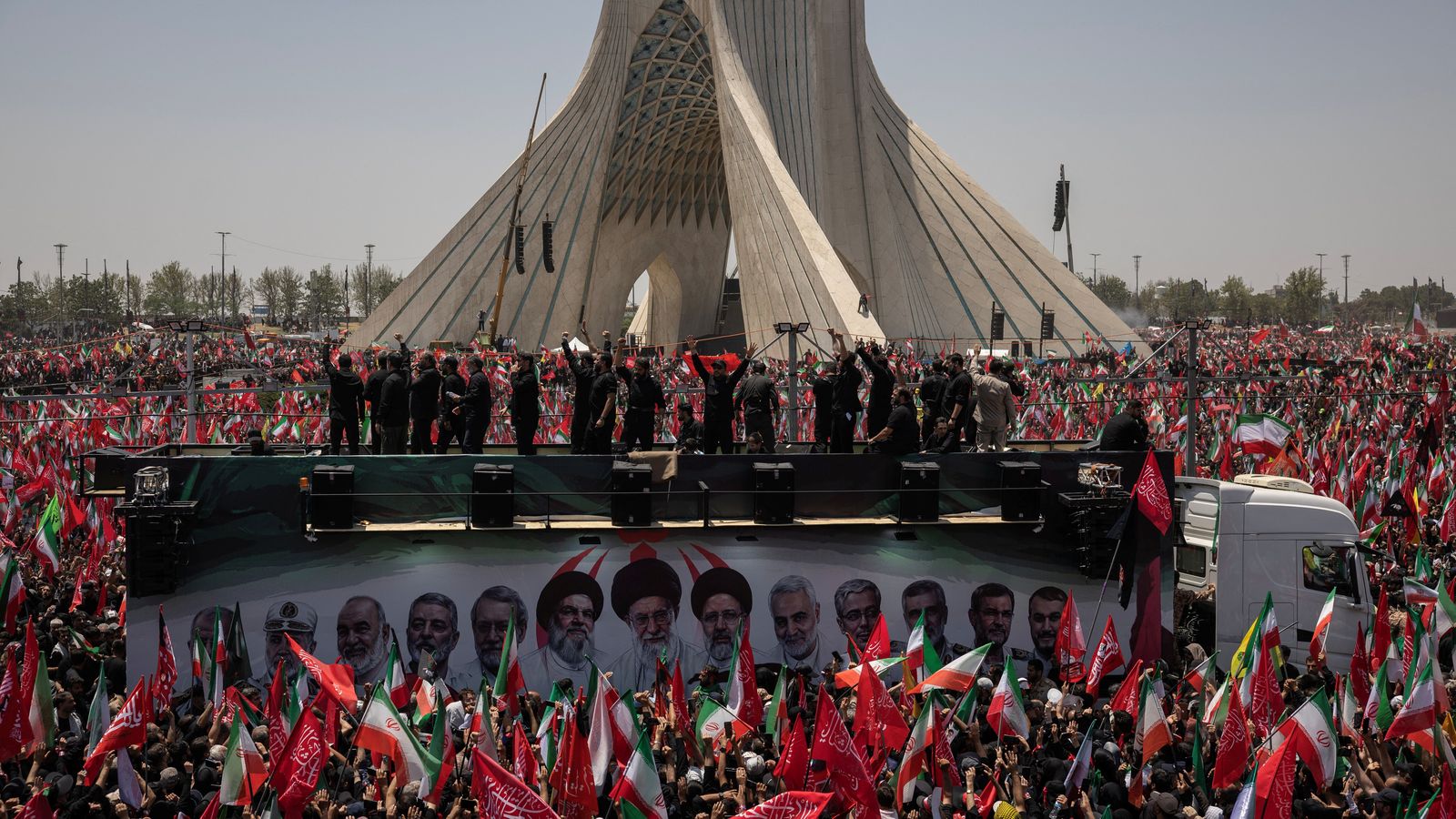

BarcelonaThe scorching sun has not been an impediment for the thousands of Iranians who, for the third consecutive day, mourn the death of Ayatollah Ali Khamenei at a massive funeral in Tehran. Tens of thousands of people have gathered on Damavand Avenue in the center of the Iranian capital to march in a funeral procession, the most important day of the commemorative ceremonies in honor of the supreme leader assassinated on February 28 in an Israeli-American attack.
In a demonstration of clerical strength and nationalist exaltation, Khamenei's coffin and those of four other assassinated members of his family have paraded since early morning on a truck, which has crossed the city from east to west on a twelve-kilometer route. The procession in Tehran ended at Azadi Square, where the coffin can be visited for ten or twelve hours, depending on the turnout of faithful. In the coming days, the coffin will be transferred to the cities of Karbala and Najaf, in Iraq, before being buried in Mashhad, in Iran.
Around them, a large crowd dressed in black has overflowed the streets. They waved Iranian flags and red banners with a slogan invoking "Khamenei's avengers" – adapting a phrase from Shia Islam about the death of the Prophet Muhammad's grandson – and chanted calls for revenge. "The US killed our father – they shouted –. Death to the United States and Israel." Some revenge chants were dedicated to US President Donald Trump and Israeli Prime Minister Benjamin Netanyahu. "There will be blood," read some signs written in Persian or English. To prevent extreme temperatures from spoiling the displays of devotion, Iranian authorities have deployed hoses in the streets to spray the demonstrators with water.

Iranians had to wait until June, once the truce with the United States was agreed, to bid farewell to the former supreme leader. The funeral ceremony began on Friday, when tribute was paid to one of his daughters and his fourteen-month-old granddaughter, one of his sons-in-law and Mojtaba's wife, who were buried in a ceremony open only to the country's authorities. And it continued from Saturday with events open to the public that have had massive participation and have left images of absolute devotion.
The absence of Mojtaba Khamenei
During these days, the most considerable absence has been that of the son of the deceased Ali Khamenei and new Iranian supreme leader. Mojtaba Khamenei has not been seen in public since the end of February, and it is speculated that he was seriously injured in the attack that killed his father. In contrast, his three brothers have made an appearance and have prayed at the side of Khamenei's coffin in a large prayer hall in Tehran. A contrast that fuels doubts about the country's internal leadership, at a time of great regional tension.

As the ayatollah's coffin circulated through the streets of Tehran, Israeli Defense Minister Israel Katz promised that any Iranian leader who continues his legacy will suffer the same fate. "Any Iranian leader who tries to push plans to destroy Israel again will also be frustrated," he threatened. Katz, who also lashed out at the chants of funeral attendees critical of Trump, boasted of his army's supposed successes during the war against Iran, which, in his opinion, "eliminated the immediate threat of Israel's destruction and significantly damaged Iran's strategic capabilities." But the minister warns that Jerusalem remains on alert and that Israel is "prepared to defend itself once again.
The truce between the United States and Iran remains on paper, awaiting the resumption of peace talks between the two parties when the farewell ceremonies for Khamenei conclude. But Israeli forces have continued to attack southern Lebanon and have violated their part of the ceasefire. This Monday, the army launched an attack on the Lebanese city of Nabatieh and announced that on Sunday it "neutralized" a supposed cell of the Shiite group Hezbollah in southern Lebanon.

