"Israel has destroyed all the bridges: the road to our home no longer exists"
Sara, a pharmacist from southern Lebanon, has fled the south of the country due to Israeli attacks, like a million more people

-
CAT -
CAST
BarcelonaThey waited until the second day to flee. Experience, even in a war, counts for something. The first time Sara Ajami and her family had to leave their home, a small village near Tyre in southern Lebanon, due to Israeli shelling, they had to queue for 15 hours. In 2024, under the shadow of the Gaza war, Israel invaded Lebanon, thousands of people from the south had gathered on the roads leading north. This time, on March 2, under the shadow of the Iran war, Israel launched the offensive in Lebanon, Sara and her family stayed home one more night, exposing themselves to danger, to avoid the queues.
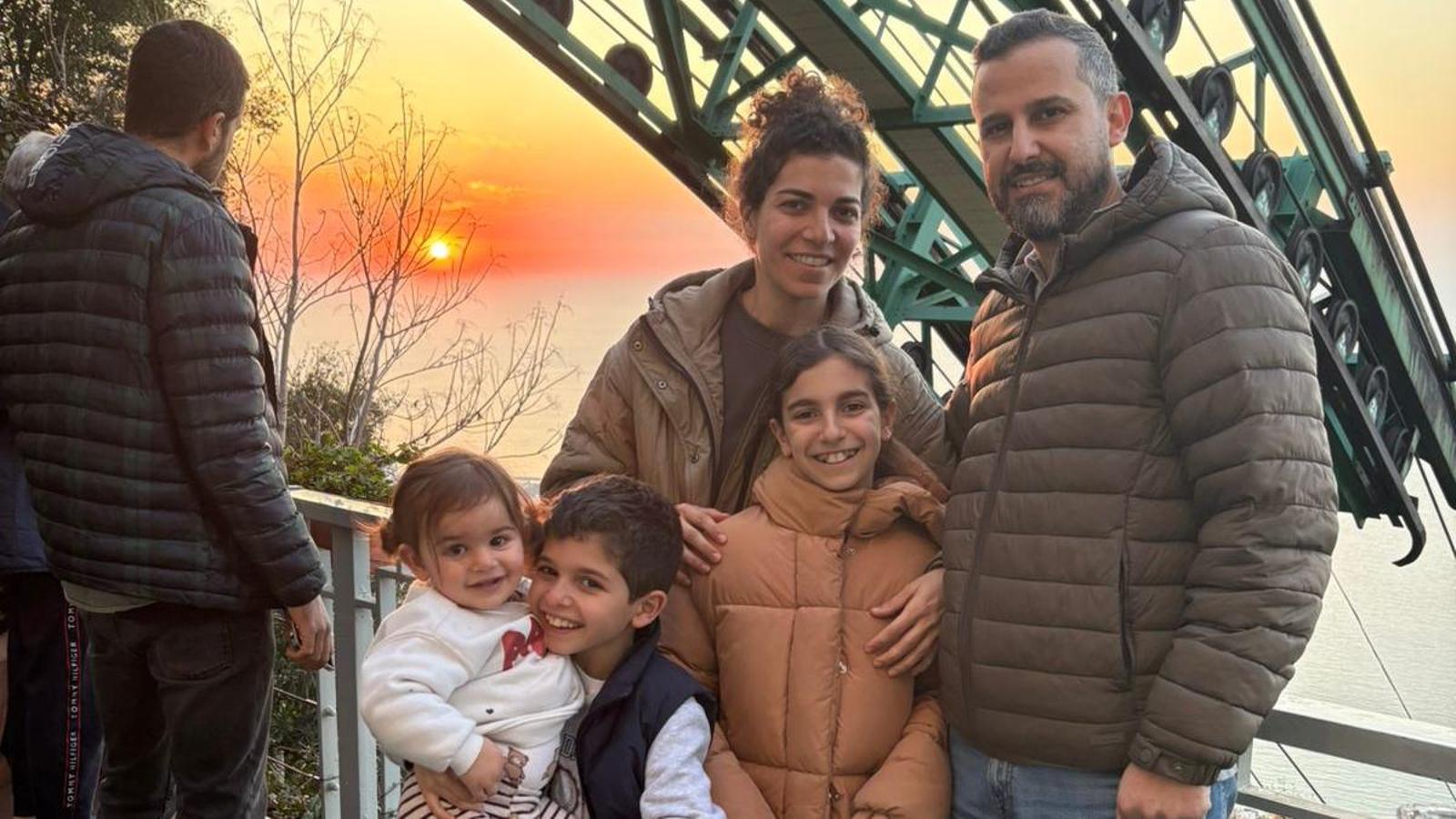
"The next day, with bombing alerts, we were forced to move," recounts this 37-year-old pharmacist. In the car were she, her husband, their three children, her two parents, and all the belongings that would fit. In the village, they left her father's medical practice, Sara's pharmacy, and her grandfather. He decided to stay. "He is 82 years old and says that whatever has to happen to him can happen, that he doesn't want to leave his home." Like Sara, nearly a million Lebanese have left their homes. Like her grandfather, many others have decided to stay. Some, 300 in just one day, have died under the bombs.
The family has settled in Jounieh, a town north of Beirut. This area was supposed to be quieter, as Israel had not attacked it in previous wars. Even so, from the small apartment where 8 people live together, the echo of projectiles can be heard. Israel has been particularly harsh with Beirut this week. "There are no shelters in Lebanon. And all of Beirut is dangerous. They say the north is safer, but you can't trust that."
Sara's children are 9, 7, and a year and a half old. They have all been through two wars. She has lived through four. "Time passes very slowly," says the pharmacist. "We don't have work, and we can't look for it either because the children aren't going to school." She herself teaches them math, English, and French. She worries they will lose their education because of the war. "They should have more stability, live in their homes, go to their school," she says. "I try to explain to them what is happening, so they understand what they are going through. But I try to make them feel safe." The mother feels things won't get better: "They are losing their childhood and they won't get it back."
Despite the efforts of hospitals and schools to maintain normality, Lebanese authorities are overwhelmed and do not provide aid to the displaced. Therefore, they have to make do with their savings. "This area is very expensive. We couldn't take many things with us and we had to buy everything here," she explains.
"The worst day of the war"
While headlines about Iran and the Strait of Hormuz filled the front pages, in Lebanon the feeling grew that they were the greatly forgotten. On Wednesday, they woke up to the news of a ceasefire in the region. But after a few hours, a hail of projectiles left the worst death toll since 1982. "Today has been the worst day of the 38 days of war we've had," explained Sara. "At two in the afternoon they started bombing. There have been 170 bombings." "We stayed home, we couldn't do anything else. Lots of patience and strength," she recounts.
After a couple of days, they were bombing her town, Abbasieh, ten kilometers from Tyre, again. An explosion collapsed a house and seven women died. Sara also suffers for what might happen to her pharmacy. Her husband, also a pharmacist, opened it in 2011 as a personal project to provide this service to the town. But in 2024 a bombing destroyed it. They repaired it and in 2025 they reopened. They don't think they can afford another reconstruction.
In the south, Israel's military campaign is devastating entire villages. With the same strategy they applied in Gaza, Benjamin Netanyahu's troops have evacuated, emptied, and attacked dozens of villages and have forced entire communities to flee in mass evacuations denounced by organizations like Human Rights Watch. Tyre, the city where Sara was born, has been documented since the third millennium BC. Now Israel seems determined to erase it from the map.
To prevent the population's return, the Israeli army has destroyed all the bridges crossing the Litani River that connect the south with the rest of the country. "Israel has been very clear from the beginning: it has a plan to create 'Greater Israel' and seize the part of Lebanon south of the Litani River," says Sara. "Netanyahu doesn't want any truce. He is a murderer and a war criminal," she adds regarding the possibility of Lebanon being included in the ceasefire.
Sara, her husband, her parents, her three children, and the belongings that fit in their car crossed over one of these bridges when they fled north on March 3. "The route we took to get to Beirut no longer exists. There is another, smaller one, and we could get there through it," she explains. The day after this conversation, Sara sends a message: "They have just bombed the last bridge connecting the south with the rest of Lebanon." The way back home no longer exists.
