The 'no' prevails in Iceland's referendum on joining the EU
Eurosceptic leaders capitalize on a result that weakens Brussels
-
CAT -
CAST
BarcelonaThe no prevailed in Iceland's referendum on resuming accession negotiations with the European Union by a clear margin: 52.8% versus 47.2%. Turnout was extremely high: 82.5%. The result is a blow to the community project, which wanted to incorporate a high-income country after the setback of Brexit, to strengthen itself internally and also against external threats represented by the United States, Russia, and China. For this reason, Brussels had shown some flexibility on the thorniest issues that concerned Reykjavík, especially fishing quotas. Far-right, Eurosceptic leaders have not missed the opportunity to celebrate it.
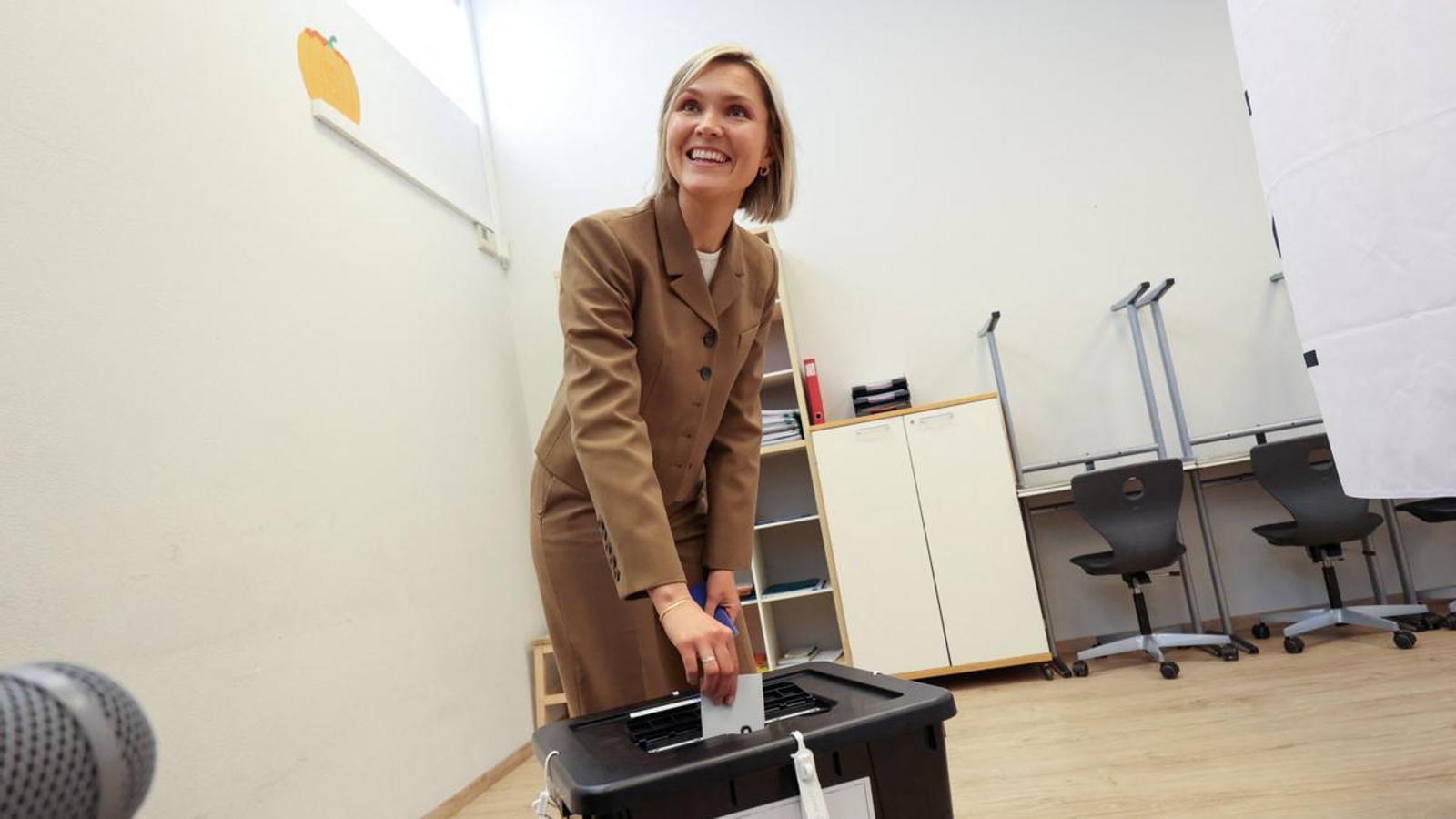
The Icelandic government had presented the consultation as an "now or never" and lost the bet. Prime Minister Kristrún Frostadóttir, who had personally engaged in the campaign for the yes, told public television that she hopes the referendum will not leave a sense of division in the country: "I have met many people across the country and they were open to any outcome." She acknowledged that the population in rural areas, tied to fishing and livestock farming, feared the impact of joining the European bloc.
Supporters of EU accession argued that it is in Iceland's interest to move closer to its European neighbors to address borderless problems, such as climate change. They also maintained that the euro would bring more stability than the volatile Icelandic krona and would curb both rising inflation (5.6%) and high interest rates. There were also geopolitical reasons: the unpredictability of Donald Trump and his threats to take over neighboring Greenland – which on several occasions he has confused with Iceland – have heightened the islanders' concerns. Russia's invasion of Ukraine has shaken established security doctrines: the island occupies a strategic position in the subarctic region, has no army, and depends on NATO and a bilateral defense agreement signed in 1951 with the United States.
The opponents, on the other hand, considered that Iceland already enjoys all the advantages of European integration without having to assume the cessions of sovereignty that accession entails: it is a member of the European Economic Area (like Norway and Liechtenstein) and is also part of the European Free Trade Association, and the Schengen area of free movement of people. They also cite trade agreements, such as the one the country has with China, which they consider more favorable. The issue of fishing – one of the pillars of the Icelandic economy and a sector over which Reykjavik wants to maintain exclusive control – would have to be negotiated with Brussels, and those affected assure that the quota system does not adapt to their reality of isolation nor to the characteristics of the sector in the country. They still remember the mackerel war of 2010, when the EU and Norway clashed with Iceland and the Faroe Islands over the unilateral increase in their catches, due to the emigration of this fish to the north due to climate change. Livestock farming, which is also a pillar of the island, is also reluctant to submit to the requirements of the single market.
Eurosceptic leaders have been quick to capitalize on the victory of the no. “At a time when some are pushing for more federalism and the transfer of sovereignty to the European Commission, this vote reminds us that another Europe is possible, a Europe of free and sovereign nations that cooperate voluntarily on matters of common interest,” Marine Le Pen said on X.
The ultra Nigel Farage has been more direct and has congratulated Iceland "for voting to maintain its independence".
Hulda Þórisdóttir, a professor of political science at the University of Iceland, told Reuters that she was not surprised by the results, given the tone of the final stretch of the campaign, the spread of disinformation, and considerably larger financial resources of the campaign of the no. "The not has won due to a combination of factors: a strong feeling that the European Economic Area is all we need, a sense of Icelandic exceptionalism, self-interest and a lot of misinformation among those less involved". Specifically, he cited some false ideas among some voters of the not that they said they did not want their children to have to enlist in the non-existent EU army.
The attractions of the community project
The triumph of yes would only have launched negotiations with Brussels and the result would have had to be submitted to a second referendum. The triumph of no, on the other hand, is more definitive, because, politically, the pro-Europeans will now have to wait a few years to recover from the defeat. The country, with just under 400,000 inhabitants, applied for accession to the EU in the wake of the 2009 financial crisis, which devastated the economy, led to a movement of popular revolt and culminated in the arrival of the left in power. The accession negotiations were suspended in 2013, with the change of government color. Neither the start of the negotiations nor their suspension were put to a referendum, and this time Frostadóttir wanted to consult the citizens first.
The result is not good news for the European Union, which has not incorporated any rich country that can contribute to the community budget since 1995. Héctor Sánchez Margalef, a researcher at Cidob, points out to ARA that "the EU has to think why, even in the current circumstances, the EU is capable of attracting a small country with the argument of security". He admits that "it is a shame that a country that would be a net contributor to the community club does not join and does not drag other countries to do the same, such as Norway". But he recalls that "Iceland already enjoys many advantages by being part of the European market and already has very broad relations with Europe, a space attractive enough for the country to accept its rules without participating in decision-making". In any case, Sánchez states that the result "is a victory for the United States", even though the priority of the European institutions is to continue with the planned timetable of incorporating Montenegro, Albania and, later, Ukraine.
