The International Maritime Organization (IMO) has announced an evacuation plan for around 11,000 sailors who remain stranded in the Strait of Hormuz, after obtaining the necessary security guarantees for navigation through the area. The secretary of this UN body, Arsenio Domínguez, said in a statement that this "large-scale operation" will be carried out in collaboration with Iran, Oman, the United States, other Persian Gulf countries, and the maritime industry. The organization said it has begun contacting ships, but has not provided any timeline.
New clash between Trump and Iran on a day of diplomatic hyperactivity to safeguard the ceasefire
Israel violates the truce again and kills two people in attacks in southern Lebanon
23/06/2026 - 18:52 h.
4 min
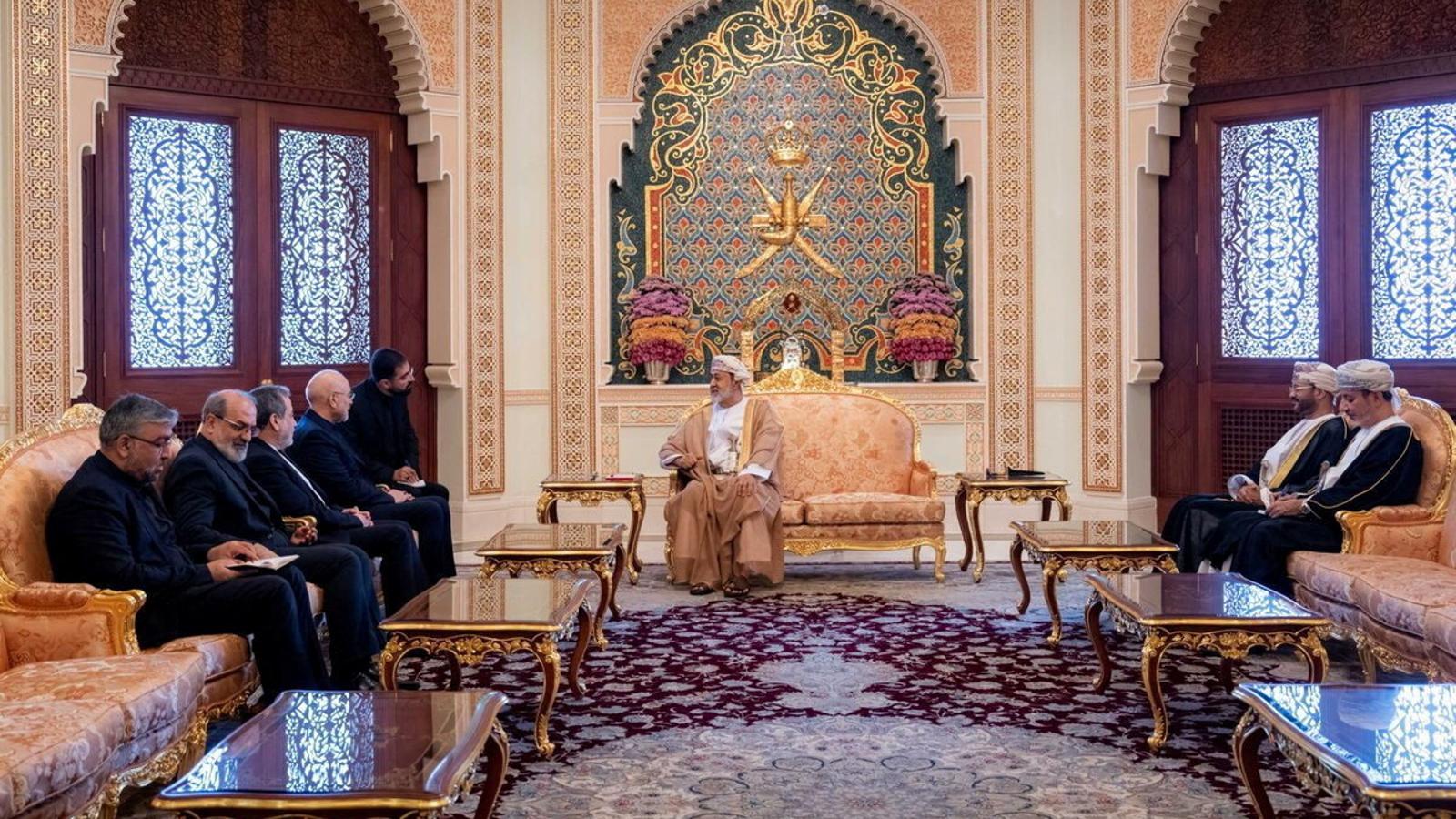
BarcelonaThe “memorandum of understanding” that extends the ceasefire between Iran and the United States and that is intended to allow progress towards a peace agreement is so fragile that all parties involved have intensified diplomatic moves to try to consolidate the foundations and prevent everything from exploding just days after its announcement. This Tuesday there are several parallel meetings in different parts of the world, all with the same objective on the table: to guarantee the mechanisms to try to maintain peace in the region. Iran's chief negotiator, Mohammad Bagher Ghalibaf, and the Foreign Minister, Abbas Araghchi, have met in Oman with Sultan Haitham bin Tariq al-Said. Iran's President, Masoud Pezeshkian, has traveled to Pakistan, a mediating country, and US Secretary of State Marco Rubio has planned meetings with leaders from Bahrain, Kuwait, and the United Arab Emirates. In addition, in Washington today, talks between Israel and Lebanon resume, as always, without the presence of Hezbollah.
One of the central issues is the Strait of Hormuz. The preliminary agreement establishes that Iran must allow the free passage of commercial vessels, without charging any type of toll, even though Tehran had suggested it would control maritime traffic along with the Omani authorities. The Iranian ambassador to the UN in Geneva, Ali Bahreini, has confirmed that the strait is “completely open for commercial vessels” and that no payment will be required during the two months that negotiations are scheduled to last. However, he pointed out that what will happen after these 60 days “will depend on the negotiations”. He also indicated that the main discussions on Hormuz will be between Iran and Oman, and that other parallel talks will open with the other parties involved afterwards.
Iran and Oman share sovereignty of the maritime passage, and that is why this is the main issue in Monday's meeting in Muscat. In a joint statement, the two countries have announced the creation of a joint working group to address “the future management of navigation in the Strait of Hormuz”, a strategic maritime route for global hydrocarbon trade. They will also have to discuss what services will be provided and the “associated costs”. They have also committed to keeping the strait “open and free” for international navigation, always respecting the sovereignty of both states.
Since the memorandum was signed, at least 172 ships have crossed the strait, 42 of which did so in a single day, Saturday, according to the BBC, citing the maritime tracking portal Kpler. This represents an increase in activity, but it still remains at levels very far from pre-war traffic, with around 130 ships daily.
Contradictions over the nuclear program and frozen funds
The other major issue in question is the Iranian nuclear program. This Monday, US Vice President J.D. Vance, assured that Iranian negotiators had agreed to allow inspections again by the International Atomic Energy Agency (IAEA), which had been suspended since the US and Israeli attacks in June last year on the country's nuclear facilities. The next day, Bahreini said that "there have been no serious negotiations regarding this matter, so any information given about allowing inspectors to go to Iran is incorrect." Foreign Ministry spokesman Esmaeil Baghaei insisted, stating that Iran has not met with IAEA Director Rafael Grossi in Switzerland, nor does it plan for the UN nuclear watchdog to inspect the damaged nuclear facilities.
US President Donald Trump was quick to react, as usual, via Truth Social, insisting that, "despite their protests and false statements [...], Iran has fully and completely accepted the highest-level nuclear inspections." He also referenced the other issue that has been the subject of discrepancies and contradictory messages in recent days: the fate of Iranian funds that will be unfrozen. The issue of frozen assets was addressed in the memorandum of understanding, but the exact definition was to be clarified in subsequent negotiations. And currently, two versions are circulating – also, as has been usual in recent months –: Washington says they will release 12 billion dollars on the condition that the money is used to buy goods in the United States, as "humanitarian aid," while Tehran refuses any such demand.
This Tuesday Trump insisted on this and stated that the money and sanctions that the US Treasury is releasing "will go into an escrow account, controlled by the US, and will be used for the purchase of food and medical supplies, exclusively from the United States", including corn, wheat and soybeans from American farmers. But Bahreini also insisted on the Iranian regime's position and assured that it will be the country that decides on the use of the foreign assets that will be unfrozen: "There will be no entity or any other party that will have anything to say about how they are used", said Bahreini. He also specified that it has been agreed to release the 12 billion dollars in two tranches of 6 billion, the first of which "is either already done or is in the process of being completed".
The most obvious risk: Israel
In this delicate context, the element that could derail the process is Israel. The Iranian ambassador to the UN has stressed that the “red line” for Tehran is Israeli attacks on Lebanon. This Monday, the United Nations celebrated that it had been the first day without exchanges of projectiles between Israel and Hezbollah since March 2, when the war in Lebanon resumed. The next day, however, deaths have been registered again. According to Lebanese official sources, at least two people have died in the south of the country when Israeli soldiers opened fire on a group of people on a road in the town of Nabatieh al-Fawqa. The Israeli armed forces stated in a communiqué that the soldiers, who were operating in the security zone established by Tel Aviv in southern Lebanon, responded to an “immediate threat” from “armed terrorists”.
All of this, as the fifth round of negotiations between Lebanon and Israel takes place in Washington. The Lebanese president, Joseph Aoun, has considered it to be “decisive” in achieving the country's objectives, among which he highlighted “restoring full sovereignty in every centimeter of territory and extending state authority” throughout the country, that is, ending the Israeli occupation and Hezbollah's influence.
The IMO initiates an evacuation plan for 11,000 sailors stranded in Hormuz
