Deadline for Ormuz blockade expires and Trump says he will "eliminate" Iranian speedboats
Oil again surpasses one hundred dollars as Washington and Tehran escalate rhetoric before the president's announcement that he will apply a naval blockade
-
CAT -
CAST
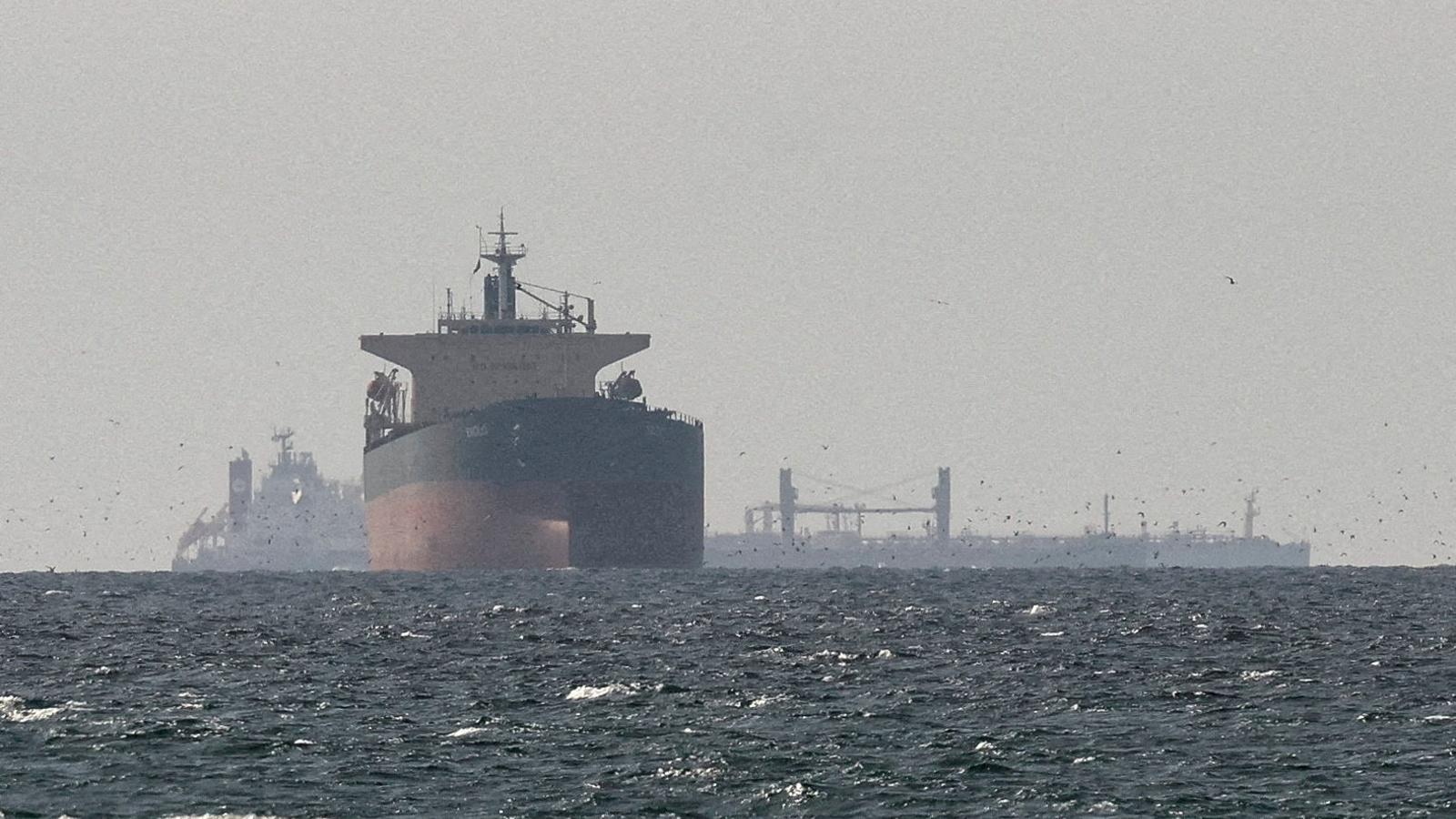
Washington/LondonDonald Trump's deadline to block the Strait of Hormuz expired this Monday past 10 a.m. in Washington and, during the first hour, the only visible change has been on a rhetorical level. The president has once again threatened the Iranians, warning them that any of their ships that try to overcome the siege of the US military will be "eliminated". "If any of these ships approach our blockade, they will be immediately eliminated, and we will use the same elimination system that we use against drug traffickers on boats at sea. It is fast and brutal," warned the Republican, alluding to extrajudicial executions in the Caribbean Sea against alleged narco-boats. Shortly after the Republican announced on Sunday his intention to obstruct maritime passage to economically harm the ayatollahs, Tehran warned that no port in the Persian Gulf would be safe if he tried to stop their ships.
threatened to destroy Persian civilizationOnce again, Trump disrupts the world with a publication on Truth Social. A week ago he to later , and now he is shaking the incipient truce. Hopes that the humanitarian pause would last two weeks had never been high, especially since Israel has continued to bomb Lebanon, contradicting one of the points of the pact. Negotiations between the United States and Iran stalled early Sunday morning, and despite Vice President J.D. Vance justifying it by the disagreement over the nuclear program, Iranian media reported that Hormuz was the apple of discord. Now it seems that it will be precisely at this point where diplomatic efforts could completely unravel.

Iranians, who thanks to the war have discovered the global damage they can inflict with the strait, want total control. Although the United States only asked for Ormuz to be reopened as an initial condition for negotiation, they are also not interested in leaving it in the hands of an enemy country. Shipping companies had already looked with suspicion at Trump's announcement last week when, after announcing the ceasefire, he said that the strait was reopened and navigable. Insurers and merchant companies wanted security guarantees, and the fragile agreement could not sustain the magnate's desired reality. In the six days of truce, only a dozen ships have passed, whereas before February 28 – when Washington and Tel Aviv attacked Tehran – between 150 and 200 passed daily. This Monday, the Brent barrel is already above 103 dollars.
According to US administration sources cited by The Washington Post, on the Oval Office desk there is both a large-scale bombing campaign and targeted attacks against Iranian infrastructure. Trump himself had suggested it with his usual combination of threat and apparent reluctance: "I would hate to do it, but it's their water plants... very easy to hit." A phrase that, in the current context, sounds less like moral doubt and more like an operational warning. An attack on Iran's desalination plants could trigger a reciprocal response from Tehran against these facilities in the Gulf countries, vital for their population.
these Gulf countries' facilities, vital for their population
European distance
Europe, for its part, is keeping its distance for the moment. British Prime Minister Keir Starmer described the situation on Monday as "deeply damaging", and reiterated that the United Kingdom will not join the US operation: "We will not be dragged into a war that is not in our national interest," he told BBC Live 5 radio, returning from a brief tour of Gulf countries. London is pushing for a multinational mission to guarantee freedom of navigation through the strait, an initiative it is jointly promoting with Emmanuel Macron's France. The message is clear: de-escalate or, at least, do not contribute to escalation. For the moment, however, it is more a wish than a reality.
And amidst all this, the Trump factor adds an additional layer of uncertainty. A few hours before confirming the blockade, the president posted an AI-generated image on Truth Social in which he appeared in a scene of miraculous healing, surrounded by patriotic symbolism and almost angelic figures. A deific representation quite illustrative of his role in world affairs.

In parallel, initial data point to an even greater slowdown in maritime traffic and an alteration of routes. Some vessels avoid clearly identifying origin or destination, while others are directly reconsidering their journey. The result is an increase in logistical and insurance costs that, as often happens, ends up being passed on to the final price of energy.
The problem is not just oil. The passage through Hormuz is also vital for liquefied gas, especially from Qatar, and for the exports of several Gulf countries. At the moment, a good part of this flow is conditioned or directly reduced or stopped. According to industry estimates, the war has already cut global crude flow by about eight million barrels a day, a significant figure to strain the markets.
The case of Saudi Arabian Oil Company (Aramco) illustrates the situation well: planned shipments to China have been halved in one month, according to sources from the company itself. Other regional players have even less room to maneuver. Kuwait and Iraq are finding it difficult to export their production, while the United Arab Emirates can only partially divert the flow through alternative routes. Qatar, key in the global gas market, also sees its export capabilities limited.
This compression of transit coexists with a market paradox: while the benchmark price of oil exceeds 100 dollars per barrel, physical crude in Asia is trading much higher, around 150 dollars, reflecting the real cost – and risk – of getting it to the committed destinations. It is the difference between a market that speculates and logistics that get stuck, according to sources from the City of London.
This balance reflects a broader reality: no one wants to bear the cost of a complete closure of Hormuz, but no one seems capable of guaranteeing its opening either. The result is an intermediate, unstable situation, in which transit does not stop completely, although it is reduced to a minimum, and ceases to be reliable. Amid credible threats, symbolic gestures, and global interests at play, Hormuz once again remains the point where geopolitics ceases to be theory and transforms into a very high risk. And any mistake or accident could reignite the fuse of missiles.
