73 missiles and 656 drones: Putin fulfills the threat and launches a massive attack against Ukraine
Twenty-two people have died and more than a hundred have been injured in Kyiv and Dnipro
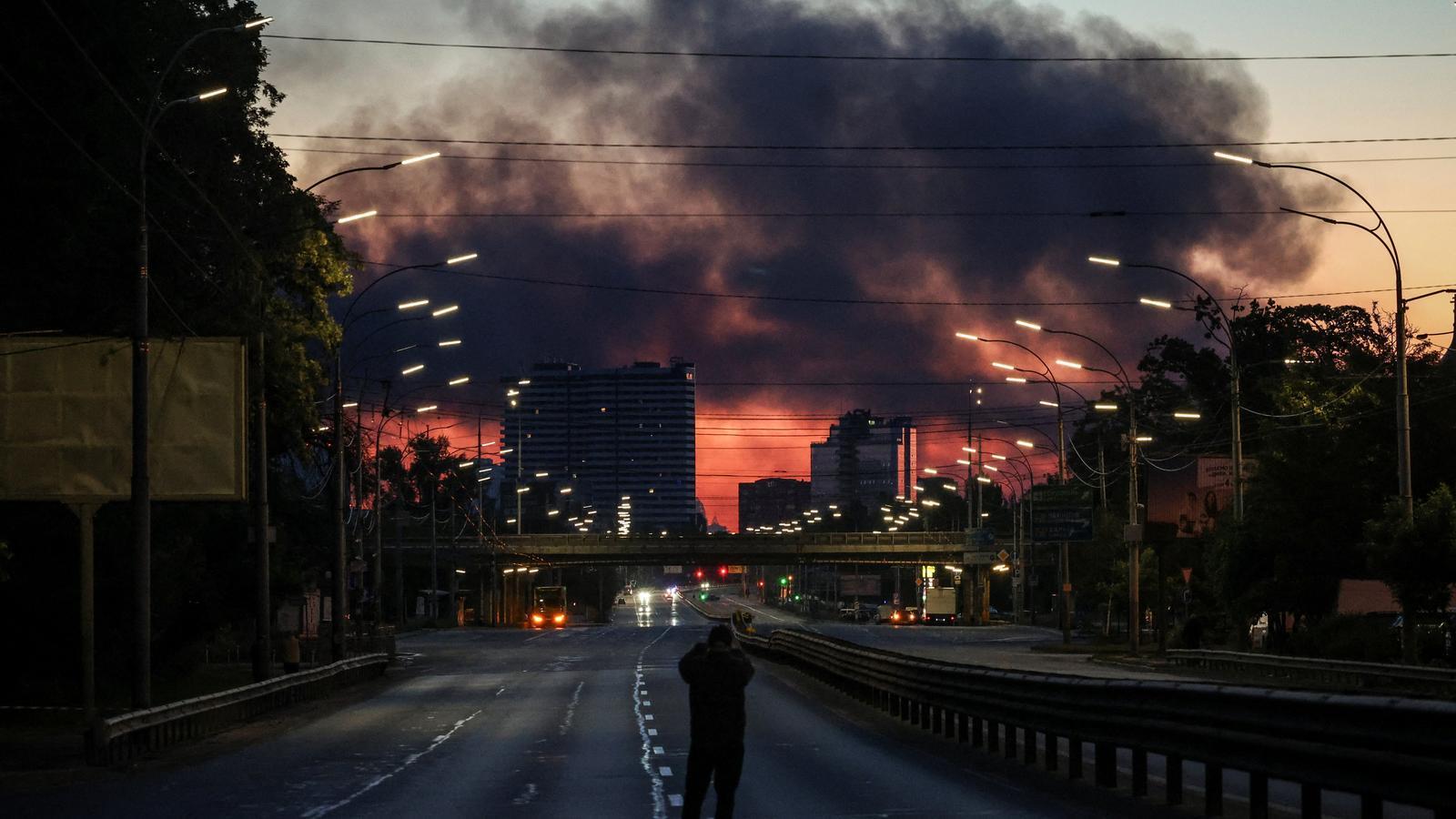

MoscowVolodymyr Zelensky had warned for days of an imminent large-scale bombing of Ukraine, and it has finally arrived. At least 22 people have died and more than a hundred have been injured in a night attack on some of the country's main cities, especially the capital, Kyiv, and Dnipro in the east. Russia launched 73 missiles, in one of the most intense attacks of the last year in a single night, in addition to 656 drones. Vladimir Putin had promised that he would respond forcefully and systematically to the massacre of 21 young people in a university college in Luhansk, in occupied Donbas, two weeks ago.
In Kyiv, six people died in the partial collapse of a nine-story residential building due to the impact of a projectile. Several skyscrapers and a clinic also caught fire, and in total, more than eighty people were injured. In Dnipro, the death toll rose to sixteen, including two children aged three and eight, in addition to about thirty injured. The authorities report that in this city, a member of the emergency services was a victim of unmanned devices while carrying out rescue tasks, in what is known as double tap, a military practice that can be considered a war crime and which consists of striking emergency personnel at the moment they are attending to the injured at the scene.

The first wave of attacks began around nine in the evening, a few minutes after Putin held an extraordinary meeting to learn about the progress of the investigation into the Ukrainian bombing of the Starobilsk student dormitory on May 22. During the meeting with representatives of the judicial and government bodies, the Russian president concluded that Zelensky had decided to "open a new chapter in his series of crimes" and had "changed the fundamental nature of the conflict" by taking it to a new dimension.

These statements were interpreted as the expected signal to launch an escalation of the conflict. Last Monday, the Kremlin announced the start of a campaign of massive and systematic attacks against the Ukrainian capital and urged neighbors and Western diplomats to flee. However, since the warning, the Russian army had not fulfilled the threat, but rather nine days have passed since the last major bombing, one of the most powerful since the beginning of the war, on May 24. The reason is that it has been accumulating missiles primarily to launch them all at once with the aim of pushing Ukrainian anti-aircraft defenses to the limit.
Zelensky considers the bombing to be "an absolutely clear declaration by Russia" that "if Ukraine is not protected against ballistic missile attacks, these attacks will continue." For this reason, he has urged Europe to build its own antiballistic defense and has requested more Patriot interceptor missiles from the Americans, warning of the scarcity of this weaponry which is practically only produced in the United States. Even a few days ago, the Ukrainian president wrote a letter to Donald Trump asking him for “help to protect Ukraine’s skies from Russian missiles”.

Record attacks on Russian refineries
Meanwhile, early this morning, drones from the Ukrainian army have once again attacked Russian energy infrastructure. In total, nearly 150 unmanned devices were launched, some of which impacted a refinery in Krasnodar, in southern Russia, dedicated to fuel exports. Attacks on Russian oil facilities marked a record high in May with 30 plants affected, including 16 refineries. This has caused the country's refining capacity to fall to levels not seen in 16 years. A move by Kyiv to counteract the Kremlin's increased oil revenues in the context of the war in the Middle East.
