The first round of talks between Iran and the United States ends with "important advances", according to Tehran
With the intermediation of Pakistan and Qatar, a roadmap has been agreed to try to end the conflict in a period of two months
-
CAT -
CAST
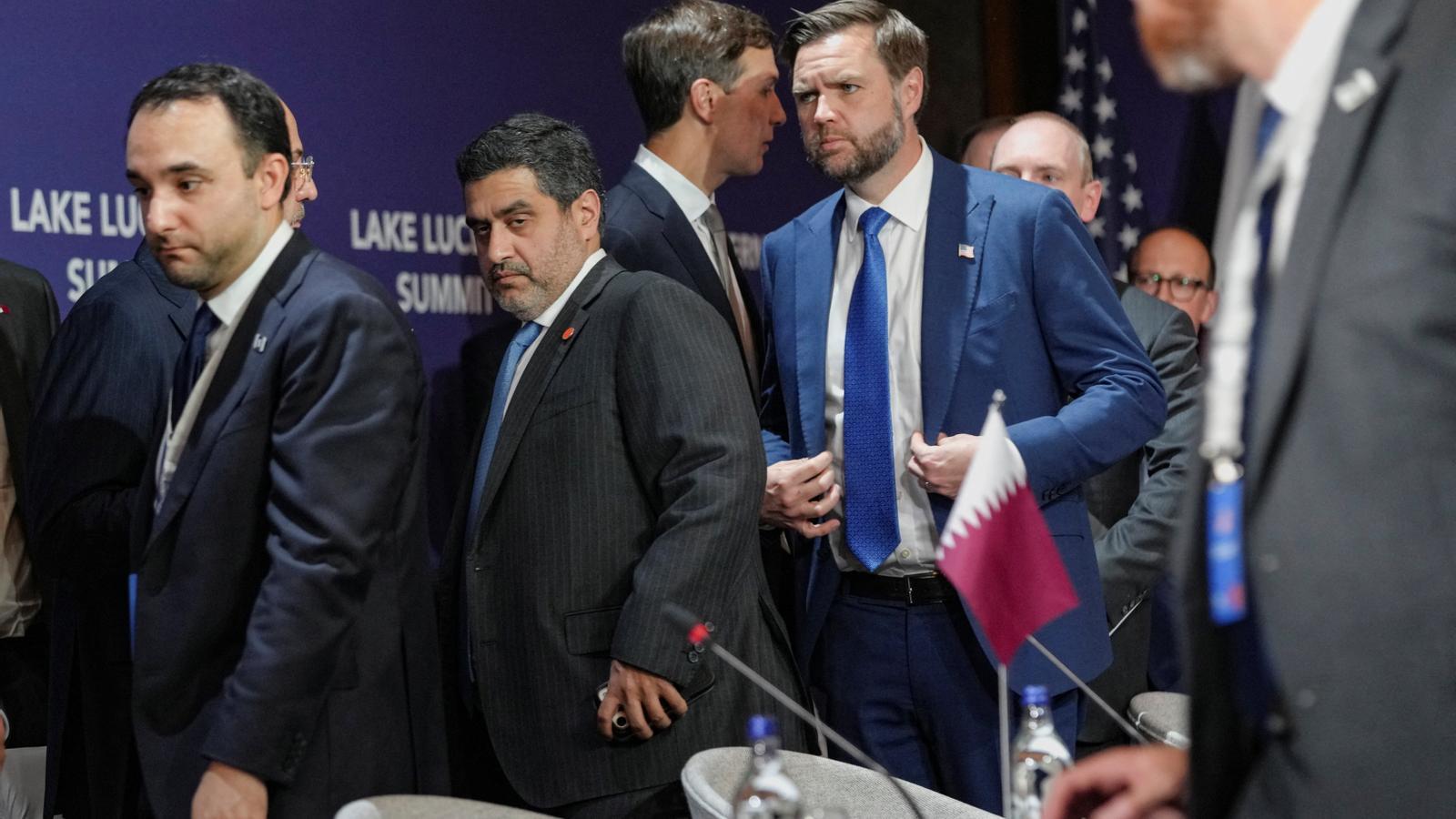
BarcelonaThe first round of negotiations between the United States and Iran in Switzerland has ended with "significant progress" to end the war in Lebanon, according to Iranian Foreign Minister Abbas Araghchi, who thanked the "tireless mediation of Pakistan and Qatar" in a social media message. The two countries have agreed to create a committee to promote a roadmap that will allow them to reach a final agreement to end the conflict within 60 days.
The atmosphere of the talks in the Swiss town of Bürgenstock has been cordial, according to the mediating countries, after the Iranian delegation walked away from the table yesterday, Sunday, due to threats from President Donald Trump to attack Iran "very strongly" again if Tehran does not curb future Hezbollah attacks against the Israeli army. On Washington's side, Vice President J.D. Vance is participating in the negotiations, while the Tehran delegation is led by Parliament Speaker Mohammad Bagher Ghalibaf and Minister Araghchi.
Both delegations have also agreed to create a conflict resolution group to ensure "compliance with the cessation of military operations in Lebanon," in relation to the attacks by the Israeli army. Following the good prospects, the price of a barrel of Brent oil, the benchmark in Europe, for delivery in August fell by almost 2% this Monday, to 79 dollars.
The talks aim to address the implementation of the 14-point memoranduman agreement that does not respond to the objectives set with the attack on Iran on February 28
Before Vance arrived, the two usual negotiators from Washington had already traveled to Switzerland: Steve Witkoff, the special envoy appointed by Trump, and Jared Kushner, the US president's son-in-law, who spent the morning dealing with "technical aspects" of the negotiation, as Vance himself detailed in a brief statement to the press.
Washington, after accepting an agreement that does not respond to the objectives set with the attack on Iran on February 28, is striving to send the message that contacts with Tehran are progressing positively. But Iran shows more caution, emphasizing that today's meeting had as its main objective "to guarantee the fulfillment of the other party's commitments." "At the forefront is the discussion about the cessation of war on all fronts, including Lebanon," declared the spokesperson for the Iranian Ministry of Foreign Affairs, Esmaeil Baghaei. Late in the evening, Iran's state television assured that the negotiations had concluded and that the Iranian delegation was leaving Switzerland.

The first night without attacks
Negotiations began this Sunday after Israel's attacks on Lebanon had shaken the agreement throughout the week and delayed the start of dialogue by two days, which was due to begin on Friday. The agreed text explicitly establishes the cessation of attacks on all fronts in the Middle East, "including Lebanon," the document states, which emphasizes that the agreement commits the United States, Iran, and also "their allies in the current war," in a clear reference, in part, to Israel.
However, Tel Aviv has not been part of the negotiation of the pact between Washington and Tehran, and the Israeli army had intensified its offensive on Lebanon this week. Iran, which does not want to see Hezbollah, one of its allies in the region, fall, has insisted on having it written in the agreement that the pact also includes Lebanon, and Trump, aware that Tel Aviv's attacks on Lebanese territory could make Tehran walk away from the negotiating table, has censured the way Israel is conducting its offensive on Lebanon. "You don't have to tear down a building every time someone from Hezbollah enters it," Trump reproached Israeli Prime Minister Benjamin Netanyahu on Wednesday from the G-7 summit. In response to the attacks on Lebanon, Iran announced on Saturday the closure of the Strait of Hormuz, but the United States denies that the transit of ships through the maritime passage has stopped, which is occurring sporadically.

Washington's pressure seems to have had an effect. For the first time in weeks, the Lebanese were able to sleep a little more peacefully tonight. Unlike what had become almost a routine, tonight Israel, after killing more than 100 people between Friday and Saturday, did not bomb Lebanese territory. Netanyahu has warned that the Israeli army will maintain the occupation of southern Lebanon, and Hezbollah assures that it respects the ceasefire but, at the same time, that it maintains its right to defend Lebanese territory. The situation, however, hangs by a thread: the head of the Israeli armed forces, Eyal Zamir, has assured that the cessation of hostilities is fragile, and has asked the army to remain prepared for new attacks.

